The Theater That Films Its Own Ghosts: Are ‘Shadow People’ Haunting Indiana’s Victory Theatre?
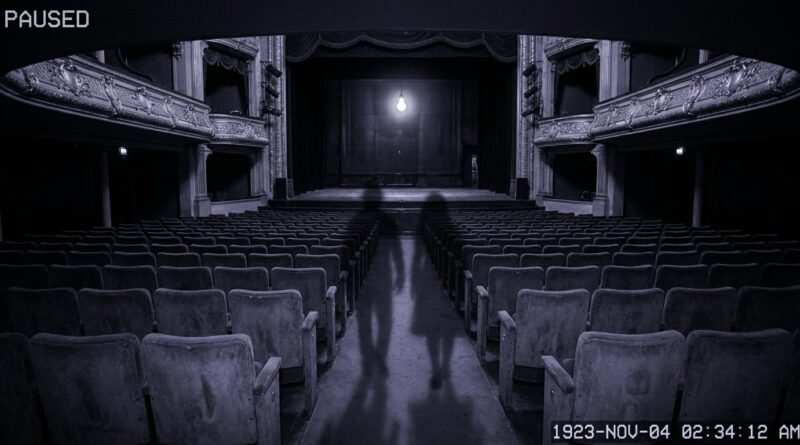
Ghost videos are fun right up until they ask you to choose between two bad options. Believe too fast, and you fall for a lighting glitch with spooky music added on top. Dismiss everything, and you might miss the rare clip that actually deserves a closer look. That is why the Victory Theatre Indiana shadow figures ghost video has people arguing so hard. Staff at the historic theater say security cameras caught full-size dark figures moving through the aisles after hours. Not little dust orbs. Not a vague smudge in a doorway. Human-sized shapes, on a real venue’s own cameras, in a place with a long, creaky, old-building vibe that practically begs for a ghost story.
So here is the useful part. Instead of picking a side too early, let’s treat this like a home tech problem. You do not need paranormal training. You need the same common-sense checks you would use to spot a fake Ring alert or a weird baby monitor clip. We can test the footage, look for camera quirks, and separate what feels spooky from what is actually solid evidence.
⚡ In a Hurry? Key Takeaways
- The Victory Theatre clip is interesting, but security footage alone is not enough to call it proof of ghosts.
- Pause, zoom, and watch for reflections, frame skipping, compression blur, and motion-trigger recording gaps before deciding what you are seeing.
- The real value is learning a repeatable way to test viral haunting videos without getting fooled or shutting down the mystery too soon.
Why this video grabbed so many people
Most haunting clips fail fast. They are too blurry, too edited, too short, or posted with almost no context. This one lands differently because it checks a few boxes people care about.
First, the setting feels real. The Victory Theatre is not some random abandoned building with no paper trail. It is a known historic theater in Indiana. Second, the footage reportedly comes from security cameras, which gives it an everyday, unplanned quality. Third, the figures are said to be full-size and moving through seating areas people can recognize.
That combination matters. When a claim comes from a place with fixed cameras, timestamps, and staff who can answer questions, it gives viewers something to work with.
What counts as good evidence in a ghost video?
This is where ghost stories and consumer tech overlap more than people think. A good piece of footage is not just spooky. It is testable.
Helpful signs
These details make a clip stronger:
- Longer uncut footage, not a five-second highlight.
- Clear date and time stamps.
- Multiple camera angles covering the same area.
- Original video file, not a repost with filters or dramatic edits.
- A known floor plan, so viewers can judge distance and scale.
Red flags
These make me pump the brakes:
- Only one cropped clip is released.
- No explanation of what camera model captured it.
- The figure appears only during heavy compression or motion blur.
- The video has been slowed down, sharpened, or color-tweaked before release.
- There is no follow-up footage from before or after the event.
How to test the Victory Theatre Indiana shadow figures ghost video yourself
You do not need a forensic lab. You just need patience.
1. Watch it once at normal speed
Do not start by zooming in until the pixels scream for mercy. First, just watch. Ask one basic question. Does the movement look like a person moving through space, or like an image artifact drifting across a flat screen?
2. Look at edges, not the center
People naturally stare at the dark shape. Instead, watch the outline. Real physical objects usually keep some consistency as they move behind rows, rails, or seat backs. Glitches often smear, stretch, or break apart around edges.
3. Check whether the “figure” interacts with the room
Does it pass behind objects correctly? Does it block light? Does its shape change in a way that matches the aisle layout? If a shadow person seems to float through fixed objects without any expected change, that is a clue you may be looking at compression noise or a reflection.
4. Think about infrared cameras
Many security systems switch to infrared at night. Infrared footage can do weird things with dark clothes, reflective surfaces, glass, polished flooring, and even insects close to the lens. A bug near the camera can look huge and eerie. So can a reflection from a door window, exit sign, or glossy armrest.
5. Ask about motion-trigger recording
Here is a big one. Some security systems do not record smoothly every second. They save space by increasing compression or recording only when motion is detected. That can create ghost-like smearing, skipped frames, and figures that seem to appear from nowhere. If the theater has not shared whether the system records continuously, that is an important missing piece.
6. Compare with the same camera on a normal night
This is the easiest reality check in the world, and it is often skipped. Show us footage from the same camera angle, at the same hour, on another empty night. If similar dark shapes appear regularly, you are probably looking at a repeatable camera effect, not a one-off supernatural event.
The boring explanations that often beat the spooky ones
I know. “Compression artifact” is not nearly as fun as “restless theater spirits.” But boring explanations win a lot because cameras are imperfect little witnesses.
Compression blur
Security systems often crush video quality to save storage. When a dark area moves against a dark background, the software can fill in gaps poorly. The result can look like a shadowy form taking a few steps.
Rolling shutter and low-light smear
In dim rooms, cameras stretch exposure time to gather more light. That can turn a quick movement, or even a flicker from changing light levels, into a human-shaped blur.
Reflections
Theater spaces are full of glossy surfaces, glass doors, polished handrails, plastic seat backs, and light spill from signs. A reflection from a staff member in another hallway can land in frame in very odd ways.
Dust and insects
Usually these create “orbs,” but close-to-lens bugs can produce elongated shapes that seem to move with intent. Not elegant, but true.
Editing after upload
Even if the original clip was innocent, reposts can make it harder to judge. Contrast boosts and sharpening create fake edges. Slow motion makes normal motion feel deliberate and uncanny.
What would make the case stronger?
If theater staff want the internet to take the claim seriously, they do not need ghost hunters first. They need better documentation.
- Release a longer clip before and after the event.
- Share footage from nearby cameras at the same timestamp.
- Confirm the camera model and whether night vision was active.
- Explain whether the system records continuously or on motion.
- Show the same aisle on a normal empty night for comparison.
- Have an independent video analyst review the original file.
That last point matters. The strongest spooky evidence is the kind that survives boring technical review.
So, is it a ghost?
Right now, the honest answer is simple. Maybe, but not proven.
That is not a cop-out. It is just the cleanest read. A strange figure on security footage can be genuinely unexplained at first glance and still have a very ordinary cause. “Unexplained” is not the same thing as “supernatural.” It just means more testing is needed.
And frankly, that is what makes stories like this fun. The mystery is not ruined by skepticism. Good skepticism is how you protect the mystery from obvious nonsense.
How to keep your own ghost-video judgment sharp
Halloween season floods feeds with creepy clips. If you want to avoid getting tricked every October, use this quick checklist:
- Find the earliest upload, not a reaction repost.
- Look for the full clip, not the dramatic excerpt.
- Check whether the source location is real and identifiable.
- Ask what kind of camera recorded it.
- Watch for reflections, low-light smear, and skipped frames.
- See if multiple angles exist.
- Be comfortable saying, “Interesting, but not enough yet.”
That last line is the sweet spot. You do not have to believe everything. You do not have to sneer at everything either.
At a Glance: Comparison
| Feature/Aspect | Details | Verdict |
|---|---|---|
| Source credibility | A real historic theater and its own security system give the claim more weight than a random anonymous upload. | Promising, but still not proof. |
| Video quality | Night security footage is useful, but it is also vulnerable to blur, compression, infrared quirks, and reflections. | Interesting evidence, easy to misread. |
| What would settle it | Original files, longer timestamps, multiple angles, camera specs, and comparison footage from a normal night. | Needed before any big paranormal claim. |
Conclusion
The Victory Theatre Indiana shadow figures ghost video is exactly the kind of claim that hooks people fast. It is fresh, creepy, tied to a real place, and supported by footage that viewers can pick apart frame by frame. That makes it more than just another campfire story. It is a chance to practice better habits. If you slow down, ask basic camera questions, and test what you are seeing before jumping to “hoax” or “haunting,” you come away with something more useful than a scare. You get a repeatable toolkit for every weird clip that pops up in your feed this Halloween season and beyond. And who knows. If a truly strange piece of evidence ever does show up, this is exactly how you will spot the difference.