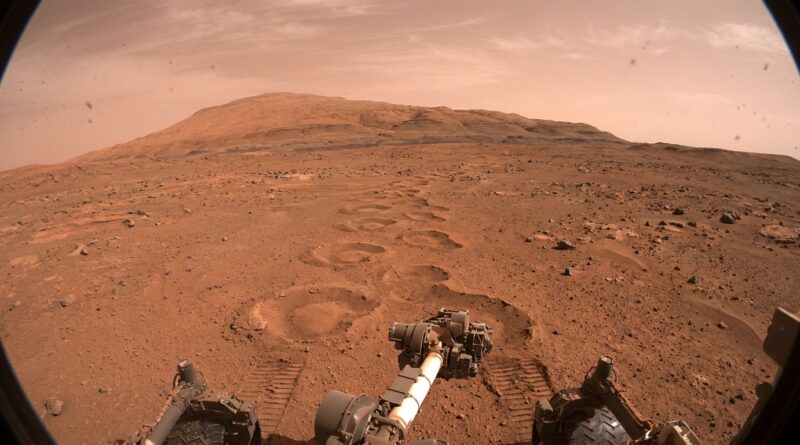
The Pits That Look Like Footprints: Why Mars Just Served Up A Brand‑New Mystery
If you are worn out by recycled UFO clips and fuzzy ghost videos, same here. Most so-called mysteries online are just old stories with louder thumbnails. That is why these strange, footprint-like pits on Mars feel different. They are new, they are odd, and they come from real rover imagery tied to actual NASA science. The mysterious pit formations discovered by Curiosity rover on Mars are getting attention because they do not neatly fit the usual casual explanations at first glance. Some look like tiny stamped marks in the rock, almost as if something pressed into soft ground long ago. Of course, nobody serious is saying Martians left shoe prints behind. The real draw is better than that. Scientists are still working out what process made them, which means we get a live mystery instead of a dead rumor. That is rare, and honestly, a lot more fun if you like facts with your wonder.
⚡ In a Hurry? Key Takeaways
- The pits are real features in Mars rock images, but scientists do not yet have a final answer for how they formed.
- If you want the best read on this story, follow NASA rover image updates and geology notes, not social media claims.
- The value here is not spooky hype. It is a real-time science mystery built on primary data that may change as new observations come in.
What Curiosity Actually Found
The buzz centers on small depressions in Martian rock that, in certain photos, look a bit like footprints or repeated stamped shapes. That visual similarity is what grabbed people. Human brains are very good at spotting familiar patterns, even when the cause is completely natural.
Curiosity has spent years driving through Gale Crater, studying layered rocks that record ancient environmental changes. Along the way, it has photographed textures that range from mud cracks to mineral veins to wind-carved surfaces. These newly discussed pits stand out because they appear clustered and neatly shaped in a way that makes you stop and look twice.
That matters. In planetary science, “huh, that is weird” is often the first step toward something useful. Strange shapes can point to ancient water activity, chemical weathering, escaping gas, salt crystals, or erosion that picked out weak spots in the rock.
Why They Look So Uncanny
Your brain loves patterns
When a set of pits seems evenly spaced or vaguely sole-shaped, it is very easy to jump to dramatic ideas. We do this on Earth too. We see faces in clouds, animals in constellations, and figures in toast. On Mars, where every odd image already comes with a layer of myth, that effect gets stronger.
Mars geology can make very weird textures
Here is the less flashy but more interesting truth. Rocks can preserve all sorts of odd marks. Sediment can harden unevenly. Softer material can wear away faster than tougher grains around it. Groundwater can move through cracks and leave minerals behind. Tiny cavities can open where crystals once sat or where bubbles, salts, or fragile clumps disappeared over time.
So yes, they may look like footprints. But in geology, looking like something is not the same as being that thing.
What Scientists Think Might Be Going On
At this stage, the smart answer is “several possibilities, no final verdict.” That may sound less exciting than internet certainty, but it is how real science works.
1. Differential erosion
This is one of the leading everyday explanations. If the rock contains zones of slightly different hardness, Martian wind and dust abrasion can wear some spots down faster than others. Over long periods, that can leave repeated pits, pockets, or scooped impressions.
2. Ancient sediment features
If these rocks formed in wet conditions billions of years ago, they may preserve textures created during deposition. Mud, silt, or sand can trap little voids, clumps, or shrinkage patterns that later fossilize into rock.
3. Chemical alteration
Mars has a long history of water-related chemistry. Mineral-rich fluids moving through rock can dissolve some materials and harden others. Later erosion then reveals the pattern. Think of it like a wall where weak patches crumble first and hidden structure slowly shows through.
4. Crystal molds or voids
Sometimes minerals grow inside sediments and later disappear, leaving behind molds. That can create pits that look surprisingly deliberate. Nature is very good at making shapes that seem designed.
What This Is Not
It is not proof of alien visitors. It is not evidence of fossilized boot prints. It is not one blurry image from a random account with a lot of caps lock.
The reason this story is worth your time is almost the opposite. The mysterious pit formations discovered by Curiosity rover on Mars are interesting because they come from a traceable scientific mission with public imagery, expert review, and the possibility of follow-up analysis.
That makes this a much healthier kind of mystery. You can be curious without being gullible.
Why This Story Feels Fresh
A lot of mystery content survives by recycling things nobody can really check. Old military clips. Urban legends. Grainy footage with no chain of custody. This Mars story gives readers something better. There is a real object of study, a real machine on another planet, and a real chance that the explanation will sharpen over time.
That unfolding part is key. We are not just revisiting a solved or stale debate. We are watching interpretation happen in public. New context images, geological comparisons, and mission notes could all change the picture.
How To Follow It Without Getting Lost in Nonsense
Start with primary sources
Look for NASA mission updates, Curiosity image releases, and notes from researchers who study Martian sediment and erosion. If a post makes a huge claim but does not show where the image came from, treat it like gossip.
Watch for scale
One of the easiest ways people get fooled by Mars images is losing track of size. A pit that looks dramatic in a crop may be tiny in real life. Scale bars, rover context shots, and surrounding terrain matter a lot.
Pay attention to repeat observations
If scientists can compare the pits to nearby rock layers or similar features elsewhere on Mars, the odds of a natural explanation improve. Good science gets stronger when a weird thing is not unique, but part of a bigger pattern.
What To Watch for Next
The next useful clues will likely come from three places.
More context imaging
Close-up images are great, but wider views often explain a lot. Are these pits isolated? Do they follow a layer? Are they on a fracture line? Do they appear in the same kind of rock nearby?
Chemistry and mineral data
If Curiosity or related analyses point to salts, sulfates, clays, or other water-linked minerals in the same area, that would support formation by chemistry plus erosion rather than anything exotic.
Comparisons with Earth rocks
Planetary geologists constantly compare Mars features with desert rocks, dried lake beds, volcanic surfaces, and sedimentary formations on Earth. If a close Earth analog turns up, that could solve a lot of the mystery fast.
Why This Matters Beyond the Click
This is not just about one odd-looking patch of rock. Mars is a giant archive of ancient environments. Every unusual texture can help answer bigger questions. Was this place once wet? How long did water stick around? What minerals formed there? How did the climate shift?
So even if the final answer turns out to be something plain-sounding like erosion plus mineral dissolution, that would still tell us something valuable about Mars’ past. “Not aliens” does not mean “not important.”
At a Glance: Comparison
| Feature/Aspect | Details | Verdict |
|---|---|---|
| Visual appearance | The pits can resemble tiny footprints or stamped impressions in cropped images. | Eye-catching, but not evidence by itself. |
| Scientific explanation | Possible causes include erosion, sediment texture, mineral changes, or crystal molds. | Natural geology is the safest current bet. |
| Why it matters | These features may reveal clues about ancient water, rock formation, and Mars’ environmental history. | Worth watching as a real, ongoing science story. |
Conclusion
The best part of this story is that it respects your curiosity instead of trying to trick it. The mysterious pit formations discovered by Curiosity rover on Mars give us a living mystery grounded in NASA data, not rumor. We know the pits are there. We know they look odd. We do not yet know exactly how they formed, and that is the honest, interesting part. If you keep an eye on future rover images and geology updates, you will be following a real scientific process in motion. That turns casual fascination into something better. It gives you an evidence-based sense of wonder, which is a lot more satisfying than spooky clickbait pretending to have all the answers.