The Temple That Collected Human Bones: Why Göbekli Tepe’s New Burials Just Deepened the World’s Oldest Mystery
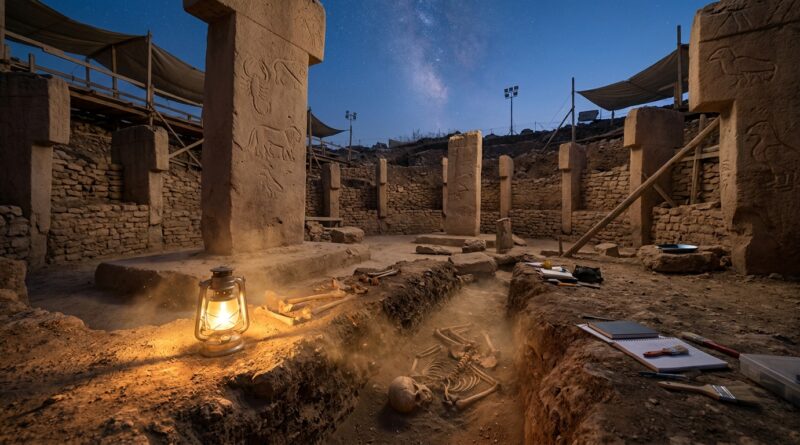
You are not imagining it. Coverage of Göbekli Tepe often swings between “mystery solved” and “aliens probably did it,” with very little in the middle. That is annoying, especially when the actual news is stranger and more interesting than the clickbait. The short version is this. New burial finds at Göbekli Tepe do not solve the site. They complicate it. For years, the place was treated mainly as a ritual center with carved pillars, scattered human bones, and hints of skull-focused rites. Now, with the first intact or more clearly defined burials entering the picture, archaeologists have stronger evidence that the site was not just a stage for ceremonies. It may also have been a place where the dead were processed, displayed, remembered, and in at least some cases buried more formally. That changes the old simple story of “the world’s first temple” into something messier, darker, and more human.
⚡ In a Hurry? Key Takeaways
- The Göbekli Tepe new burials mystery is important because the finds suggest the site was tied to real funerary practices, not just abstract ritual.
- When you see headlines claiming the site is “finally explained,” look for one key detail. Are they talking about scattered bones, modified skulls, or actual burials? Those are not the same thing.
- The safest fact-based takeaway is that Göbekli Tepe is still unsolved. The new burials narrow some possibilities, but they also raise bigger questions about ancestor worship, body treatment, and who was allowed to rest there.
What actually changed?
For a long time, the bones from Göbekli Tepe were mostly fragmentary. Archaeologists found human remains, sometimes with cut marks and signs of special treatment, but not many clean, tidy burials you could point to and say, “Here is the body, here is the grave, here is the practice.”
That gap mattered. Without intact burials, it was easier to picture Göbekli Tepe as a ritual site where people gathered, feasted, carved huge T-shaped pillars, and maybe handled bones from elsewhere.
The new finds push back on that. They suggest at least some dead people were placed at or near the site in a more direct way. That does not mean Göbekli Tepe suddenly becomes a normal cemetery. It clearly does not. But it does mean death and burial were probably more central to the site’s purpose than older summaries let on.
Why the old “first temple” label was always too neat
Calling Göbekli Tepe the world’s first temple was always a useful headline and a slightly clumsy explanation.
Yes, it has monumental stone enclosures. Yes, the animal carvings and layout look ritual-heavy. Yes, it is shockingly old, dating back to the Pre-Pottery Neolithic, long before cities, writing, or metal tools.
But “temple” makes modern readers imagine something familiar. Priests. Worship. Sacred architecture with a clear purpose. Göbekli Tepe has never behaved that neatly. It has animal imagery, massive pillars, buried enclosures, worked human bone, and now stronger burial evidence. That is less like a simple temple and more like a mixed-use ritual landscape centered on memory, death, identity, and maybe social power.
The skull cult idea. What it got right, and what it may have missed
One reason Göbekli Tepe drew so much attention was evidence that some human skulls may have been specially treated. In the wider region, archaeologists already knew that early Neolithic people sometimes removed skulls, modified them, plastered them, displayed them, or kept them in special places.
So when human cranial fragments at Göbekli Tepe showed unusual marks, the “skull cult” idea took off fast.
What that theory explained well
It helped make sense of cut marks, bone modification, and the idea that human remains had symbolic power. It also fit a broader Near Eastern pattern where ancestors mattered a great deal.
What the new burials complicate
If the site also includes actual burials, then the story cannot just be “people brought selected skulls here for ritual.” Now we may be looking at several overlapping practices.
- Some bodies may have been buried intact.
- Some remains may have been disturbed later.
- Some skulls may have been separated on purpose.
- Some bones may have been moved, curated, or displayed.
In plain English, Göbekli Tepe may not have had one death ritual. It may have had a whole system.
So what were these people doing with the dead?
This is the part where a lot of articles get dramatic and vague at the same time. Let’s keep it simple.
The strongest possibilities now being discussed are not fantasy. They are patterns archaeologists see at other ancient sites too, just not usually in this exact mix.
Ancestor worship
The dead may have remained active members of the community in a symbolic sense. Keeping bones close, revisiting graves, or separating skulls could have been ways of honoring important people and tying the living to shared memory.
Ritual dismemberment or defleshing
This sounds grisly because it is. But in archaeology, body processing does not automatically mean violence or disrespect. In some cultures, removing flesh, moving bones, or rearranging remains was part of a proper funerary sequence.
Status marking
Not everyone may have received the same treatment. A formal burial in one area, curated skulls in another, and scattered bone elsewhere could reflect rank, role, kinship, or ritual office.
Foundation or closure rites
Some remains may have been tied to the building, use, or burial of the enclosures themselves. Göbekli Tepe is famous for structures that were intentionally filled in. Human remains might have played a part in those transitions.
Why this matters beyond archaeology nerd circles
Because Göbekli Tepe sits at the center of one of the biggest popular stories about prehistory. People use it to argue that religion came before farming. Or that civilization began with ritual. Or that ancient humans were guided by lost advanced knowledge. Or, yes, that mainstream archaeology is hiding everything fun.
The new burial evidence makes the real story better, not worse. It points toward something more believable and more unsettling. These were early people building huge stone spaces while also doing complex things with their dead. That suggests a society already rich in symbolism, memory, and social rules, even before later forms of urban life appeared.
So if you want a grounded way to talk about the Göbekli Tepe new burials mystery, start there. Not “mystery solved.” More like “the site just became harder to reduce to one neat idea.”
What the evidence still does not tell us
This part is important, because the gaps are where bad internet theories rush in.
We do not know the full burial program
A few burials do not automatically map the whole site. Göbekli Tepe was used over time, and different enclosures may have had different roles.
We do not know whether all the bones are local
Some remains may belong to people who lived nearby. Others could have been brought in. Until more lab work is done, that question stays open.
We do not know whether body treatment was honor, fear, or both
Modern people tend to sort rituals into “respectful” and “horrific.” Ancient practices often ignore that line. Separating a skull might have been an act of devotion, control, remembrance, or several things at once.
We definitely do not have a final answer to why Göbekli Tepe was built
The pillars, carvings, feasting evidence, architecture, and human remains all matter. But they still do not give us a single tidy purpose statement.
How to read future headlines without getting fooled
If another article says Göbekli Tepe has been “decoded,” check for these questions.
- Are they reporting a new peer-reviewed study, or rewriting old claims?
- Do they distinguish between isolated bones and proper burials?
- Do they explain whether the remains were primary burials, secondary deposits, or later disturbances?
- Do they admit uncertainty, or jump straight to a sweeping conclusion?
If the article skips those points, it is probably giving you mood, not clarity.
What is the most reasonable current picture?
Right now, the fairest summary is this. Göbekli Tepe was likely a ritual center, but not only a ritual center. It seems increasingly tied to the management of the dead. That may include burial, reburial, skull removal, bone handling, remembrance, and ceremonies connected to powerful ancestors or lineage groups.
That does not shrink the mystery. It deepens it.
Instead of asking, “Why did hunter-gatherers build a temple?” we may need to ask something more precise. “Why did early communities create monumental stone enclosures where animals, memory, identity, and human remains all came together?”
That is a better question. It is also a much creepier one.
At a Glance: Comparison
| Feature/Aspect | Details | Verdict |
|---|---|---|
| Old view of the site | Primarily a ceremonial or temple-like space with scattered human remains on the side | Too simple now |
| Impact of new burials | Shows stronger evidence that funerary practices were part of what happened at Göbekli Tepe | Major shift in interpretation |
| What remains unknown | Who was buried, why some bones were modified, and how burial linked to the enclosures’ full purpose | Mystery still very much alive |
Conclusion
The best thing about these finds is also the most frustrating thing. They do not give us the clean ending headline writers want. They give us a more honest picture. The first intact burials at Göbekli Tepe are quietly reshaping one of the anchor myths of ancient mystery culture in real time. They suggest the site was not just a stone monument for vague ritual, but a place where people dealt with death in direct, physical, and probably highly symbolic ways. That matters because most coverage either goes full sensational mode or skips the weirdest facts entirely. A grounded reading lets you talk about ancestor worship, ritual body treatment, and early sacred architecture without drifting into nonsense. And that is real value. It gives readers a fact-based way to think about one of the biggest active mysteries on the planet, while admitting the strangest part. We still do not fully know why this stone forest of bones was built.