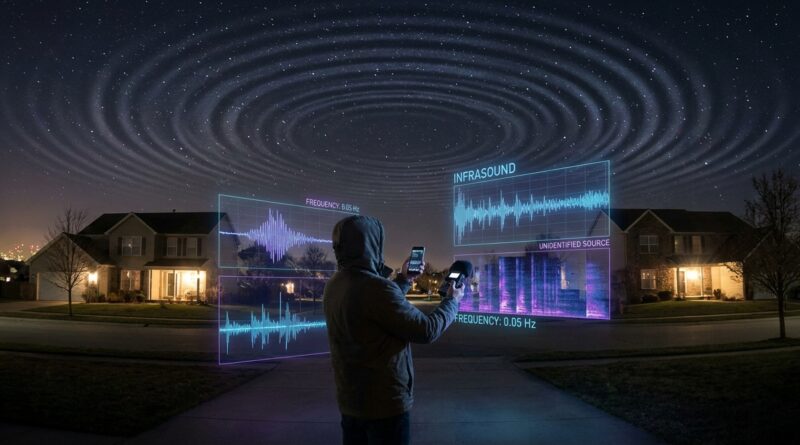
The Sky That Keeps Clicking: Why A Global Surge In ‘Invisible’ Sky Sounds Has Scientists Baffled
It is deeply frustrating to hear something strange above you, check the sky, and find nothing there. No helicopter. No power line buzz. No obvious source at all. Yet reports of sharp clicking, metallic tapping, low humming, and odd pulsing noises in clear skies seem to be popping up everywhere right now. Some are probably ordinary sounds carried in very unusual ways. Some may be tied to electrical activity in the atmosphere or low-frequency vibration that behaves differently from normal sound. And some, honestly, do not fit neatly into any one box yet. That does not mean every clip is fake, and it does not mean every report points to disaster either. It means we are looking at a messy real-world mystery, where weather, acoustics, electronics, and human perception can all mix together. The good news is that there are smarter ways to look at this than endless doom-scrolling and guesswork.
⚡ In a Hurry? Key Takeaways
- Many unexplained sky sounds, including clicking, humming, and pulsing, may come from distant noise bent by the atmosphere, electrical discharge, or low-frequency infrasound, but not every case is solved.
- If you hear one, log the time, weather, wind, direction, and make a 30 to 60 second recording. That kind of data is far more useful than a vague post.
- Do not stand in open areas during storms or near electrical equipment to investigate. Curiosity is good. Safety comes first.
Why people are suddenly talking about this
The phrase people keep searching is some version of “unexplained sky sounds clicking hum infrasound 2026,” and that tells you a lot. These are not all the same sound. Some witnesses describe a fast click-click-click, almost like a giant relay switch in the clouds. Others hear a distant industrial hum, even on quiet nights in rural areas. A few report pulses that seem to come from overhead, then vanish.
Part of the spike is simple visibility. Everyone has a phone. Everyone can upload a clip in seconds. Local oddities that once stayed local now get stitched together into a global pattern. But that is not the whole story. Scientists who study acoustics and the atmosphere do have a few reasons to take these reports seriously.
The most likely explanations, from boring to genuinely weird
1. Atmospheric ducting can move sound in sneaky ways
This is the most grounded explanation for a big chunk of reports. Under certain temperature and humidity conditions, sound does not spread out normally. It can bend, travel farther than expected, and seem to come from the wrong direction. This is called atmospheric ducting.
So a train yard, industrial fan, highway bridge, drilling site, or even distant aircraft activity might sound as if it is hanging directly in a clear sky overhead. If the source itself is mechanical and rhythmic, what reaches you can turn into eerie clicks, taps, or a low hum.
This matters because people often rule out human-made sources too quickly. “There is nothing near me” can still be true in the everyday sense, while a sound source 10, 20, or even more miles away is being carried unusually well.
2. Electrical activity can create real sound, even without a dramatic storm
The atmosphere is not electrically quiet just because the sky looks calm. Corona discharge around lines, towers, and sharp metal points can make buzzing or clicking sounds. Distant storm systems can also stir up conditions that change how sound and electromagnetic noise behave locally.
In some cases, what people think is “the sky clicking” may be a nearby object responding to electrical conditions. A fence, rooftop hardware, utility equipment, or even a recording device can become part of the story. That does not make the experience fake. It just means the sound source may be indirect.
3. Infrasound may be part of the puzzle
Infrasound is sound below the normal range of human hearing. You usually do not hear it as a clean tone. You may feel unease, pressure, vibration, or hear odd harmonics created by objects around you. Thunder, ocean waves, wind turbines, aircraft, rockets, industrial activity, and geological movement can all produce it.
If low-frequency energy is present, windows, gutters, walls, and phone microphones can react in strange ways. A clip that seems to capture a sky hum may actually be your environment resonating with something lower and less obvious.
4. Some recordings are artifacts, not evidence of a sky source
Phone microphones are notorious for mangling unusual sound. Automatic noise reduction, compression, wind filtering, and clipping can turn a faint distant rumble into something that sounds mechanical and much closer. That is why two people at the same event can post recordings that sound completely different.
This does not mean all audio should be dismissed. It means recordings need context. Without location, weather, orientation, and a witness description, a spooky clip can only take you so far.
Why the reports may feel like they are increasing right now
There are a few sensible reasons.
First, weather patterns matter. Temperature inversions, humidity shifts, wildfire smoke layers, and unstable air can all change how sound travels. Second, there is more low-level industrial and transport noise in the environment than most of us realize. Third, social attention is contagious. Once people have a label for an experience, they notice it more and share it faster.
And then there is the uncomfortable fourth reason. A residue of cases remains after you strip out the obvious stuff. Those are the ones keeping interest alive.
What scientists would want you to record
If you hear unexplained sky sounds, your job is not to become a detective in a panic. Your job is to become a decent observer.
Write down the basics
Note the exact time, your town or GPS area, and how long it lasted. Say whether the sound was a click, hum, pulse, buzz, drone, or mix of several.
Check the weather
Log cloud cover, wind direction, humidity if available, and whether there were storms within 50 to 100 miles. Temperature inversions and distant storm activity are especially useful clues.
Describe direction and movement
Did it seem overhead, near the horizon, or impossible to place? Did it drift or stay fixed? This helps separate traveling sources from resonance or ducted sound.
Record the surroundings too
Pan slowly. Capture nearby poles, rooftops, trees, fences, and open sky. Often the key is not the sky itself, but what in the local environment might be vibrating or discharging.
Use more than one device if possible
If two phones or a phone and a portable recorder capture the same rhythm, that is more helpful than a single clip. Even better if another person a mile away heard it too.
What not to do
Do not walk into fields during electrical weather. Do not approach substations, towers, or rail lines to “get a better listen.” Do not assume every strange sound is military, extraterrestrial, or apocalyptic. Big claims are fun. Good notes are better.
Also, do not be embarrassed if your strange event turns out to be mundane. That is how real investigation works. You rule things out. Then you see what is left.
So are these sky sounds real?
Yes, in the sense that people are hearing something. The better question is whether all these reports have a single cause. Almost certainly not.
The strongest science-backed bucket includes distant mechanical noise being bent by the atmosphere. Another solid bucket involves local electrical or structural effects triggered by conditions people do not notice. A third bucket includes low-frequency sound and resonance. Then there is a smaller pile of events that stay unresolved because the data is poor, the sound is too brief, or the details do not match known patterns cleanly.
That last category is where the genuine mystery lives.
Why this mystery deserves better than eye-rolling
One reason people get dismissed is that “weird sky sounds” has become internet shorthand for bad clips and wild theories. But dismissing everything is just as lazy as believing everything. There is real science here. Atmospheric acoustics is complicated. Electrical environments are complicated. Human hearing is complicated.
When lots of ordinary people in different places describe similar sounds, the smart response is not panic or mockery. It is organized curiosity.
At a Glance: Comparison
| Feature/Aspect | Details | Verdict |
|---|---|---|
| Atmospheric ducting | Can bend and carry distant industrial, traffic, rail, or aircraft noise so it seems to come from a clear sky. | Best fit for many hum and clicking reports. |
| Electrical discharge | Corona effects, utility hardware, and charged local objects can create buzzing or clicking without obvious visible signs. | Plausible in weather-sensitive cases. Use caution around equipment. |
| Infrasound and resonance | Very low-frequency energy can make buildings and objects produce audible byproducts or a felt sense of pressure. | Likely part of some events, but harder to confirm without instruments. |
Conclusion
The most useful way to approach these unexplained sky sounds is to stay calm, stay curious, and document well. This helps the Anomal community today because it gives people a clear, science-literate way to engage with a genuinely weird pattern unfolding in real time, instead of just doom-scrolling isolated clips. By grounding the mystery in research on atmospheric ducts, electrical discharges, and low-frequency infrasound, we get better tools for sorting the ordinary from the truly odd. And yes, a chunk of reports still remain stubbornly unexplained. That is not a failure. That is where careful observation starts to matter most.