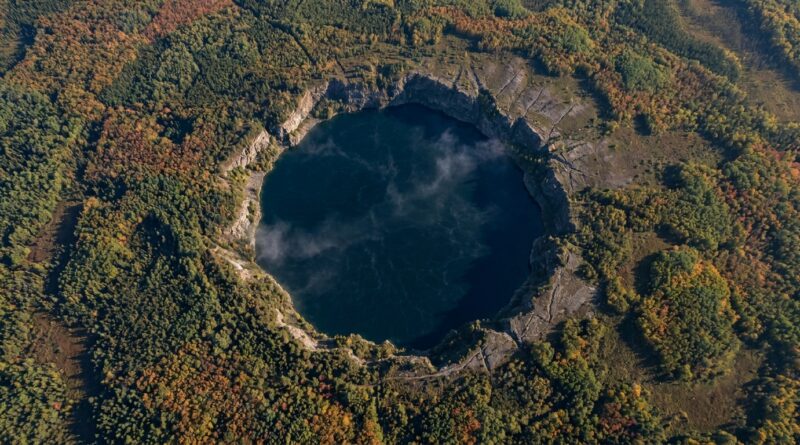
The Crater That Shouldn’t Exist: How a ‘Vanished’ Canadian Impact Just Rewrote Earth’s Cosmic Hit List
You can only stare at so many recycled UFO clips and fake haunted-house videos before your eyes glaze over. That is the frustrating part of following weird science online right now. The truly strange stuff, the kind with maps, measurements, and scientists arguing in public, often gets buried where almost nobody sees it. That is why this new mysterious meteorite crater discovered in Quebec in 2026 matters. It is not a rumor. It is not a shaky light over a parking lot. It is a newly confirmed, nearly perfect circular impact structure in a remote part of Quebec, and researchers are now trying to answer a very fair question. How did something this big, this clean, and this geologically dramatic seem to slip past earlier crater lists and surveys? If you want a real anomaly with hard evidence, this is the one to watch, because the story is only starting.
⚡ In a Hurry? Key Takeaways
- A newly confirmed circular impact structure in remote Quebec has been added to Earth’s crater conversation, and experts are now debating its age, origin, and why it stayed overlooked for so long.
- If you want to follow this intelligently, focus on published field evidence like shocked minerals, geophysical data, and crater shape, not social media hype.
- This is valuable because it is a fresh, verifiable mystery. Nobody needs to invent anything spooky when the real science is already weird enough.
What was actually found in Quebec?
At the center of the buzz is a large, strikingly circular structure in remote Quebec that researchers now say fits the profile of an impact crater. That means a scar left by an object from space hitting Earth with enormous force.
The reason people are paying attention is not just the shape. Earth has round lakes and odd geologic rings for all sorts of reasons. The reason this one matters is that specialists believe the evidence now points strongly enough toward an impact origin that it has moved from “interesting feature” into “serious crater candidate,” and in current reporting, into the category of newly confirmed impact structure.
That is a big deal. Earth does not get brand-new craters every day. It gets new identifications of ancient ones. Those are different things. The collision happened long ago. What is new is our recognition of it.
Why people are calling it “the crater that shouldn’t exist”
That phrase is a little dramatic, sure, but I get why it is sticking. The odd part is not that an impact crater exists in Canada. Canada has several. The odd part is that this one appears to be both obvious and overlooked.
From the early descriptions, the structure is unusually symmetrical. In crater studies, symmetry matters because impact scars often leave a recognizable circular outline, even after erosion, sediment, and time have had their turn. So when something looks that clean, the next question is simple. Why was it not firmly logged earlier?
There are a few possible answers, and none require a conspiracy.
Remote terrain hides a lot
Northern and remote parts of Quebec are not exactly easy weekend survey territory. Dense vegetation, water cover, limited road access, and patchy historic fieldwork can hide big features surprisingly well.
Not every round shape is an impact crater
Geologists are careful for a reason. A circular feature can come from volcanism, collapse, erosion, tectonics, or plain bad luck in the landscape. Scientists usually want more than a pretty ring on a map.
Confirmation takes specific evidence
To move a site into the impact category, researchers typically look for things like shock-metamorphosed minerals, unusual rock deformation, melt signatures, breccias, or geophysical patterns that match known craters. In other words, shape starts the conversation. Rock evidence closes the deal.
Why this story is better than the usual mystery bait
This is the rare anomaly story where you can actually check the receipts. There are coordinates, measurements, geology, and competing interpretations. That alone makes it more interesting than 95 percent of what gets passed around as “unexplained.”
It also gives readers something better than a solved mystery pretending to be unsolved. Here, parts of the puzzle are genuinely open. Researchers appear to agree that the structure is significant. What they are now working through is how old it is, how well preserved it is, and how it managed to avoid broader recognition until now.
What scientists are arguing about right now
The fun part of a story like this is that confirmation is not the same as full understanding. Once experts agree a feature is likely or definitely impact-related, the harder questions begin.
How old is it?
Age matters because it changes the whole story. A very ancient crater tells us about a much older Earth, one whose surface has had ages to erase and distort the wound. A younger one raises different questions about preservation and visibility.
If the Quebec structure turns out to be older than first assumed, that could help explain why it looked faint or incomplete in earlier work. If it is younger and still crisp, then people will naturally ask why it sat under the radar so long.
How big was the original impact?
A crater you see today is not always the crater that originally formed. Erosion can shrink, soften, flood, or break apart the structure. Researchers will be trying to estimate the size of the incoming object and the scale of the original blast.
Why is it so symmetrical?
A clean circle can be a clue, but it can also be misleading if later geologic processes sharpen or preserve certain edges better than others. Specialists will want to know whether the current shape reflects the original impact, later modification, or a mix of both.
Why did earlier surveys miss or sideline it?
This may be the most interesting question for non-specialists. It gets at how science actually works. Sometimes a feature is seen but not understood. Sometimes data sits in separate silos. Sometimes nobody has enough field evidence to make the call until new tools, new eyes, or new comparisons come along.
How a giant crater can “hide in plain sight”
This sounds impossible until you remember what Earth does to its own history. Our planet is messy. Wind, ice, rain, vegetation, sediment, and tectonic activity are like a cleaning crew with terrible timing.
Unlike the Moon, Earth does not preserve impacts neatly. It recycles surface scars constantly. That means even large impact structures can become subtle enough that they stop looking like textbook craters, especially from the ground.
And then there is the human side. Science is a map with blank spots. Some places are understudied. Some old data gets re-read in light of better models. Some discoveries happen because a satellite image, gravity survey, and field sample finally line up at the same time.
What counts as real proof of an impact crater?
If you want to follow the new mysterious meteorite crater discovered in Quebec 2026 story without getting lost in hype, keep an eye on the evidence that impact geologists care about most.
Shock features in minerals
These are microscopic or structural changes in minerals like quartz that form under extreme pressure. They are among the strongest signs of an impact event.
Impact breccia or melt rock
When a space rock hits at high speed, it can shatter and melt existing rock. Those products leave a geological fingerprint that is hard to fake with ordinary Earth processes.
Geophysical signatures
Gravity and magnetic surveys can reveal buried rings, uplifted centers, fractured zones, or other subsurface patterns that match known impact structures.
Consistent mapping
If the circular shape holds up across topography, bedrock data, and fieldwork, confidence grows. One suggestive map is interesting. Multiple lines of agreement are what move scientists.
Why this matters beyond crater nerds
First, every confirmed impact crater helps refine Earth’s collision history. That sounds academic, but it feeds into a bigger picture of how often large objects hit our planet and how well we can detect old strikes.
Second, these discoveries improve the way scientists search for more hidden structures. A crater found late is a reminder that our catalog is not finished.
Third, and this is where readers of strange news should pay attention, it is proof that the real world still has mysteries left. Not fuzzy ones. Not “trust me, bro” ones. Actual physical mysteries.
What to watch next
If this story keeps developing, expect a few kinds of updates.
More precise dating
Researchers may narrow the age using radiometric methods or better regional comparisons.
Peer-reviewed follow-up papers
Initial reports create attention. Full technical papers are what really settle the debate.
Better imagery and maps
As more people look at the site, you will likely see improved topographic models, satellite views, and perhaps geophysical cross-sections.
Pushback from specialists
This is normal. If impact experts disagree on details, that is not a sign the story is fake. It is usually a sign the evidence is being taken seriously.
How to read stories like this without getting fooled
A practical tip. Separate three levels of claim.
Level 1: “There is a circular structure.” That is just observation.
Level 2: “It appears to be an impact crater.” That is an interpretation.
Level 3: “We know exactly when it formed, how big the object was, and why nobody noticed.” That is a much bigger claim, and it usually takes longer.
Right now, the Quebec story is compelling because Level 1 and much of Level 2 seem to be in strong shape, while Level 3 is still being worked out. That is exactly where a good science mystery lives.
At a Glance: Comparison
| Feature/Aspect | Details | Verdict |
|---|---|---|
| What makes it newsworthy | A newly confirmed, highly circular impact structure in remote Quebec appears to have joined Earth’s crater list after being overlooked or underclassified for years. | Genuinely significant |
| Main scientific debate | Researchers are sorting out its age, preservation, original size, and why earlier surveys did not fully recognize it. | Open and worth watching |
| Why readers should care | It is a rare real-world anomaly backed by geology, not internet folklore, and it may reshape part of Earth’s known impact history. | High value for science-minded mystery fans |
Conclusion
For once, the most interesting “weird story” online is not a blurry light or a recycled scare clip. It is a chunk of hard Earth science. A newly confirmed, perfectly circular impact structure in remote Quebec has just jumped onto the map of known craters, and the questions around its age, symmetry, and seeming disappearance from earlier surveys are already stirring debate among specialists. That gives readers something rare. A fresh, verifiable mystery with real data and real uncertainty. If you have been hungry for an anomaly you can actually follow as science unfolds, this is it. The crater is there. The arguments have started. Now we get to watch experts figure out how a colossal cosmic scar managed to hide in plain sight until this week.