The Sun’s ‘Super‑Hot Halo’: Why Our Own Star Is Suddenly The Weirdest Mystery In The Sky
It is oddly frustrating to admit this, but one of the biggest objects in our lives still refuses to make simple sense. The Sun’s visible surface sits at about 5,500 degrees Celsius. Its outer atmosphere, called the corona, can soar to well over a million degrees. If that sounds backwards, it is. Heat usually drops as you move away from the source, not skyrockets. That is why so many people keep asking, why is the sun’s corona hotter than its surface, and why do scientists still not have one clean answer?
The honest version is this: researchers now have stronger clues than ever, but not a final verdict. Fresh eclipse planning, new spacecraft passes and updated observatory data are pushing two leading ideas to the front. One says the Sun’s tangled magnetic field snaps and reconnects in tiny bursts that dump energy into the corona. The other says waves moving through the Sun’s magnetic fields carry energy upward and release it as heat. Both may be right. The weird part is that our nearest star is still acting like a live unsolved case, and it matters because the same processes feed space weather that can mess with satellites, radio, GPS and even power grids on Earth.
⚡ In a Hurry? Key Takeaways
- The short answer is that scientists think magnetic energy, not ordinary surface heat, is superheating the corona.
- When you see eclipse photos or solar charts online, look for two terms: magnetic reconnection and Alfvén waves. Those are the main ideas to watch.
- This is not just sky trivia. Corona heating links directly to space weather that can affect GPS, communications and power systems.
Why this feels so wrong
If you stand near a campfire, you expect the hottest part to be closest to the flames. The Sun does not fully play by that rule.
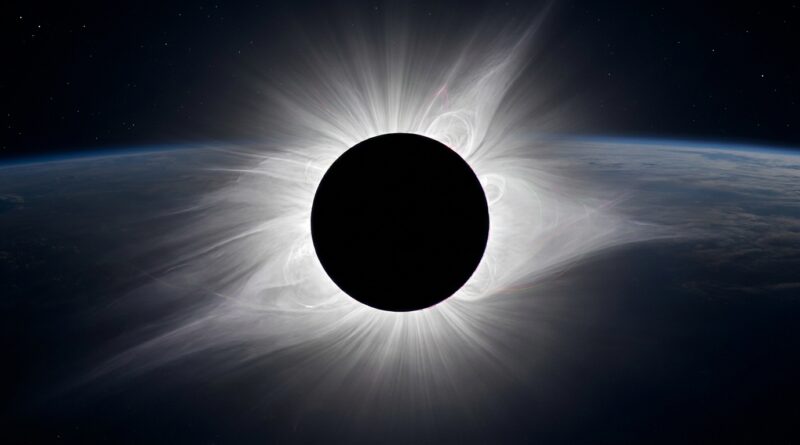
The layer we usually think of as the Sun, the photosphere, is the bright visible surface. It is extremely hot by Earth standards, but still much cooler than the faint halo above it. That halo is the corona. During a total solar eclipse, it appears as a ghostly white crown around the darkened Sun.
And somehow, that thin outer halo is much hotter than the layer below it.
That is the core mystery. Scientists are not saying the Sun breaks physics. They are saying the heating process is happening through a route we still do not fully pin down.
So, why is the sun’s corona hotter than its surface?
The best current answer is that the corona is heated by the Sun’s magnetic field.
Not by simple proximity to the core. Not by heat rising in the everyday sense. By magnetic energy getting stored, moved and released in the Sun’s outer layers.
The Sun is basically a giant ball of electrically charged gas, or plasma. Plasma and magnetic fields interact in messy, dramatic ways. The Sun’s surface churns constantly. That motion twists magnetic field lines like rubber bands. When those field lines snap, reconnect or shake, they can throw energy into the corona.
That is the broad picture. The debate is over which exact mechanism does most of the work.
The two leading explanations
1. Magnetic reconnection, or countless tiny magnetic explosions
This idea says the corona is heated by magnetic field lines crossing, snapping and reconnecting. When they do, they release stored energy fast.
You can think of it like stretching and tangling elastic cords until they suddenly flick into a new shape. That release sends energy into the surrounding plasma.
Some researchers focus on “nanoflares.” These are not giant Hollywood solar flares. They are thought to be tiny, frequent bursts happening all over the corona. One nanoflare would not do much. Billions of them could.
If this model is right, the corona is being warmed by a nonstop rain of miniature magnetic outbursts.
2. Wave heating, or energy riding upward on magnetic vibrations
The second big idea says the Sun’s boiling motion generates waves that travel along magnetic field lines into the corona.
These are not ocean waves. They are plasma waves, especially Alfvén waves, moving through magnetized solar material. The key question is whether enough of that wave energy gets dumped into the corona instead of just passing through.
If the waves break, tangle or transfer their motion into surrounding particles, they can heat the corona.
This idea has gained support because spacecraft have seen wave-like motions and signatures of energy flowing through the Sun’s atmosphere. The tricky part is measuring whether that energy turns into enough actual heat in the right places.
Why scientists still argue about it
Because the Sun is huge, bright and violent, but also hard to measure up close.
The corona is thin and faint compared with the blinding solar disk below it. That makes it difficult to isolate. Total eclipses help because the Moon blocks the bright surface, letting the corona stand out. Spacecraft help too, especially those built to observe ultraviolet and X-ray light, where hot coronal structures show up more clearly.
But there is still a big gap between seeing patterns and proving cause.
For example, a telescope may show magnetic loops brightening. A spacecraft may detect waves. Another instrument may spot particles heating up. Turning that into one clean chain of events is the hard part.
That is why this mystery keeps surviving new data. Every fresh observation sharpens the case, but it has not closed it.
What new eclipse and spacecraft data are changing
Scientists are now getting a better mix of views than ever before.
Eclipses give a rare wide-angle look at the corona close to the Sun’s edge, where a lot of important heating and solar wind acceleration seem to happen. Spacecraft can then fill in details using instruments that track magnetic fields, particle speeds and extreme ultraviolet light.
Solar missions such as Parker Solar Probe and Solar Orbiter have changed the conversation by getting closer to the Sun than older missions could. Parker, in particular, has flown through parts of the Sun’s outer atmosphere and sampled the solar environment more directly than anyone thought possible a generation ago.
That matters because the corona is not just a pretty halo. It is tied to the solar wind, the stream of charged particles constantly flowing out from the Sun. If we understand how the corona gets so hot, we also get closer to understanding how the solar wind is launched and why some solar events turn nasty for Earth technology.
Why everyday people should care
Because this strange solar halo is not only a physics puzzle. It is part of the machinery behind space weather.
When the Sun throws out energetic particles or magnetic disturbances, those can interact with Earth’s magnetic field. Strong events can disrupt satellite operations, radio communications, airline routes, GPS accuracy and, in rare severe cases, power grids.
So when scientists argue about the corona, they are not just trading abstract theories. They are trying to understand the engine room of the Sun’s behavior.
This is also why social media gets messy around major solar news. You will see gorgeous eclipse photos, scary flare headlines and diagrams filled with arrows and jargon. A lot of them skip the most important point. We know a great deal about the corona, but the exact heating recipe is still under active debate.
What to watch for in the next wave of coverage
If you want to follow this without getting buried in technical language, keep an eye on three simple questions.
Are researchers seeing heat appear where magnetic fields reconnect?
If yes, that strengthens the nanoflare or reconnection side of the debate.
Are they measuring enough wave energy to explain the temperatures?
If yes, wave heating gets a boost.
Do the answers vary by region of the corona?
This may be the most likely outcome of all. Quiet regions, active regions and coronal holes may not all heat the same way. The final answer may be a mix, not a winner-takes-all result.
The simple version you can tell a friend
If someone asks why the sun’s corona is hotter than its surface, you can say this:
The Sun’s outer atmosphere is probably being superheated by magnetic energy. Scientists think that energy is released either by tiny magnetic snap events, by waves moving along magnetic fields, or by both working together. New eclipse and spacecraft data are helping, but the mystery is not fully solved yet.
At a Glance: Comparison
| Feature/Aspect | Details | Verdict |
|---|---|---|
| Main mystery | The corona reaches millions of degrees while the visible surface is far cooler, which seems backwards at first glance. | Still unsolved, but strongly tied to magnetic activity. |
| Top explanation | Magnetic reconnection and tiny nanoflares may release stored magnetic energy into the corona. | Leading contender, with growing evidence. |
| Other major explanation | Alfvén waves and related plasma waves may carry energy upward and convert it into heat. | Also credible. The final answer may involve both. |
Conclusion
The reason this story matters right now is simple. The corona mystery sits right at the line between practical life and cosmic weirdness. It affects space weather that can hit GPS, satellites and power systems, yet the basic heating mechanism still does not line up neatly with the kind of textbook logic most of us expect. With a fresh eclipse ahead and new observatory updates starting to circulate, a lot of people are about to run into oversimplified charts and dramatic claims. If you remember one thing, make it this: scientists are closer than before, but they are still working the case. That makes this a rare kind of space story. Not ancient history. Not settled fact. A live mystery you can actually follow, with a grounded understanding of what is known, what is guessed and what the next round of observations might finally settle.