The Star That Won’t Behave: Why One Dimming Sun Just Broke The Rulebook Of Stellar Physics
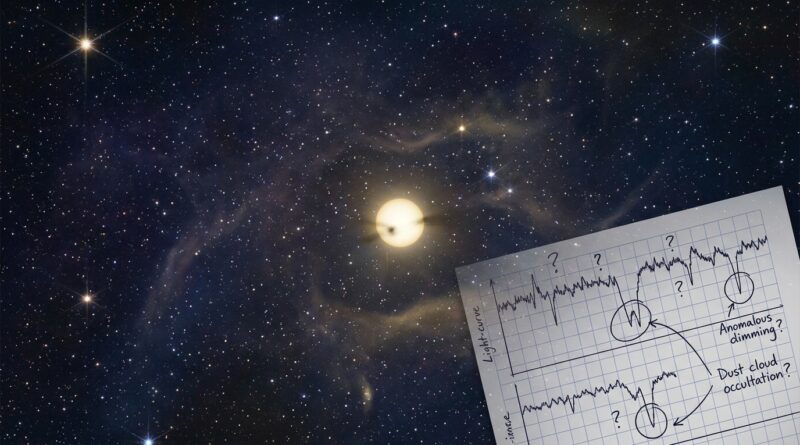
You are not wrong to be skeptical. Most “mysterious space anomaly” stories fall apart fast. It is dust. It is a bad sensor reading. It is a headline writer getting carried away. That is why this case matters. A mysterious dimming star unexplained by the usual easy answers has astronomers paying attention for a simple reason. The weirdness has held up under repeat observations. One star appears to fade in ways that do not fit the tidy rules we use for normal stellar behavior, and the pattern is awkward enough that researchers cannot wave it away with one neat explanation. That does not mean aliens, doom, or a cosmic glitch. It means we may be watching a real scientific puzzle in progress. For readers tired of hype, this is the useful kind of mystery. It is specific, testable, and still open. You can actually follow the evidence as it changes, instead of just recycling old internet folklore.
⚡ In a Hurry? Key Takeaways
- This star’s dimming appears real and repeated, not just a one-off glitch or obvious dust event.
- When you see claims about a space mystery, check whether the odd behavior was observed more than once and by more than one instrument.
- The value here is not a wild answer yet. It is that scientists have a live case they can test, challenge, and refine in public.
Why this star stands out
Stars do change brightness. That part is not shocking. Many pulse, flare, rotate, or get partially blocked by orbiting material. Astronomers have long lists of known reasons a star might look dimmer from Earth.
What turns this into a genuine puzzle is that the dimming does not sit comfortably inside the usual categories. The drop in light is odd enough, persistent enough, or shaped strangely enough that standard models struggle to explain it cleanly. In plain English, the star is not following the script.
That is the difference between a real anomaly and clickbait. A real anomaly survives the first round of boring explanations.
What “broke the rulebook” really means
It does not mean physics has failed. It means one object is exposing a gap in our current understanding, or at least a place where our simple models are too simple.
Think of it like your car making a noise mechanics cannot identify right away. The engine has not “broken the laws of driving.” It just means the obvious fixes do not match what you are hearing. Astronomers are in that stage with this star.
The usual suspects
When a star dims, researchers usually start with a shortlist:
- Dust passing in front of the star
- A planet transit
- Starspots, like large cooler patches on the surface
- Instrument error or data processing mistakes
- Natural cycles inside the star itself
Those are sensible starting points. Most weird cases end there. This one has stayed annoying.
Why the easy answers are not fully satisfying
Dust often leaves a color signature, because it blocks some wavelengths of light more than others. Planet transits tend to be regular and repeat on a schedule. Instrument glitches usually disappear when another telescope checks the same target. Surface activity can explain some variation, but not always the timing or depth of the fading.
So when astronomers keep saying “we do not know yet,” that can be a sign of caution, not weakness. It means the data is forcing them to be honest.
How to tell a real space mystery from recycled hype
This is the part that actually helps you as a reader. You do not need a PhD to spot the difference.
1. Ask whether the effect repeats
A one-time odd reading is interesting. A repeated signal is much stronger. If the dimming shows up over multiple observations, it deserves more attention.
2. Ask whether more than one team has looked
If only one source is making the claim, stay cautious. If separate groups or instruments see the same thing, confidence goes up.
3. Watch for specific language
Good reports mention actual possibilities and what has been ruled out. Bad reports jump straight to dramatic conclusions.
4. Notice whether the mystery is testable
A useful anomaly creates predictions. Will the star dim again? Will it fade more in blue light than red? Will spectroscopy show gas, dust, or motion? If scientists can test those ideas, the story is real science, not just vibes.
That is also why stories like The Town That Lost Its Shadows: The Bizarre ‘Light Drop’ Phenomenon No One Can Explain grab people. Sudden changes in light feel eerie right away. The key question is always the same, whether it is a street or a star. Can the effect be measured, repeated, and checked independently?
What astronomers may be dealing with
Right now, several broad possibilities usually stay on the table in a case like this.
Unusual circumstellar material
The star may be surrounded by clumps of dust, gas, or debris in a shape that is more chaotic than expected. That could produce strange dimming without requiring brand-new physics.
An internal stellar process we do not model well yet
Stars are not simple light bulbs. They are violent balls of plasma with magnetic fields, convection, waves, and rotation all tangled together. A dimming pattern that looks impossible at first may reveal a process that has been underappreciated.
A hidden companion
Another object, such as a faint star, brown dwarf, or dense debris structure, might be involved. Sometimes “one weird star” turns out to be a more complicated system.
Something genuinely rare
Every now and then, nature serves up an object that is not impossible, just uncommon. Those cases matter because they stretch our categories and force better ones.
Why this matters beyond astronomy fans
Because it is a clean example of how science works when the answer is not ready yet.
People often imagine science as a machine that instantly produces facts. Real science is messier. First comes the weird observation. Then the checking. Then the arguing. Then the failed explanations. Then, maybe, a better model.
This star gives you something rare in public science coverage. Not a polished final answer, but a live investigation.
What to watch for next
If you want to follow this story without getting dragged into nonsense, look for updates in a few areas:
- Whether future dimming events happen on any pattern
- Whether the star changes color as it dims
- Whether spectroscopy finds signs of gas, dust, or motion
- Whether space and ground telescopes agree
- Whether proposed explanations make predictions that later come true
That last point is the big one. The best explanation is not the coolest one. It is the one that correctly predicts what happens next.
At a Glance: Comparison
| Feature/Aspect | Details | Verdict |
|---|---|---|
| Observed dimming | The star’s brightness changes have been strong enough to trigger serious follow-up, not just casual curiosity. | A real signal worth watching |
| Common explanations | Dust, transits, starspots, and instrument problems remain the first checks, but none appears to close the case neatly. | Still unresolved |
| Reader takeaway | This is a solid example of a mysterious dimming star unexplained by the usual quick answers, and a good model for judging future anomaly headlines. | Useful case study, not empty hype |
Conclusion
It is healthy to roll your eyes at flashy “space mystery” headlines. Most deserve it. But every so often, a case comes along that earns the label. This star seems to be one of them. Not because it proves anything wild, but because it gives us a live, testable mystery with real data behind it. That helps the community right now. It anchors the idea of an unexplained phenomenon to something specific you can follow as new observations come in. It also gives you a better filter for future stories. Ask what was measured, what was ruled out, and what prediction comes next. That turns you from a spectator in a hype cycle into someone following science as it actually happens.