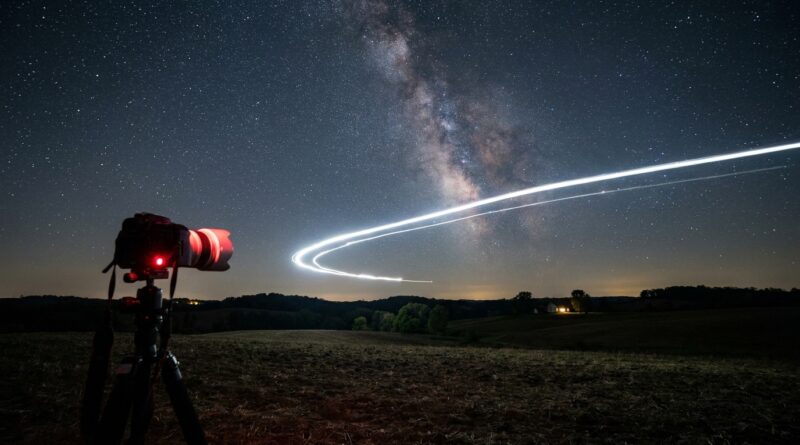
The Night The Sky Turned Sentient: Why A 21‑Second ‘Visual Wow! Signal’ Over Wisconsin Has UAP Hunters Arguing With Physics
You can only watch so many fuzzy orb videos before your eyes glaze over. That is the frustration here. Most viral UAP clips ask you to pick a side before they give you anything solid to check. This Wisconsin case is different. It is short, just 21 seconds. It was captured in infrared. And, most important, the people studying it published numbers, made an early identification, then corrected themselves when the math did not hold up. That matters. It means skeptics and believers can stop yelling past each other for a minute and argue over the same evidence. The result is not proof of aliens. Let’s keep our feet on the ground. But it is a genuinely odd sky event, and one of the cleaner cases tied to the search term Wisconsin visual wow signal unexplained infrared sky event 2026. If you are tired of social media mystery bait, this is the kind of case worth your time because it can actually be tested.
⚡ In a Hurry? Key Takeaways
- The Wisconsin 21-second infrared event is unusual because the observers corrected their first explanation and still could not match the object to a known satellite or aircraft.
- If you want to judge UAP clips better, start with cases that include timestamps, camera details, star references, and a published reconstruction of speed and altitude.
- This is interesting, not dangerous. The real value is learning how to sort one measurable anomaly from the daily pile of low-quality orb videos.
What actually happened over Wisconsin?
According to the case notes circulating in the Anomal community, the event was recorded as a brief infrared sky pass lasting 21 seconds over Wisconsin. The object appeared visually striking enough that researchers nicknamed it a “visual wow” signal. That phrase sounds dramatic, but the useful part is the paperwork behind it.
The Contact Project team reportedly did something rare in this space. They did not just post the clip and let the internet run wild. They tried to identify it, published an initial explanation, then went back and corrected that explanation when the geometry and timing did not fit. That one step raises the quality of the case right away.
A lot of UAP content falls apart because nobody wants to admit the first guess was wrong. Here, the correction is the story. If your first answer is “probably a satellite,” but your own later analysis says the speed, altitude, and lighting do not line up with a catalogued satellite track, then you have moved from hype into investigation.
Why this case stands out from the usual orb flood
It gives people the same numbers to argue about
That sounds small, but it is huge. Most online UAP fights are belief fights. One person says “obvious drone.” Another says “non-human craft.” End of discussion. This Wisconsin clip is different because it appears to come with measurable claims. How fast did the object move across frame? What altitude range makes sense? Was the lighting pattern consistent with reflected sunlight, heat bloom, or something else?
When people can check the same numbers, the conversation gets better. It gets less tribal. You can be skeptical without being dismissive. You can be curious without sounding gullible.
The team corrected its own mistake
This is the part I would underline if we were sitting at a kitchen table going through the case file. Self-correction is not a weakness. It is the closest thing this topic has to good hygiene.
If a research group says, “We thought this was X. Then we reran the data and X no longer fits,” that tells you they are at least trying to separate signal from wishful thinking. In plain English, they are acting more like investigators and less like promoters.
Where the physics fight starts
The argument is not really “Is it aliens?” The real argument is more basic. Can the observed motion, apparent brightness, and inferred altitude all belong to one ordinary thing we already know?
That is where people start bumping into physics.
If the object was low, then its apparent speed may become awkward for a conventional aircraft depending on the angle and camera tracking. If it was high, the lighting and infrared signature may stop making sense for a normal plane or known satellite. If it was a satellite, the path, timing, or illumination may not match the catalogues the team checked. That does not prove anything exotic. It just means the “easy answer” is not holding together cleanly.
Why infrared complicates things
Infrared footage can help because it picks up heat differences and can reveal objects invisible to the naked eye. It can also confuse people. Hot engines, atmospheric distortion, sensor bloom, and automatic image processing can make everyday things look weird fast.
That is why the supporting analysis matters more than the clip itself. A dramatic thermal dot means almost nothing by itself. A thermal dot tied to star position, timestamp, camera specs, and track reconstruction is a different beast.
What the Contact Project team seems to have done right
Based on the description of the case, there are three things worth praising.
1. They treated the first explanation as provisional
Good. That is how this should work. Initial IDs should be cheap and revisable.
2. They kept the case tied to measurable features
Also good. The useful questions are boring on the surface. What was the angle? What was the frame rate? What were the weather conditions? Which satellite databases were checked? Was ADS-B traffic nearby? Those questions are not sexy, but they are how you stop fooling yourself.
3. They ended up with a narrower mystery, not a bigger fantasy
This is important. A serious case does not explode into ten wild theories. It shrinks into one annoying unresolved problem. In this case, that problem appears to be that the object’s speed, altitude, and lighting do not fit neatly with known aircraft or catalogued satellites.
What could it still be?
Let’s be fair. “Unexplained” is not the same thing as “impossible.” There are still ordinary possibilities worth testing.
Uncatalogued or miscatalogued satellite
This happens. Public tracking data is good, not perfect. Military payloads, stale orbital elements, or timing mismatches can throw off an identification.
Aircraft seen under odd geometry
A plane moving toward or away from the observer can play tricks with perceived speed. Infrared can also flatten familiar cues that would normally let you say, “That is just a jet.”
Sensor artifact or processing effect
Some thermal systems sharpen, stabilize, or compress footage in ways that can create false impressions of acceleration, shape, or glow.
None of those are lazy debunks. They are the standard checklist. The point of the Wisconsin event is that, at least so far, those checks have not produced a clean fit.
How to read this case without getting played
If you want to get smarter about UAP stories, use this event like a template.
Ask for the chain of evidence
You want capture time, location, device type, original file if possible, and whether the footage was edited before release.
Ask what got ruled out, and how
“We checked satellites” is not enough. Which database? Which time window? What margin of error? Was local flight traffic checked too?
Pay attention to corrections
Counterintuitive, I know. But a case gets more credible when the investigators openly revise an earlier conclusion.
Separate weird from world-changing
A weird event can stay weird for a long time without rewriting physics. That is normal. Science is full of “we do not know yet.”
Why the Anomal community cares right now
The timing is a big part of the appeal. The Pentagon keeps releasing mixed-quality UAP material. Social feeds are full of clips with bad context and louder captions than evidence. People are hungry for one case that is current, strange, and still grounded enough to test.
That is what gives this Wisconsin visual wow signal unexplained infrared sky event 2026 its value. It is not just another shiny mystery. It is a case where the paper trail matters as much as the image.
At a Glance: Comparison
| Feature/Aspect | Details | Verdict |
|---|---|---|
| Evidence quality | Short 21-second infrared clip, but tied to reconstruction efforts and a documented correction of the first ID. | Stronger than a random viral orb clip. |
| Conventional explanations | Satellite, aircraft, or sensor artifact remain possible, but reported speed, altitude, and lighting do not neatly fit the usual boxes. | Still open. No clean match yet. |
| What readers should do with it | Use it as a model for evaluating UAP claims by data quality, not emotional punch. | Worth watching closely, but not proof of anything extraordinary by itself. |
Conclusion
The best thing about this case is not that it gives either side an easy win. It does the opposite. It forces everyone into the same uncomfortable but useful place, looking at one carefully documented event and asking what the numbers actually allow. That helps the Anomal community today because it gives readers a single, rigorously documented case from the last 24 hours that is both genuinely weird and scientifically tractable. By unpacking how the Contact Project team corrected their own initial mistake and still ended up with an object whose speed, altitude and lighting do not line up with any catalogued satellite or aircraft, we get something better than another viral mystery clip. We get practice. Practice in thinking like investigators, not just spectators. And right now, with official UAP dumps and low-value orb content flooding every feed, that is the kind of weird story worth keeping on your radar.