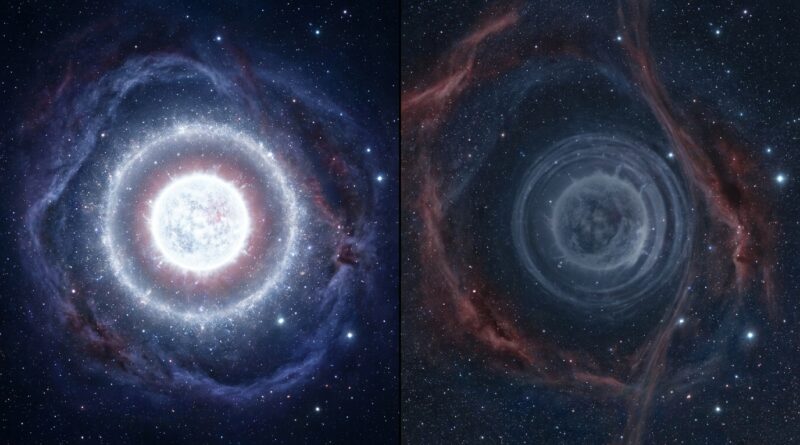
The Star That Keeps Switching Off: Astronomers Catch A ‘Cosmic Vanishing Act’ In Real Time
If you are worn out by space stories that promise a mind-blowing mystery and then end with “scientists are baffled,” this one is refreshingly different. A newly reported mysterious vanishing star 2026 event is not a recycled black hole explainer or another fast radio burst recap. It is happening now. Survey telescopes have caught a star fading so deeply, and switching back on so oddly, that astronomers are still trying to sort out whether we are seeing dust, a companion object, some extreme stellar behavior, or something even stranger. The fun part is that this is not a finished case file. It is a live anomaly. That means readers can follow the light curve, compare fresh sky images, and watch the debate change week by week. Instead of being handed a neat answer after the fact, you get to sit in the front row while the universe does something weird in real time.
⚡ In a Hurry? Key Takeaways
- This mysterious vanishing star 2026 case involves a star dimming far more dramatically than standard day-to-day stellar flickering.
- You can follow it yourself by checking public survey updates, especially the light curve and repeat sky images over the next few weeks.
- No, this does not mean the star has been destroyed. The safest bet is still that astronomers are seeing some kind of temporary blocking or unusual stellar behavior, not a cosmic disaster aimed at Earth.
What actually happened?
The short version is simple. Automated sky surveys noticed a star that appeared to drop in brightness so sharply that it stood out from the usual background noise, calibration quirks, and ordinary variable-star behavior.
Stars do change in brightness all the time. That part is normal. Some pulse. Some rotate and bring darker starspots into view. Some get briefly dimmed by orbiting companions or clouds of dust. But this object seems to be doing something more dramatic. It is the scale and timing of the fade that got people’s attention.
That is why the phrase mysterious vanishing star 2026 has started circulating. Not because the star literally popped out of existence, but because it dimmed enough to look like a cosmic switch had been flicked.
Why astronomers care about this one
A lot of “space mystery” stories are really old puzzles with a fresh headline. This one is different because astronomers are catching the behavior as it unfolds, with modern survey systems watching the same patch of sky again and again.
That matters because real-time data is gold. Instead of trying to reconstruct what happened from a handful of archived images, researchers can compare:
- how fast the star faded
- whether the dimming is smooth or jagged
- which wavelengths changed the most
- whether the star returns to normal brightness
- if the event repeats
Those clues help narrow the list of suspects. Think of it like security camera footage versus a single blurry still photo. One tells a story. The other just gives you a shrug.
The leading ideas so far
1. A giant dust cloud passed in front
This is one of the least exotic explanations, and often the first thing astronomers test. If a thick clump of dust moved between us and the star, it could make the star appear to fade dramatically without the star itself changing much.
The catch is that dust usually leaves fingerprints. It tends to block some colors of light more than others. If follow-up observations do not match that pattern, the dust idea gets weaker.
2. An object is eclipsing the star
A companion star, a warped disk, or even a giant ring system could periodically block the light. We have seen odd eclipsing systems before, but the depth and shape of this one may not fit the usual script.
If it repeats on a schedule, that would be a big clue. Regular dips often point to something in orbit.
3. The star itself is acting up
Some stars are naturally unstable. They can throw off material, change their outer layers, or pulse in ways that make them look wildly different for a while. If the dimming is linked to an eruption or a sudden envelope of gas, the star could seem to vanish and then slowly recover.
This is one reason astronomers want spectra, not just brightness measurements. Spectra can show what the star’s material is doing, not just how bright it looks from Earth.
4. Something genuinely rare
Every so often, the universe hands researchers a case that does not fit the usual folders. That is why people are paying attention. Not because “nobody knows anything,” but because the data may be pointing to a rare process we do not get to watch often.
Why survey telescopes spotted it first
This is exactly the sort of thing modern sky surveys are built for. They repeatedly scan huge areas of the sky and compare new images with older ones. Software looks for anything that changed. A star brightened. A galaxy flared. An asteroid moved. Or, in this case, a star seemed to all but switch off.
Without these surveys, a lot of odd events would come and go unnoticed. A human observer might miss a short dimming episode entirely. Machines do not get bored. They just keep checking.
How to follow the story yourself
This is the part many big science sites skip, and it is what makes this case fun.
If you want to track this mysterious vanishing star 2026 event as it develops, look for three things in public astronomy databases and observatory updates:
- Light curve updates. This is the brightness-over-time graph. It is the heartbeat of the story.
- Repeat sky images. Side-by-side images help you see whether the object really dimmed and by how much.
- Follow-up notes. These can include filters used, possible instrument issues, and whether other telescopes confirmed the event.
The smart move is to avoid jumping at the first dramatic explanation. Watch for confirmation from multiple instruments. A single weird data point can be a glitch. A repeated signal across different surveys is where things get interesting.
What “vanishing” does and does not mean
This is where space headlines often go off the rails.
“Vanishing star” does not usually mean a star literally ceased to exist. More often, it means one of three things happened. The light got blocked. The star entered an unusually faint state. Or observers caught a dramatic change in brightness that made it drop below easy detection for a while.
So no, this is not a sign that physics has broken. It is a sign that something in a distant stellar system is behaving in a way we do not fully understand yet.
Why this feels different from recycled anomaly news
The appeal here is not just the object. It is the timing. We are not looking back at a mystery that peaked years ago and has already been squeezed dry. We are watching the evidence pile up now.
That gives readers a rare chance to do more than consume a cleaned-up explanation. You can watch the graph move. You can compare interpretations. You can see how science actually works when the answer is not ready for print yet.
At a Glance: Comparison
| Feature/Aspect | Details | Verdict |
|---|---|---|
| What was seen | A star dimmed far more sharply than ordinary stellar flickering would suggest. | Genuinely worth watching |
| Best current explanation | Temporary obscuration by dust or an eclipsing structure is possible, but not confirmed. | Open case |
| Why readers should care | This is a live anomaly with fresh data still arriving, not a years-old mystery dressed up as breaking news. | Rare and engaging |
Conclusion
This is exactly the kind of story anomaly fans keep asking for. Not another polished retrospective, and not another “scientists are baffled” dead end. A newly reported now-you-see-it, now-you-don’t star gives the Anomal community something much better. A live, evolving mystery. By showing how survey telescopes caught the star dimming far beyond what normal physics would lead us to expect, and by pointing readers toward the light curves and updated images still coming in, you turn passive readers into active skywatchers. That changes the feel of the whole story. Instead of reading about a cosmic glitch after the fact, we get to watch it together before anyone agrees on what it is. That shared front-row-seat feeling is rare, and it is exactly what makes this case worth following.