Something In Earth’s Core Just Shifted – And Geophysicists Can’t Explain The ‘Speed-Up’
You are not wrong to feel whiplash from the headlines. One week Earth’s core has “stopped.” The next week it has “reversed.” Now people are talking about a new speed-up. It sounds like the setup for a disaster movie, but the real story is stranger and much less dramatic. What scientists are actually tracking is not the whole planet grinding to a halt. They are measuring tiny changes in how the solid inner core seems to rotate relative to the rest of Earth, using earthquake waves as their ruler. That is a real scientific puzzle. It is also something most of us will never notice in daily life. The fresh twist in the earth inner core mystery 2026 story is that newer measurements suggest the long slowdown may not be a simple straight trend. It may be wobbling, pausing, or slightly changing pace again. That matters for geophysicists. For you, it means: pay attention, but do not panic.
⚡ In a Hurry? Key Takeaways
- The “speed-up” does not mean Earth is breaking apart. It means scientists see possible changes in the inner core’s relative motion deep below us.
- If you want the real signal, watch peer-reviewed seismic studies and public earthquake data, not viral social posts or disaster-style thumbnails.
- There is no evidence this poses an immediate danger to your home, health, devices, or the planet’s day-to-day stability.
So what actually shifted?
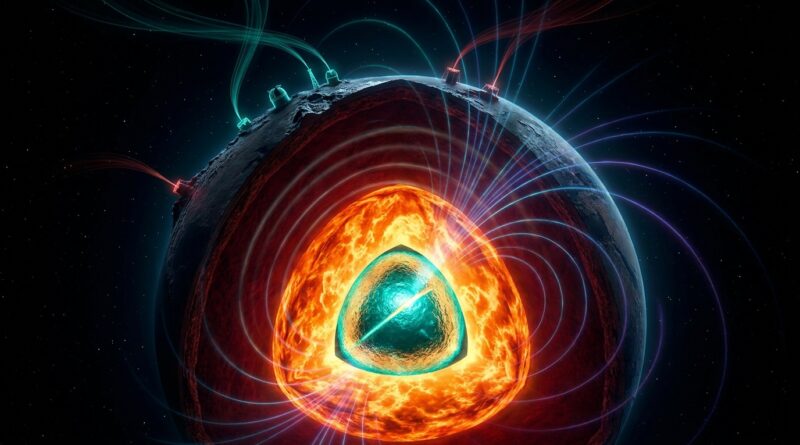
At the center of Earth, there is a solid inner core made mostly of iron, surrounded by a liquid outer core. Scientists think the inner core can rotate at a slightly different rate than the mantle and crust where we live. Not wildly different. Just a little.
That tiny difference is enough to show up in careful measurements of seismic waves from earthquakes. When similar earthquakes happen and their waves pass through the core along nearly the same paths, researchers can compare the arrival times. If those times change in a consistent way over years, something down there may have shifted.
That is the heart of the current mystery. Some teams have argued the inner core had been slowing relative to Earth’s surface. Now fresh readings suggest the trend may be changing again, or at least not behaving as neatly as earlier headlines implied.
What “stopped” or “reversed” really means
This is the part headlines usually skip.
When researchers say the inner core “stopped,” they usually mean its relative motion, compared with the mantle, may have reached a point where it was no longer moving ahead in the same way as before. When they say “reversed,” they mean the relative drift may have changed direction.
That is very different from the whole core literally freezing in place or spinning backward like a broken top.
Think of two moving walkways at an airport. If one slows down relative to the other, your position changes even though both are still moving through the building. That is closer to what scientists mean here.
Why geophysicists are arguing about it
The inner core is hard to study because no one can go there, photograph it, or drop a sensor into it. Everything is indirect. Scientists are using earthquake echoes, wave timing, and models of how materials behave under insane pressure and heat.
That means a few things can be true at once:
The signal is real
Many researchers agree something unusual is happening in the deep interior, and that the inner core is not just a perfectly locked, simple ball.
The exact explanation is still unsettled
Different teams use different earthquake sets, different statistical methods, and different assumptions. Some think the main effect is rotation. Others think part of the signal could come from changes in the inner core’s shape, surface texture, or the layers around it.
“Speed-up” may be oversimplified
Nature loves messy systems. The new hint may not mean the core suddenly hit the gas. It could mean the slowdown is uneven, cyclical, or mixed with other changes that mimic speed shifts in seismic data.
Does this affect your life?
Right now, not in any direct way you would notice.
It is not expected to cause instant earthquakes, flip the magnetic field tomorrow, ruin GPS next week, or change the length of your day in a way your phone clock can detect. Earth’s deep interior does influence the magnetic field and the planet’s long-term behavior, but those are giant systems working on scales far beyond a scary headline cycle.
If you were hoping for a clean yes or no, here it is. No, this is not movie-level catastrophe. Yes, it is a real and fascinating anomaly in frontier science.
Why the story keeps sounding scarier than it is
Because “inner core relative rotation inferred from seismic phase timing” does not get clicks.
“Earth’s core has stopped” does.
The problem is that the dramatic version strips away the one detail that matters most. Relative motion is not the same as a planetary emergency. Once you put that missing context back in, the story becomes less terrifying and more interesting.
What the fresh 2026 angle seems to be
The earth inner core mystery 2026 angle is not that scientists discovered a brand-new apocalypse. It is that updated measurements may be hinting the earlier slowdown picture was incomplete. Instead of one clean, simple trend, researchers may be seeing a wobble, a phase change, or a more complicated pattern in how the inner core and surrounding layers interact.
That is a big deal scientifically because it tells us our model of the planet’s center may still be too simple. It also means every new dataset matters.
How this is measured, in plain English
Scientists mostly use earthquake waves. Here is the simple version:
1. An earthquake happens
It sends waves through Earth in many directions.
2. Some waves pass through or near the inner core
Those waves carry clues about the materials and structures they crossed.
3. Researchers compare repeated paths
If two similar quakes send waves through almost the same route years apart, tiny timing differences can suggest the deep interior changed.
4. They test models
Then comes the hard part. Was it rotation? Structural change? A data artifact? Something in the mantle instead? This is where the arguments start.
What you can actually track yourself
This is the fun part for the Anomal community. You do not have to take every headline on faith.
Watch the source papers, not the summaries
If a story names a journal, author, or university team, that is your trailhead. Read the abstract. You do not need to understand every equation to catch the difference between “suggests” and “proves.”
Use public earthquake data
The USGS earthquake catalog and IRIS seismic resources are open to the public. You will not solve the core mystery from your couch in one night, but you can follow the same raw event stream professionals use.
Look for repeated-event studies
Stories worth your time often mention “repeating earthquakes,” “PKIKP waves,” or “travel-time changes.” Those phrases usually signal a real seismology-based claim rather than pure clickbait.
Check whether scientists agree on the mechanism
A solid report will tell you if the observation is stronger than the explanation. That is common in science. We can see something odd before we fully know why it is happening.
Red flags that a core story is probably clickbait
Be skeptical if you see any of these:
- Claims that the core change will immediately destroy the magnetic field
- No mention of seismic data, earthquakes, or published research
- Language like “scientists stunned” with no named scientists
- A prediction of instant global disasters
- Confusing the inner core with the outer core or with Earth’s whole spin
What scientists still do not know
This is what makes the story genuinely interesting.
Is the change truly rotational?
The data may point to changing relative motion, but some researchers think structural changes inside the core could imitate that signal.
Is there a cycle?
Some studies have suggested multi-year or multi-decade patterns. The new “speed-up” talk may support that idea, or complicate it.
How tightly is the inner core coupled to the rest of Earth?
Gravity, magnetic forces, and fluid motion in the outer core may all be involved. We still do not have a neat final answer.
What does it tell us about the magnetic field?
The liquid outer core drives the geodynamo that helps create Earth’s magnetic field. The inner core likely plays a role, but connecting small seismic timing shifts to big magnetic consequences is not simple.
Why this matters even if it does nothing to your morning commute
Because it is one of the few live mysteries about the physical planet beneath your feet. We know more about many distant objects in space than we do about some processes at Earth’s center. That alone is humbling.
And there is value in learning how to hold two ideas at once. This is scientifically important. It is also not an emergency. That balance is hard to find online.
At a Glance: Comparison
| Feature/Aspect | Details | Verdict |
|---|---|---|
| What changed | Fresh seismic comparisons suggest the inner core’s long slowdown may be wobbling or shifting again. | Real scientific signal, still debated. |
| Risk to everyday life | No evidence of immediate danger, device failure, sudden magnetic collapse, or disaster-movie effects. | Low practical risk right now. |
| Best way to follow it | Track peer-reviewed seismic studies, USGS quake data, and whether researchers agree on interpretation. | Worth following if you like real mysteries, not hype. |
Conclusion
The best way to read the earth inner core mystery 2026 story is with curiosity and a steady pulse. Something odd may indeed be shifting deep inside the planet. That is real. But the scary version flying around online usually says more about the internet than about Earth. For the Anomal community, this is exactly the kind of mystery worth keeping on the board. It helps sort real anomaly from clickbait at a moment when fresh measurements hint the inner core’s long-term slowdown may be wobbling again. Better yet, it is a mystery you can track through open data, published studies, and careful reporting. That turns a vague scary headline into a living science story you can actually follow, question, and talk about today instead of wasting time on another recycled UFO clip.