The Pentagon’s ‘Living Lights’: Inside the Newly Declassified UFO Orbs That No One Can Explain
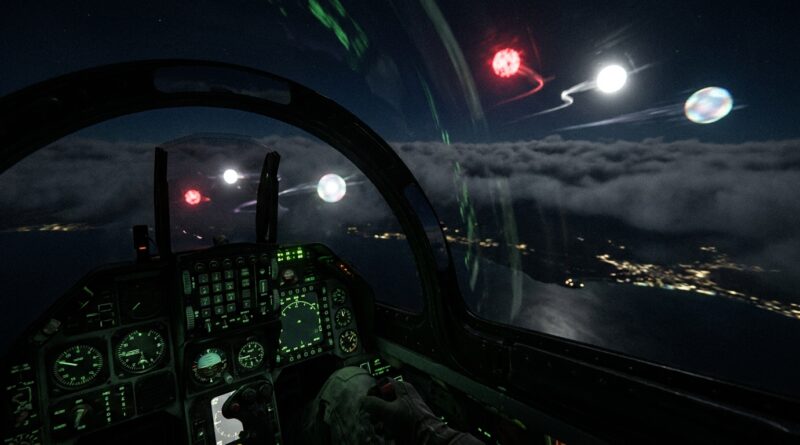
You are not crazy if you feel burned out by UFO news. Most of what floods your feed is the same loop. A glowing dot. A dramatic caption. Ten people yelling “disclosure” before anyone has read the actual file. That is exactly why the newly declassified Pentagon UFO orb files matter. Not because they prove aliens, and not because every light in the sky is a mystery, but because a small group of these cases comes with the stuff that usually changes the conversation. Multiple sensors. Trained witnesses. Flight safety concerns. Repeating behavior patterns. What has scientists quietly on edge is not that the videos look spectacular. Some do not. It is that a few of these so-called living lights keep showing up in ways that are hard to dismiss as balloons, drones, lens artifacts, or simple pilot error. Once you strip away the hype, a handful of orb incidents still refuse to sit neatly in any normal box.
⚡ In a Hurry? Key Takeaways
- The newly declassified Pentagon UFO orb files do not prove extraterrestrials, but a few orb cases remain unexplained even after sensor review.
- Start with cases that include radar, infrared, visual witnesses, and time-stamped reports. Those are the ones worth your attention.
- Most glowing blobs online are still noise, so reading the source material matters if you want to separate real anomalies from recycled hype.
Why these orb files are getting so much attention
“Orb” has become one of those words that means almost nothing online. It gets slapped onto everything from Venus to camera glare to hobby drones. But in Pentagon and military reporting, the term is often much narrower. It usually points to a small, round, luminous object that appears to move in ways observers cannot quickly explain.
The reason the newly declassified Pentagon UFO orb files are different is simple. These are not just random clips passed around by anonymous accounts. Some are tied to operational reporting, pilot observations, electro-optical sensors, infrared imaging, or radar returns. That does not make every case extraordinary. It does make them harder to wave away with a shrug.
This is also why orb cases keep surviving each new wave of official review. Triangles often turn into bokeh. Fast movers can turn out to be parallax. Strange lights near civilian traffic lanes can end up being aircraft seen from odd angles. Orbs, frustratingly, are sometimes what is left after the easy explanations get used up.
What people mean by “living lights”
The phrase sounds dramatic, but it captures a pattern that shows up again and again in old and new reports. Witnesses describe lights that do not behave like a dumb object drifting with the wind. They hover. They pace aircraft. They brighten and dim. They split apart or merge. They appear aware of nearby movement. Then they vanish, accelerate, or simply blink out.
That does not mean they are alive in the biological sense. It means they act less like debris and more like something controlled, responsive, or powered in a way observers do not understand.
Across decades, that pattern is one reason orb reports keep pulling researchers back in. If you read enough of the serious files, the same odd details recur. Small size. Bright spherical appearance. Silent movement. Abrupt changes in speed or direction. Minimal visible structure. Poor fit with normal aviation lighting.
The three buckets that matter most
When sorting through these files, it helps to think in three buckets.
1. Solved or mostly solved
These are the cases that look spooky until context arrives. Sensor bloom, targeting pod quirks, star fields, balloons, airborne trash, and drones live here. They matter because they keep us honest.
2. Unclear but ordinary is still likely
These are weak-data cases. Maybe one witness. Maybe a short clip. Maybe no weather record or no range estimate. They stay open mostly because the file is thin.
3. High-strangeness with support
This is the bucket that keeps people up at night. Not because it is automatically alien, but because the usual off-ramp is missing. These are the orb incidents with multiple trained observers, strange motion, good timestamps, and sometimes radar or infrared support.
If you only care about the strongest material, live in bucket three.
What is actually in the strongest orb cases
The most interesting files tend to share a few traits.
Multiple witness layers
A pilot sees it. A weapons systems officer sees it. Ground personnel log it. Sometimes air traffic or shipboard teams track something at the same time. One person can be fooled. A stack of observers is harder to dismiss.
More than one sensor
Video alone is weak. Radar alone can be glitchy. Infrared alone can be misleading. Put them together, even imperfectly, and the picture gets stronger. That is when investigators start asking better questions.
Behavior that breaks the usual script
Not just “it moved fast.” Lots of things can seem fast on a screen. The better cases involve pacing, station-keeping in difficult conditions, abrupt directional changes, unusual climb or drop profiles, or appearing and disappearing without the gradual movement you would expect from a normal craft.
No obvious propulsion cues
No wings. No exhaust plume. No navigation lights in the standard pattern. No rotor sound reported at close range. Again, that does not equal non-human technology. It simply removes easy answers.
The quiet scientific problem
Scientists are not rattled because a blob in a video looks weird. They are rattled when an object appears to have measurable behavior that does not fit the expected physics of known platforms, or when the available data are good enough that a shrug starts to feel intellectually lazy.
That is the real story in the newly declassified Pentagon UFO orb files. Not proof. Not certainty. Tension. A few cases are sitting in an uncomfortable zone where the evidence is too thin for a grand claim, but too solid for a casual dismissal.
This is also where the public conversation often goes off the rails. People jump from “unexplained” to “explained by aliens” in one leap. Serious researchers do not do that. They treat unexplained as a status, not a conclusion.
Patterns that keep repeating across decades
One of the most striking things in orb reporting is how old some of the behavior patterns are. The hardware has changed. The witnesses have changed. The sensors got better. But certain descriptions keep resurfacing.
- Small glowing spheres seen near water, training ranges, or remote airspace
- Objects that hold position in winds that should push balloons or lightweight drones
- Lights that seem to interact with aircraft, then depart rapidly
- Short visibility windows, often with no clear transition in or out
- Weak or inconsistent signatures across different sensors
If you have been following recent cases around lakes and nighttime sightings, you can see why reports like The Lake That Glows After Midnight: Why Newly Declassified Orb Videos Have UAP Researchers Obsessed have grabbed so much attention. Water-adjacent orb sightings are one of those recurring motifs that researchers keep circling back to, not because every case is good, but because the best ones seem stubbornly weird.
Why video alone keeps fooling people
This part is important. A lot of orb footage looks dramatic precisely because cameras are bad at distance, scale, and bright points of light against dark backgrounds.
Autofocus hunts. Heat signatures bloom. Compression adds strange edges. Stabilization can create false motion. Background reference disappears at night. A tiny object close to the lens can look like a massive object far away.
That is why the strongest newly declassified Pentagon UFO orb files are not valuable just because they include video. They matter when the video is paired with logs, pilot statements, radar notes, infrared readouts, weather context, and location data.
If a clip is all you have, stay skeptical. If a clip is part of a larger incident package, pay closer attention.
What these files do not show
They do not show a clean, cinematic reveal of a structured alien craft. They do not give us a neat answer. They do not prove a cover-up by themselves.
And frankly, that is why many people miss the significance. We are trained by movies and social media to expect one giant moment. Real anomaly research is messier. It is often about a stack of imperfect cases that point to a genuine problem in the data.
The orb files are interesting because they leave residue. Questions that remain after review. Incidents where investigators still cannot close the case with confidence.
How to read the newly declassified Pentagon UFO orb files without getting played
If you want to avoid conspiracy quicksand, use this simple filter.
Ask what the source is
Is it a declassified report, a memo summary, an official case slide, or just a clip reposted ten times with no origin?
Check for sensor support
Was there radar? Infrared? Electro-optical tracking? More than one observer?
Look for mundane elimination
Did the file rule out balloons, drones, aircraft traffic, astronomical objects, and known sensor artifacts?
Notice what is missing
Range estimates, altitude, speed, weather, camera type, and witness count all matter. Missing basics often mean you are dealing with noise.
Do not confuse unresolved with impossible
An unresolved case is a live question, not a final answer.
Why some orb incidents remain so stubborn
Because they sit in the dead center of a technical blind spot.
Many are too small, too bright, too short-lived, or too oddly placed for clean identification. Sensors optimized for one job can perform badly at another. A military system built to track jets may not classify a tiny luminous object very well. Night operations reduce visual certainty. Range errors distort apparent speed. Classification rules can also hide useful context from public release.
So you end up with an object that is clearly there, clearly observed, but still not clearly understood.
That is not satisfying. It is, however, very real as an investigative problem.
What the smart read is right now
The smart read is not “the Pentagon admitted alien orbs.” That is lazy.
The smart read is this. The third wave of releases adds more weight to a narrow but persistent category of UAP reports involving luminous spherical objects that sometimes appear to demonstrate unusual behavior. Most online discussion will overstate the case. But a small subset of incidents deserves serious attention because the data stack is better than critics admit.
In other words, the middle ground is where the truth probably starts. Not blind belief. Not blanket dismissal.
At a Glance: Comparison
| Feature/Aspect | Details | Verdict |
|---|---|---|
| Weak orb clip | Single video, no metadata, no witness detail, no sensor backup | Mostly noise until proven otherwise |
| Moderate case file | Witness report plus partial imagery or limited operational context | Interesting, but not enough for strong claims |
| High-strangeness orb incident | Multiple observers, time-stamped reporting, unusual motion, and radar or infrared support | Best reason to take the files seriously |
Conclusion
If you take one thing from this, let it be this. The newly declassified Pentagon UFO orb files are not a magic answer key. They are better than that. They are a reality check. In the middle of a hundred hot takes, they give the Anomal community something badly needed right now. A way to read the source material first, separate radar-backed anomalies from recycled hype, notice the behavior patterns that keep repeating across decades, and understand why a handful of these glowing spheres still resist neat explanation even after modern sensor analysis. That is real value. It will not satisfy people who want instant certainty. But if you care about what is actually in the files, and not just what gets shouted online, it is the only place worth starting.