The Ice Shelf That Won’t Stop Humming: Are Antarctic ‘Heartbeat Quakes’ Pointing To Something Under The Ice?
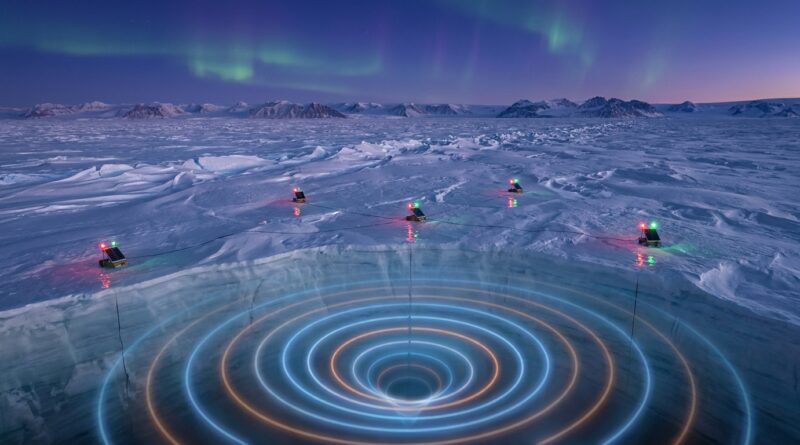
If you are worn out by fuzzy phone videos and another round of “what was that light,” this Antarctic story is a relief. It feels solid. Measurable. Real. Over the last 24 hours, seismic stations in West Antarctica have reportedly picked up a repeating vibration pattern, a kind of unexplained antarctic seismic heartbeat under the ice, and it is not lining up neatly with the usual suspects like normal ice cracking, glacial sliding, or a routine tectonic rumble. That does not mean something sci-fi is hiding below the shelf. It does mean there is a live anomaly with data attached to it, which is a lot more useful than internet guesswork. Right now, the most honest answer is simple. Nobody knows yet. And that is exactly why this case matters. It gives curious readers something better than recycled mysteries. It gives them a fresh signal to watch, question, and test in real time.
⚡ In a Hurry? Key Takeaways
- The reported Antarctic “heartbeat” is unusual because it repeats in a pattern that does not neatly match common icequakes or simple glacial slip.
- Start with the data, not the hype. Track updates from seismic networks, compare timing and frequency patterns, and look for expert comments before jumping to conclusions.
- The real value here is not wild speculation. It is having a fresh mystery tied to measurable signals that can be tested as more evidence comes in.
What is actually being reported?
The core claim is that seismic monitors in West Antarctica are picking up a repeating underground vibration. Not a one-off shake. Not random noise. A pattern.
That is why people are calling it a “heartbeat.” The term is dramatic, sure, but it points to the important part. Repetition. Rhythm. A signal that seems to come back again and again.
In seismology, that matters. Repeating signals often suggest a process, not just an accident. Think of it like hearing the same knock in your plumbing every few minutes. One bang might mean nothing. A steady pulse means something is driving it.
The problem is that Antarctica already makes lots of noise. Ice shelves flex. Glaciers grind. Wind can interfere with instruments. Ocean waves can send vibrations inland. So “weird” does not automatically mean “unknown force under the ice.” It just means scientists have not matched it cleanly to a known cause yet.
Why this feels different from the usual mystery story
Most viral anomalies fall apart fast. The clip is too short. The source is unclear. The image is blurry. Everyone argues, and nobody can measure much of anything.
This one is different because the interesting part is not a photo. It is a signal. That changes the whole conversation.
Signals can be logged, compared, filtered, and checked against weather, tides, known ice movement, and regional seismic activity. That is the kind of mystery that lets regular readers act more like patient investigators than excited spectators.
And honestly, that is refreshing.
What could cause an unexplained antarctic seismic heartbeat under the ice?
There are several plausible natural explanations. None should be ignored just because the pattern sounds strange.
1. Ice shelf flexing
Ice shelves are not frozen parking lots. They bend. They strain. They respond to ocean swell, tides, temperature shifts, and internal fractures. If the geometry is just right, a shelf can produce repeating vibrations a bit like a giant frozen drum.
2. Subglacial water movement
Water under ice can move through channels, pools, and drainage systems. If pressure builds and releases in cycles, that could create repeating tremor-like events. This is one of the more interesting possibilities because subglacial water systems can be active, hidden, and surprisingly complex.
3. Glacial stick-slip motion
Sometimes ice does not move smoothly. It sticks, then jerks, then sticks again. If that cycle repeats with some regularity, seismometers may record a pulse-like sequence. That would still be unusual, but not supernatural.
4. Interaction with ocean tides or waves
Antarctica is tightly linked to the surrounding ocean. Long-period wave action, tidal forcing, or resonance effects could potentially create a repeating seismic pattern. If the timing matches tidal cycles, that would be an important clue.
5. Volcanic or geothermal activity
This is the headline-grabber, and it should be handled carefully. West Antarctica does have volcanic history and geothermal hotspots. But a repeating signal does not automatically point to magma movement. Scientists would need much stronger evidence, including signal depth estimates, frequency analysis, and confirmation from multiple stations.
What makes scientists pause before naming a cause
Because Antarctica is messy data territory.
Remote sensors deal with harsh weather, power limits, communication delays, and interference from the environment. A strange pattern may be real, but before anyone can explain it with confidence, they need to answer some basic questions.
- Is the signal showing up on multiple instruments?
- Is it local to one station or spread across a wider area?
- What frequencies are involved?
- Does it line up with tides, storms, or known ice motion?
- Has anything similar appeared in older data but gone unnoticed?
That last one is a big deal. Sometimes a “brand new” mystery turns out to be an old pattern that only looks new because people are finally paying attention.
How to follow this story without getting fooled
If you want to track this smartly, start with a few ground rules.
Look for primary data references
If a post talks about seismic activity, it should point to actual stations, network data, spectrograms, waveforms, or comments from polar researchers. If it does not, be cautious.
Watch for the difference between “unexplained” and “unexplainable”
Those are not the same thing. “Unexplained” means the work is still happening. “Unexplainable” is usually something people say when they want to skip that work.
Check whether the pattern repeats over days, not just hours
A 24-hour anomaly is interesting. A multi-day repeating signal is much more useful. Duration helps separate random noise from a real process.
Pay attention to frequency and timing
If experts mention narrow-band tremor, harmonic behavior, or repeating intervals, that is where the real clues live. The shape of the signal matters more than the spooky nickname.
Why the “heartbeat” label catches people so fast
Because humans are built to notice rhythm. We hear a pulse and we assume agency. Something alive. Something mechanical. Something intentional.
But nature produces rhythms all the time. Geysers do it. Volcanoes do it. Ice does it. Even bridges and buildings can hum in patterns under the right conditions.
So yes, the label is catchy. Just do not let it do all the thinking for you.
What readers can do right now
You do not need a lab coat to follow a seismic mystery well. You just need a decent filter for nonsense.
- Save claims that include timestamps, station names, or images of waveforms.
- Compare reports from science-focused accounts rather than viral meme pages.
- Note whether experts are talking about ice dynamics, tides, or geothermal sources.
- Keep a simple timeline. When did the pattern begin, change, weaken, or stop?
- Treat dramatic certainty as a red flag, especially this early.
This approach keeps the fun intact while protecting you from the usual internet pile-on.
What would make this story much bigger?
A few things.
First, confirmation that multiple stations are recording the same pattern in a way that lets researchers triangulate a source area. Second, evidence that the signal is persistent and not tied to a short-lived weather or ocean event. Third, published comments or early technical notes from teams familiar with Antarctic seismic noise.
If those pieces show up, then this moves from “interesting chatter” to a serious live geophysical puzzle.
At a Glance: Comparison
| Feature/Aspect | Details | Verdict |
|---|---|---|
| Current evidence | A repeating seismic pattern has reportedly appeared in West Antarctica and does not fit neatly into simple, everyday explanations yet. | Interesting, but still early. |
| Most likely explanations | Ice shelf flexing, subglacial water flow, stick-slip motion, tidal forcing, or other natural geophysical processes. | Natural causes remain the smart first bet. |
| Best move for readers | Follow primary data, expert interpretation, and multi-day updates instead of viral clips and instant theories. | Stay curious, stay grounded. |
Conclusion
This is what makes the unexplained antarctic seismic heartbeat under the ice worth your attention. It is not another light in the sky with no scale, no source, and no way to check the story. It is a fresh, unfolding deep-earth mystery that is still firmly in the “no one knows yet” phase. That is rare. Better still, it is tied to live seismic data, which means the weirdness can be tracked, questioned, and tested. For readers who want something more solid than recycled UFO chatter, this is a much better focal point. You get the thrill of a real anomaly, plus practical ways to follow it without drifting into fantasy. In other words, this is a chance to think like a field investigator. Watch the data. Compare explanations. Stay open, but make every claim earn its place.