The Hum That Won’t Go Away: Why A Worldwide Low‑Frequency Drone Is Suddenly Spiking Again
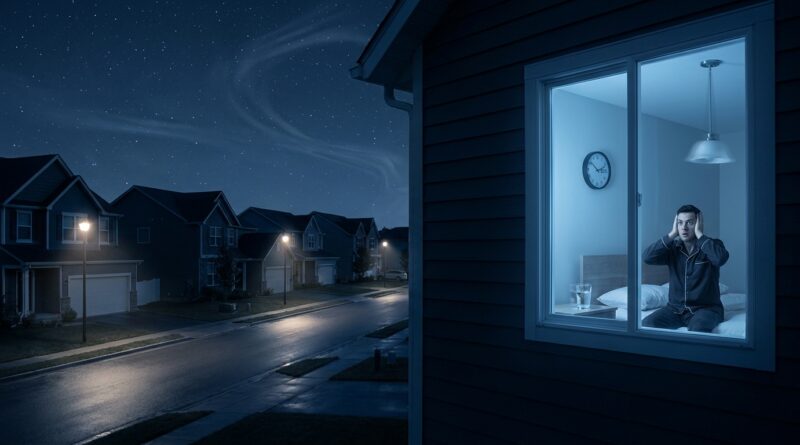
You wake up at 3 a.m. sure a truck is idling outside. Only there is no truck. The sound is a deep, stubborn rumble, more felt than heard. It can make windows buzz, beds vibrate and your chest feel strangely tight. Then you try to record it, and the recording sounds almost normal. That is the maddening part. If you have been hearing this mysterious global hum unexplained low frequency noise, you are not imagining the frustration. Reports are climbing again across cities, suburbs and small towns, and many people say the pattern feels familiar. Nighttime. Indoors. Hard to pinpoint. Easy for other people to dismiss. The good news is that there are a few grounded explanations worth taking seriously, a few wild ones worth labeling clearly, and some practical ways to document what is happening without jumping straight to panic or self-doubt.
⚡ In a Hurry? Key Takeaways
- The recent spike in reports likely has multiple causes, including industrial noise, building vibration, atmospheric conditions and human hearing quirks, not one single worldwide source.
- Start a simple hum log with time, location, weather, nearby machinery and whether others heard it. That makes your report far more useful.
- If the hum comes with headaches, pressure, dizziness or obvious home vibration, rule out local safety issues first, especially HVAC faults, generators and gas or utility equipment.
Why this low hum feels so real, and so hard to prove
Low-frequency sound is sneaky. It travels farther than higher-pitched noise, slips through walls more easily and can seem louder indoors than outside. That is because rooms, floors, vents and windows can act like little amplifiers.
It also behaves differently from the sounds most phones are built to capture. Phone microphones often filter out deep bass, compress audio or focus on voices. So when people say, “I recorded it and it vanished,” that is not strange at all. It is common.
Another wrinkle is human hearing itself. Some people are much more sensitive to low-frequency vibration than others. Two people can stand in the same room and have very different experiences. That does not automatically mean one of them is wrong.
Why reports seem to be spiking again
There are a few likely reasons this mystery seems louder right now.
1. More people are comparing notes in real time
What used to stay a local complaint now spreads fast through neighborhood groups, Reddit threads and map-based reporting sites. Once a cluster appears, more people start listening for it. That can reveal a real pattern, but it can also pull in unrelated sounds that get lumped together.
2. Weather and seasonal conditions matter
Temperature inversions, still air and damp night conditions can carry low sounds farther than usual. A factory, port, rail yard, highway or pumping station that is barely noticeable in one week can suddenly sound like it moved next door.
3. Modern infrastructure is noisier than many people realize
Data centers, warehouse fans, backup generators, industrial refrigeration, heat pumps, electrical substations and even distant construction equipment can all create a deep drone. You may never see the source. You just feel the result.
4. Homes themselves can turn small noise into big misery
Ductwork, loose window frames, metal vents, crawlspaces and hollow walls can resonate at certain frequencies. That means a modest outside hum can become an in-house amplifier test at 3 a.m.
The best working explanations, from most grounded to most speculative
Local industrial or mechanical sources
This is still the strongest explanation in many cases. Common culprits include HVAC systems, rooftop units, water pumps, diesel generators, ventilation fans, traffic corridors, ships in port, rail activity and utility equipment.
Why it fits: These sources often run overnight, produce low-frequency noise and are hard to locate by ear.
Building resonance
Sometimes the sound is not “in the air” as much as “in the structure.” Floors, walls and windows can vibrate sympathetically with a distant source.
Why it fits: People often report the hum is worse in one room, one corner or one floor of the house.
Atmospheric effects
Weather can bend and carry sound in odd ways. A source miles away may seem nearby under the right conditions.
Why it fits: Many reports are strongest late at night or early morning, and seem to fade when wind picks up or temperatures change.
Tinnitus or hearing interaction
This is the explanation people hate hearing because it often gets used as a brush-off. But it should be on the list, not as an insult, but as one possible piece of the puzzle. Some forms of tinnitus are low and humming rather than high and ringing. In some people, external low-frequency noise may also trigger or worsen an internal perception.
Why it fits: If the hum follows you to different places, or persists in acoustically different environments, it is worth checking.
Large-scale infrastructure and power systems
Some researchers and citizen investigators suspect parts of the global pattern may be tied to electrical grids, transmission equipment or widespread industrial systems rather than a single point source.
Why it fits: It could explain why similar descriptions appear in many regions, even if each local case still has its own source.
Fringe theories
Military testing, underground activity, secret communication systems and geophysical changes all show up in hum discussions. These theories stay popular because official answers are often weak or missing.
Why caution matters: Right now, public evidence for a single hidden global source is thin. It is better to label these ideas as unproven than present them as settled fact.
If you want a broader look at how strange and widespread this has become, The World Is Hearing A Low, Unseen Hum – And A New Study Just Made The Mystery Even Weirder is a useful companion read.
Why officials so often seem dismissive
Part of this is practical. Low-frequency noise is difficult to measure well, especially if it is intermittent or stronger inside private homes than in open air. Standard environmental noise checks often focus on overall loudness, not the deep frequency bands that make people miserable.
Part of it is human. If a complaint sounds unusual, and the inspector cannot hear it during a brief visit, the default response is often skepticism.
That does not help residents. It also does not mean every claim is correct. It simply means this kind of problem falls into a frustrating gap between acoustics, public health and old-fashioned disbelief.
How to document the hum in a way that actually helps
If you are hearing it, start with structure, not speculation.
Keep a hum log
Write down:
- Date and exact time it starts and stops
- Where you are in the home
- Whether windows are open or closed
- Weather conditions, especially wind, rain and temperature shifts
- Any nearby businesses, construction, trains or trucks active at the time
- Whether anyone else heard or felt it
- Whether the sensation is sound, vibration or both
Test room by room
Walk through the house. Check corners, closets, basements and upper floors. If it is much stronger in one area, that points to resonance or a nearby mechanical source.
Use simple tools, but know their limits
A phone spectrum analyzer app can sometimes show low-frequency spikes, but treat it as a clue, not proof. External microphones are better, but even then, deep bass is tricky to capture accurately.
Try the shutoff test
If it is safe, switch off your HVAC system briefly. Unplug large appliances. Listen near breaker panels, vents and water pipes. Do not mess with gas lines or utility equipment. If the hum changes when your own systems are off, that tells you a lot.
Check outside at several distances
Walk 20 feet, 100 feet and farther if possible. If the hum fades fast outside but is strong indoors, your house may be boosting it.
When it is time to think safety, not mystery
Not every hum is a global phenomenon. Some are urgent local problems.
Take it seriously if you notice:
- A new hum paired with a smell of gas, burning or chemicals
- Visible vibration in pipes, vents or appliances
- Dizziness, nausea or headaches that improve when you leave the house
- A hum that started right after new utility work, a generator install or HVAC changes
In those cases, contact your utility company, landlord, building manager or a licensed technician first. Mystery can wait. Safety cannot.
What a shared investigation should look like
The best way forward is boring in the best sense of the word. Compare notes. Look for clusters. Separate “heard by many” from “felt by one.” Track dates, weather and possible sources. That is how a real pattern emerges.
A useful community report should include location, approximate frequency if known, time pattern, whether it is audible or mostly vibrational, and what local infrastructure exists nearby. That kind of detail turns scattered stories into something researchers, reporters and local officials can use.
At a Glance: Comparison
| Feature/Aspect | Details | Verdict |
|---|---|---|
| Most likely cause | Local industrial equipment, HVAC, traffic, utility gear or building resonance creating unexplained low frequency noise indoors | Best first place to look |
| Why recordings fail | Phone microphones and compression often miss or flatten deep bass, especially below the range where the hum is most annoying | Very common, not proof the hum is imagined |
| Best next step for readers | Keep a timed log, compare with neighbors, rule out home systems and note weather and nearby machinery | Most useful way to turn anecdotes into evidence |
Conclusion
The hum may not have one neat answer, and that is probably the hardest part. But that does not mean people are making it up. It means we are dealing with a mix of acoustics, infrastructure, weather, human hearing and, yes, a little mystery. The real value right now is not pretending we can solve every case overnight. It is giving people a grounded way to compare what they are experiencing in real time, in their own homes, with something more useful than shrugs and wild guesses. A clear map of hum clusters, the best scientific and fringe explanations labeled honestly, and practical steps for documenting what you hear can turn a lonely, sleep-stealing annoyance into a shared investigation. That matters. It helps people feel less dismissed, and it gives curious newcomers a solid starting point for one of the strangest ongoing mysteries on Earth.