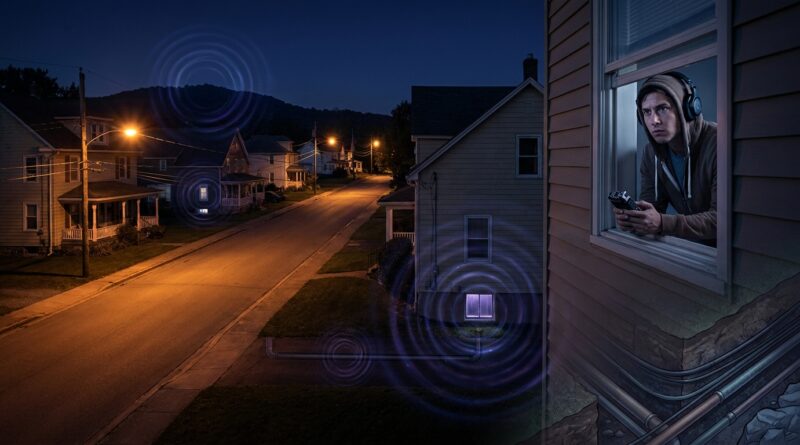
The World Is Hearing A Low, Unseen Hum – And A New Study Just Made The Mystery Even Weirder
If you hear a deep humming sound that nobody around you seems to notice, you are not alone, and you are not automatically imagining it. That matters, because this topic has a nasty habit of pushing people into two bad corners. One is panic. The other is being brushed off. Reports of a low, persistent hum have been popping up for decades in places as different as Bristol, Taos, Windsor, Auckland, and parts of coastal Canada. Now a 2026 study has made the mystery stranger, not simpler. Instead of pointing to one neat cause, researchers found signs that the “worldwide mysterious hum unexplained low frequency sound 2026 study” story may involve several overlapping things: real low-frequency environmental noise, vibrations people feel more than hear, room resonance inside homes, and in some cases the listener’s own hearing system. That is frustrating, yes. But it is also progress, because the question is finally being treated like data instead of internet folklore.
⚡ In a Hurry? Key Takeaways
- A new 2026 research wave suggests “the Hum” is probably not one single global source, but a mix of low-frequency noise, vibration, building acoustics, and sometimes hearing-related effects.
- You can start a useful home test by logging time, location, weather, nearby machinery, and making recordings with the same phone and same position each time.
- If the sound is causing stress, sleep problems, or pressure in one ear, document it and talk to both local authorities and a hearing specialist. It is worth checking both the environment and your health.
Why this mystery keeps sticking around
The “Hum” is one of those stories that sounds made up until you meet someone who has lived with it. People usually describe it the same way. A low diesel-like rumble. A distant idling engine. A vibration through the floor at night. Sometimes they hear it indoors more than outdoors. Sometimes they feel it in their chest or skull more than in their ears.
That pattern is exactly why this has been so hard to solve. Low-frequency sound is tricky. It travels far. It bends around obstacles. It can be boosted by walls, windows, ducting, and room shape. A noise source miles away can seem like it is coming from your own house.
And then there is the other complication. Some people appear to be much more sensitive to these frequencies than others. So when one person says, “How can you not hear that?” and the person next to them hears nothing, both may be telling the truth.
What the new 2026 study actually says
The fresh research making the rounds this year does not deliver a movie-style reveal. No giant secret machine. No single military project. No one universal explanation. What it does say is more interesting, and honestly more believable.
1. There may be several “hums,” not one Hum
Researchers comparing reports from different regions found that many cases do not line up neatly in frequency, timing, or local conditions. Some reports cluster near known industrial low-frequency bands. Others match transportation patterns, shipping lanes, heat pumps, compressors, wind flow over structures, or even household systems that create standing waves indoors.
That means “the Hum” may be a category, not a single event. Think of it like “headache.” Real problem, many causes.
2. Buildings can make weak sounds much worse
This is one of the biggest takeaways. The study points to room resonance and structure-borne vibration as possible amplifiers. In plain English, your home can act like a weird instrument. A tiny vibration from outside can get boosted by joists, pipes, ventilation ducts, window panes, or even furniture layout.
That helps explain a common complaint. The sound is strongest in one bedroom corner, one basement wall, or one specific time after midnight.
3. Some cases may involve hearing that is “adding” to the signal
This is the part people often hate hearing, because it sounds like dismissal. It should not be. The study discusses the possibility that for some people, tinnitus, low-frequency hearing sensitivity, middle-ear issues, or neural processing may shape how the hum is perceived. That does not mean the experience is fake. It means the final sound you notice may be a mix of an external trigger and your body’s own audio system.
That is weirder, yes. But it also fits reality. Plenty of sensory experiences are a blend of outside input and internal processing.
4. Standard microphones often miss what people report
This is another reason online arguments go in circles. Cheap phone mics are not great at very low frequencies. Some noise-canceling tech strips out exactly the kind of rumble people are trying to catch. So “I recorded nothing” does not always prove “nothing was there.”
At the same time, recordings can also be misleading. HVAC rumble, handling noise, traffic wash, or microphone self-noise can look dramatic in an app.
So what could be causing it?
Based on the current evidence, the best honest answer is “a few different things.” The most likely buckets are:
Industrial and transport sources
Factories, pumps, refrigeration units, power substations, trains, ships, highway traffic, and distant diesel engines can all create low-frequency noise that travels farther than you would expect.
Structure-borne vibration
Sometimes the issue is not airborne sound at all. It is vibration moving through the ground or building frame. That can make a home seem like the source even when it is not.
Atmospheric and geographic effects
Temperature inversions, humidity, coastal conditions, valleys, and nighttime air stability can change how sound moves. That is one reason some people report the hum only under certain weather conditions.
Household systems
Boilers, heat pumps, extractor fans, smart appliances, pool pumps, well pumps, aquarium equipment, and neighbors’ HVAC systems can all produce low droning sounds.
Physiological factors
Tinnitus, Eustachian tube problems, blood pressure changes, jaw tension, and hearing sensitivity can overlap with outside noise and make detection stronger or more selective.
Why people feel gaslit by this topic
Because the experience is personal, intermittent, and hard to prove. If you hear it at 2 a.m. in one room, and by 9 a.m. a city inspector hears nothing, the easy response is to act like the whole thing was in your head. That is unfair.
The new research matters because it treats reports as patterns worth studying. That is a big shift. Serious investigators are starting to collect repeated measurements, look at building acoustics, compare weather data, and ask better questions instead of rolling their eyes.
How to test it at home without turning into a conspiracy detective
You do not need a lab coat. You do need a method. The goal is not to prove a wild theory. It is to create a repeatable record.
Start a hum log
Write down:
- Date and exact time
- Where you are in the home
- Whether windows are open or closed
- Weather conditions, especially wind and rain
- Whether nearby traffic, trains, ships, or industrial activity seem active
- Whether you feel vibration, ear pressure, or just hear a tone
Do this for at least a week. Two weeks is better.
Move room to room, then outside
If the sound changes dramatically between rooms, that points toward resonance or household sources. If it is stronger outdoors or near one wall, that suggests an external source.
Turn off what you can
Safely switch off non-essential systems one by one. HVAC, portable fans, dehumidifiers, smart speakers, fridge ice makers, aquarium pumps, chargers, anything with a motor. Wait a few minutes each time. If the hum changes, you have a lead.
Use a spectrum app carefully
A phone app can still help if you use it the same way every time. Stand in the same spot. Hold the phone the same way. Record at the same times each night. You are looking for patterns, not courtroom-grade proof.
If you can, compare your readings to a second device. Consistency matters more than dramatic screenshots.
Try the “car test”
One old trick is to sit in your parked car with the engine off. Cars block some outside sound but can also transmit vibration differently. If the hum disappears in the car, that may point to your house acoustics. If it stays, the source may be broader.
Ask neighbors specific questions
Do not ask, “Do you hear the Hum?” Ask, “Do you ever notice a low idling-engine sound at night, especially in the back bedroom?” Specific questions get better answers.
When to think about your health too
This is not either-or. You can check the environment and your body at the same time.
If the sound seems one-sided, comes with dizziness, fullness in the ear, headaches, sleep disruption, or anxiety spikes, it is worth booking a hearing check. Low-frequency tinnitus and ear-pressure issues can be subtle. A good clinician will not assume you are making things up.
Also, stress makes sensory irritation worse. That does not create every hum, but it can turn a mild one into something you cannot stop noticing.
What the study still does not answer
Quite a lot.
- Why some hotspots produce years of reports while nearby areas do not
- Why some listeners can detect the sound instantly and others never do
- Why many reports peak at night
- Why some measurements fail to match the listener’s exact description
So yes, the 2026 study made things weirder. But in a useful way. It ruled out the fantasy that one magic explanation will solve every case.
What to do if you want authorities to take it seriously
Show patterns, not panic.
Bring a timeline. Note locations. Include short recordings if you have them, but lead with repeatable observations. Mention nearby infrastructure like substations, industrial parks, ports, rail lines, large HVAC systems, or recent construction. Local environmental health teams are more likely to act when the report sounds measurable.
If several neighbors notice it too, combine notes. A shared log is much harder to shrug off.
At a Glance: Comparison
| Feature/Aspect | Details | Verdict |
|---|---|---|
| Single global cause | The 2026 evidence does not support one universal source behind every report. | Unlikely |
| Environmental low-frequency noise | Industrial activity, transport, weather, and building resonance can plausibly create real hum events. | Strong candidate |
| Personal hearing factors | Some cases may be shaped by tinnitus, ear issues, or unusual sensitivity, especially when recordings show little. | Important piece, not the whole story |
Conclusion
The best thing about this new research is not that it “solves” the worldwide mysterious hum unexplained low frequency sound 2026 study puzzle. It does not. The value is that it takes people’s reports seriously enough to sort them into testable possibilities. That is a real step forward. If you have been hearing something strange, you do not have to jump straight to wild theories, and you do not have to accept being brushed off either. Start a log. Test your rooms. Check your home systems. Compare notes with neighbors. And if needed, get your hearing checked too. That turns a lonely, easy-to-dismiss experience into a shared investigation. More important, it shows that researchers are finally starting to treat this mystery as data, not fringe noise.