The Glacier That Switched Off: Why a Sudden Silence Beneath Alaska Has Seismologists Spooked
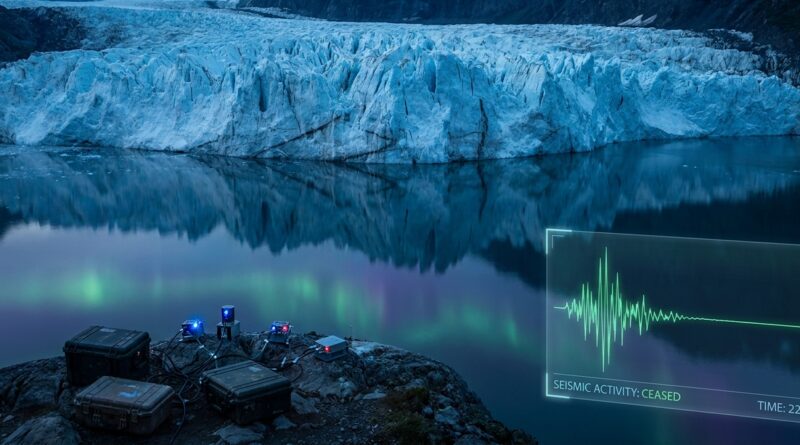
Most “Earth mystery” stories are annoying for the same reason. Big promise, tiny evidence. This one is different, and that is exactly why it is unsettling. Seismologists in Alaska are tracking a real, measured change beneath an active tidewater glacier. For years, instruments picked up a steady background hiss from ice grinding, cracking, shifting, and triggering tiny quakes below the glacier. Then, over a matter of hours, that signal dropped away. Not gradually. Not seasonally. It just went quiet.
That does not automatically mean disaster. It also does not mean aliens, secret bases, or any of the junk that spreads online the second a graph looks weird. What it does mean is that something in the glacier’s plumbing, pressure system, or movement likely changed fast enough to show up clearly on seismic records. Scientists are intrigued because glaciers are supposed to be noisy when they are active. Silence, in this case, may be the loudest clue of all.
⚡ In a Hurry? Key Takeaways
- The mysterious glacier seismic silence Alaska unexplained phenomenon 2026 appears to be a real instrument-recorded drop in normal glacier-related seismic noise, not just internet hype.
- If you live nearby or follow Alaska hazard updates, stick to official seismic, weather, and glacier monitoring feeds instead of rumor accounts.
- Silence is not proof of an imminent catastrophe, but sudden changes in glacier behavior are worth watching because they can hint at shifts in water flow, ice movement, or local hazard conditions.
What actually went quiet?
When people hear “seismic activity,” they usually picture one clear earthquake. That is not what we are talking about here.
Glaciers make a constant mess of low-level vibrations. Ice cracks. Meltwater pushes through channels. The glacier base grinds over rock. Small slips happen all the time. Seismometers nearby pick up that background motion as a kind of ongoing noise floor.
Under this Alaska glacier, that hum had become normal. Researchers expect some rise and fall with weather, tides, melt, and calving. What caught attention this weekend was the speed of the change. The signal reportedly fell off so fast that it looked less like natural fading and more like a system switching states.
Why seismologists are taking this seriously
Scientists are used to strange data. Instruments fail. Storms interfere. Software glitches happen. So the first rule is simple. Check the boring explanations first.
But when multiple stations show the same shift, and the timing lines up across the network, the “broken sensor” idea gets weaker. That is when people start asking the harder questions.
Possible reason #1: Water flow beneath the glacier changed
One of the best non-dramatic explanations is subglacial drainage. Think of the glacier like a giant frozen machine with hidden pipes underneath. If the water under it suddenly rerouted, drained out, or depressurized, the ice might stop sliding the same way. Less grinding can mean less seismic noise.
That would still be a big deal. Water at the glacier bed acts like a lubricant. Change the water, and you change the motion.
Possible reason #2: The glacier temporarily locked up
If the base lost some of that lubrication, sections of the glacier could have slowed or stuck more firmly to the ground below. That might sound safer, but it is not always that simple. A glacier can quiet down before stress builds elsewhere. Nature loves delayed consequences.
Possible reason #3: Surface conditions changed the signal
Heavy weather, freezing conditions, or sudden shifts in the ice surface can alter how vibrations travel. In other words, the glacier may still be moving, but the way the signal reaches instruments could be different.
This is one reason scientists avoid jumping to conclusions in the first 24 hours.
Possible reason #4: A bigger structural shift happened inside the glacier
This is the version that gets attention fast. If a major internal drainage pathway collapsed, opened, or drained, the glacier’s internal mechanics could have changed almost at once. That could explain a rapid drop in background noise.
Important point, though. “Could” is doing a lot of work here. Right now, that is a live hypothesis, not a settled answer.
Why this feels so eerie to regular people
Because absence is creepy.
We know how to react to a bang, a crack, or a warning siren. A sudden lack of a familiar signal feels different. It feels like the Earth stopped saying something it had been saying for years.
That gets under your skin, especially now, when so many people already feel like climate and geology are changing faster than public explanations can keep up. A glacier going quiet is not cinematic. It is worse in a way. It is subtle enough to be ignored, but strange enough to stay in your head.
Does this mean an eruption, quake, or tsunami is coming?
Based on what is publicly understood from this kind of event, no one should make that leap.
A sudden seismic silence beneath a glacier is not the same thing as a volcano waking up. It is not direct proof of a major earthquake either. And it is not, by itself, a tsunami warning.
That said, glacier systems in Alaska can connect to real hazards. Tidewater glaciers can calve violently. Subglacial water can burst out. Slope failures can happen near rapidly changing ice. So the right response is neither panic nor dismissal. It is attention.
What scientists will likely check next
If you are wondering what the experts do after seeing a graph flatline, the list is pretty practical.
1. Verify the instruments
They will compare stations, power status, timing data, and noise from nearby sources to make sure this is a real geophysical change.
2. Compare with weather and temperature records
A sudden freeze, rain pulse, or melt event can change glacier behavior fast.
3. Look at GPS and satellite data
If the glacier slowed, sped up, lifted, dropped, or changed shape, space-based measurements may show it.
4. Check local water output
Streams, outflow channels, and sediment loads can offer clues about what happened under the ice.
5. Watch what happens next
This may be the biggest clue of all. If the noise returns, scientists can compare before-and-after patterns. If it stays low, that suggests a more lasting change in the glacier’s mechanics.
What you should pay attention to if you live nearby
You do not need to become a seismologist overnight. But if you are in Alaska or follow glacier conditions there, a few things matter.
- Watch updates from official seismic and geological agencies.
- Pay attention to local advisories about flooding, ice movement, or coastal hazards.
- Be careful with dramatic social posts that show one chart without context.
- If you are a pilot, boater, hiker, or local resident, note unusual visible changes like water discoloration, fresh cracking, or altered calving activity, then compare them with official reports.
This is one of those moments when citizen observation can help, as long as it stays grounded and responsible.
Why this story matters beyond Alaska
Because it is a reminder that the planet does not always announce change with fireworks.
Sometimes the warning sign is a missing sound. A pattern that used to be there stops. Instruments notice first. Humans catch up later.
That is part of what makes the mysterious glacier seismic silence Alaska unexplained phenomenon 2026 so compelling. It sits in the uncomfortable middle ground between normal Earth science and genuine uncertainty. Not fantasy. Not solved science either.
At a Glance: Comparison
| Feature/Aspect | Details | Verdict |
|---|---|---|
| What changed | A long-running background seismic “hiss” from glacier motion and tiny quakes dropped sharply over hours. | Real anomaly, worth close monitoring. |
| Most likely explanations | Changes in subglacial water flow, ice sliding, signal transmission, or a structural shift inside the glacier. | Science has plausible ideas, but no clean answer yet. |
| Public risk right now | No clear evidence that this alone predicts a quake, eruption, or other immediate disaster. | Stay informed, not alarmed. |
Conclusion
This is the rare kind of mystery that deserves the word. Not because it is spooky, but because it is still unfolding and backed by hard measurements. A glacier in Alaska appears to have gone seismically quiet with unusual speed, and even the people who study these systems for a living are still sorting out why. That gives readers something valuable. You do not have to sit through another fake “explained” story built on vibes. You can follow real data as it comes in, compare expert updates with local observations, and watch a genuine scientific puzzle develop in real time. That matters, especially now. A lot of people sense the planet is changing in ways we only partly understand. Sometimes the first clue is not a spectacular event. Sometimes it is a silence almost nobody notices until a sensor points it out.