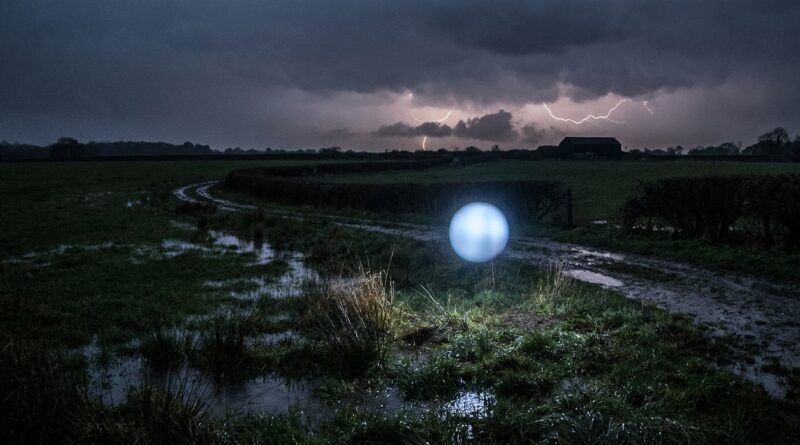
The ‘Ghost Orbs’ In Our Storms: Why Ball Lightning Is Suddenly Everywhere Online
You are not crazy if you saw a glowing orb in a storm and immediately thought, what on earth was that. The frustrating part is that the internet is full of certainties from people who are not actually certain. One camp says every floating light is ball lightning. Another says it is all fake, lens flare, power lines, bugs, or plain old wishful thinking. Meanwhile, more videos keep showing up, and some of them are weird enough to make even skeptical people pause. That is why ball lightning unexplained glowing orbs are suddenly everywhere online. Phones are always recording now, storms are easy to share in real time, and mystery spreads fast. The honest answer is less satisfying but more useful. Ball lightning is a real reported phenomenon with some scientific support, but most viral orb clips still have boring explanations. The trick is knowing how to tell the difference without killing the sense of wonder that made you hit replay in the first place.
⚡ In a Hurry? Key Takeaways
- Ball lightning may be real, but most online storm orbs are not solid proof of it.
- Check for common causes first, like lens flare, insects, reflections, power equipment arcing, or compressed video artifacts.
- If you spot one during a storm, prioritize safety and recording details. Do not go outside chasing it.
Why these storm orbs are blowing up right now
The short answer is cameras. Specifically, tiny phone cameras that do a lot of software processing behind the scenes.
Modern phones brighten dark scenes, smooth noise, sharpen edges, and compress video hard. That is great for birthday parties. It is not great for strange lights in bad weather. Add rain, reflections, lightning flashes, dirty windows, and social media compression, and a simple artifact can start looking like a glowing sphere with a mind of its own.
There is also a culture shift. Ten years ago, someone might tell a friend they saw a light in a storm. Now they upload it to TikTok, Reddit, YouTube, and UFO groups within minutes. The clip gets slowed down, zoomed in, and argued over by thousands of strangers before the storm has even moved on.
So, is ball lightning actually real?
Probably yes. But that does not mean every orb video shows it.
Ball lightning has been reported for centuries. Witnesses often describe a glowing sphere, usually from golf-ball size to basketball size, drifting silently or with a faint hiss during or after a lightning strike. Reports say it can last several seconds, move oddly, pass near windows, and then vanish, fade, or explode.
For a long time, scientists treated it as folklore because it was hard to study. That is fair. Science likes repeatable evidence, and ball lightning is rare, brief, and dangerous to chase. But over the years, lab work and a small number of field observations have made it harder to dismiss outright.
Researchers still argue over what causes it. Possible ideas include vaporized silicon from soil after a lightning strike, microwave energy trapped in plasma, or other short-lived electrical processes in the air. None of these explanations fully settles the case. That is why the subject stays in the strange middle ground between accepted phenomenon and unsolved puzzle.
What ball lightning usually looks like in credible reports
Common traits
When witness accounts overlap, a pattern starts to form:
- A storm is happening, or lightning struck very recently.
- The orb appears bright but not always blinding.
- It often moves slowly, sometimes horizontally.
- It lasts longer than a normal lightning flash. Often a few seconds.
- It may disappear suddenly or end with a pop or burst.
What it usually does not do
It does not usually zip around like a science-fiction drone. It does not tend to perform clean geometric turns. And it rarely hangs in the sky for long periods like a distant aircraft or lantern.
That matters, because many viral clips of ball lightning unexplained glowing orbs show behavior that looks more like camera weirdness than atmospheric physics.
Why so many videos are convincing but still misleading
This is where people get annoyed, and I get it. You can look at a clip and think, that is clearly a floating orb. But cameras lie in very specific ways.
Lens flare
If a bright lightning flash hits the lens at the wrong angle, you can get a ghostly orb that appears to float. It may even move as the camera moves, which makes it look alive.
Raindrops and bugs
A close raindrop, bug, or speck of dust can catch light and turn into a glowing blob, especially at night. Out-of-focus objects often look round and mysterious.
Power line and transformer arcing
Electrical equipment can produce eerie glows, flashes, and sizzling balls of light during storms. These are real. They are just not ball lightning in the classic sense.
Rolling shutter and compression
Phone sensors record scenes line by line, not all at once. Bright flashes can smear, pulse, or form odd shapes. Then social apps compress the footage and make the edges stranger.
Shooting through glass
If the video is filmed through a window, especially at night, all bets are off. Indoor reflections plus outdoor lightning can make a perfect fake orb.
How to judge a viral orb clip without becoming That Guy
You do not need to sneer at people. Most witnesses are trying to be honest. Start with a calm checklist.
1. Was there a storm in progress?
If there was no thunderstorm nearby, the odds of true ball lightning drop fast.
2. Is the object interacting with the environment?
Does it light nearby surfaces? Does it move behind objects instead of staying stuck to the camera view? If not, it may be an artifact.
3. Does the camera movement change the orb?
If the orb slides in sync with the lens or stays in a suspicious spot on screen, lens flare jumps to the top of the list.
4. How long does it last?
A split-second flash is less convincing than a sustained object with consistent motion.
5. Is there original footage?
A reposted, cropped, zoomed, heavily filtered video is almost useless. Ask for the original file if possible.
6. Was it near electrical infrastructure?
Transformers, substations, and downed lines can create dramatic storm lights that people mistake for something rarer.
The UFO crossover is part of the reason this feels so messy
Glowing spheres are catnip for UFO communities because they sit right in the overlap between weather, perception, and the unexplained. A weird light with no clear source will always attract bigger theories.
That does not mean every witness is chasing aliens. It means mystery has a gravity of its own. Once a clip leaves a weather forum and lands in a paranormal feed, the story often mutates. A shaky video of a storm artifact becomes an “energy entity” by lunchtime.
This is where clear thinking helps. Weird does not automatically mean fake. It also does not automatically mean extraordinary. A good observer can hold both ideas at once.
What recent research actually gives us
Recent work has not “solved” ball lightning, but it has done something almost as important. It has moved the conversation out of pure folklore.
Scientists have built lab effects that mimic some reported features of ball lightning, including glowing plasma-like spheres and silicon-based reactions after high-energy discharges. These experiments do not prove every witness report. They do show that nature may have more than one route to producing a floating luminous object.
That is a big deal. It means the serious position is no longer “impossible.” The serious position is “rare, not fully understood, and often misidentified.” That is a lot less flashy, but a lot more honest.
What to do if you think you captured ball lightning
First, do not chase it
Storms are dangerous enough without turning yourself into a field researcher. Stay indoors, away from windows if lightning is close, and do not head outside for a better angle.
Save the original file
Do not just post the app-compressed version. Keep the full-resolution original with metadata if your phone stores it.
Write down the basics
Time, place, weather conditions, how far away it seemed, what happened before and after, and whether there were power lines or a lightning strike nearby.
Look for other witnesses
Neighbors, doorbell cams, dashcams, or local weather groups can help confirm whether you saw the same thing from different angles.
Be open to boring answers
This is the hard part. The more emotionally intense the sighting felt, the more it helps to let someone try to debunk it. If it survives that process, it gets more interesting, not less.
Why people care so much about this one mystery
Because ball lightning sits in a very human sweet spot. It is not just science. It is experience. Someone sees a glowing orb where no glowing orb should be, and for a moment the world feels less finished than we thought.
That feeling matters. You do not need to mock it to stay rational. In fact, the best skeptics and the best believers tend to share one trait. They both keep looking.
At a Glance: Comparison
| Feature/Aspect | Details | Verdict |
|---|---|---|
| Scientific status | Ball lightning is supported by many reports and some research, but there is no single agreed explanation. | Plausible and unresolved |
| Viral orb videos | Many can be explained by lens flare, bugs, raindrops, electrical arcing, reflections, or phone processing. | Usually not strong evidence |
| Best response for witnesses | Stay safe, save the original footage, document the weather and surroundings, and invite analysis. | Most useful approach |
Conclusion
Right now there is a real tug-of-war between believers, UFO communities, and professional skeptics over what these storm orbs mean. That is exactly why people need a clear, no-nonsense guide. The most grounded take is this: ball lightning may be real, it is still not fully understood, and the internet is very good at turning ordinary glitches into extraordinary claims. If you keep one foot in curiosity and the other in evidence, you will be ahead of most of the conversation. That is a good place to be. It lets you cut through hype and hoaxes without losing the part of you that still looks at a strange light in a storm and thinks, maybe there is more going on here.