The Chemist In The Pew: How A Church Cyanide Suicide Just Blew Open A 44‑Year Mystery
If you have ever tried to follow a breaking true crime update, you know the feeling. Half the internet is repeating rumors, the other half is acting like every loose thread is suddenly solved. That is exactly what is happening with the Unknown Wanderer Boise church cyanide mystery identified chemist Tylenol murders story. For 44 years, the man who sat in a Boise church, swallowed cyanide, and died without a clear identity has been one of those cases that seemed built to stay foggy forever. Now police say they know who he was, and that claim matters because they also believe he may connect to the 1982 Chicago Tylenol murders. That is a huge statement. It deserves a calm look. Here is the clean version of what happened, what investigators actually announced, what cyanide evidence can and cannot prove, and how to watch a cold case breakthrough without getting swept up in online guesswork.
⚡ In a Hurry? Key Takeaways
- The man long known as the Boise church “Unknown Wanderer” has reportedly been identified by investigators as a trained chemist, reviving interest in a possible link to the Tylenol cyanide murders.
- When a cold case breaks, separate confirmed facts from investigator theory. Press conference language matters. “Identified” is not the same as “proved responsible.”
- Cyanide is central to both stories, but similar poison alone does not close a murder case. Motive, access, timeline, and physical evidence still matter.
What happened in the Boise church in 1982?
The short version is haunting.
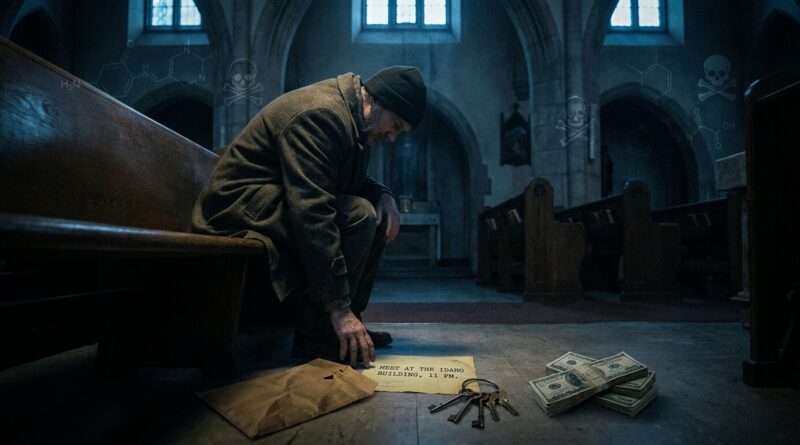
In September 1982, an unknown man walked into a church in Boise, Idaho. He appeared distressed. Accounts over the years describe him as sick, agitated, or unwell. He collapsed and later died. Investigators determined he had taken cyanide.
That alone would make the case memorable. But what kept it alive for decades was how little he left behind. No solid public identity. Few clear personal clues. A death in a church pew that felt both public and deeply private.
He became known by different labels over the years, including the “Unknown Wanderer.” And like many long-cold cases, that nickname turned him into a story people argued about instead of a person investigators could clearly place in the world.
What investigators say now
The big new development is not simply that police revisited the file. It is that they now say they have identified the man.
According to the recent announcement, the dead man was allegedly a chemist. That detail instantly changed the temperature around the case because cyanide was not just the method of his death. Cyanide also sits at the center of one of the most notorious unsolved poisoning cases in American history, the Chicago Tylenol murders, which also exploded in 1982.
That is why this update is getting so much attention. Not every old unidentified-person case suddenly brushes up against a national murder mystery.
Still, this is the part where it helps to slow down.
What is confirmed
At this stage, the strongest reported claim is that investigators believe they have identified the man who died in the Boise church.
They also appear to believe his background and timing make him relevant to the Tylenol case.
What is still a theory
A possible connection to the Tylenol murders is not the same thing as a solved Tylenol case.
That difference matters a lot. Police can identify someone with strong confidence through records, genealogy, old forensic work, family tracing, or a mix of all three. But linking that same person to a different crime requires a separate chain of proof.
Why the Tylenol angle is such a big deal
If you are rusty on the background, the Tylenol murders began in the Chicago area in 1982 when several people died after taking Extra-Strength Tylenol capsules laced with cyanide. The case changed consumer safety forever. It led to tamper-evident packaging, factory seals, and a whole new level of suspicion around over-the-counter medicine safety.
And yet the killer was never definitively identified in court.
So when a long-unknown man who died from cyanide is now reportedly identified as a chemist, true crime circles immediately start filling in blanks. Sometimes too quickly.
It is fair to say the overlap is striking. It is not fair to say overlap equals proof.
The cyanide evidence, in plain English
Cyanide has a terrifying reputation for a reason. It acts fast and can be deadly in very small amounts. In both suicide and homicide cases, it tends to attract intense attention because it is less common than many other poisons and often suggests planning or special access.
Why cyanide stands out
Cyanide is not the sort of substance that shows up by accident in ordinary daily life for most people. A person with chemistry training, lab access, industrial access, or very specific criminal intent may be more likely to encounter it.
That does not make every chemist suspicious. It does explain why investigators would pay close attention to a chemist who died by cyanide in the same year as the Tylenol poisonings.
What cyanide can prove
It can help establish cause of death. It can suggest a method. It can support timeline work if toxicology and scene evidence line up.
What cyanide cannot prove on its own
It cannot identify a killer by itself. It cannot place someone at a separate crime scene. And it cannot substitute for hard evidence like fingerprints, packaging evidence, witness statements, travel records, purchase records, or a reliable confession.
Why this case stayed unsolved for so long
Old unidentified-person cases often remain open for boring reasons, not dramatic ones.
Records get lost. Agencies do not share data well. Dental records sit in one place, fingerprints in another, and family reports in a third. In 1982, there was no modern DNA genealogy playbook. There was no internet swarm comparing old newspaper clippings in real time. If a person wanted to disappear, or simply drifted outside normal family and work networks, it was much easier to become a ghost in the paperwork.
That is one reason these breakthroughs often come very late. Modern tools are better. Patience is better. Cross-agency work is better. But even now, a fresh lead can take years to verify before police are willing to stand at a podium and put their names behind it.
How to read a breaking cold case update without getting fooled
This is the part that helps beyond this one story.
When a 40-year-old mystery suddenly bursts back into the news, the first wave of coverage is messy. Headlines race ahead of the evidence. Social posts trim away every careful word investigators used. Soon “possible link” turns into “case solved” and “identified suspect” turns into “confirmed killer.”
1. Listen for the exact verbs
“Believe,” “investigating,” “possible,” and “consistent with” are not filler words. They are the guardrails.
If officials say a man has been identified, that is one level of certainty. If they say he is tied to another case, ask how. If they say they are reviewing whether he may be responsible, that is still open ground.
2. Separate identity evidence from crime evidence
These are often bundled together in headlines, but they are not the same thing.
A person can be correctly identified while their role in another event remains unknown.
3. Watch for what is missing
Did investigators mention DNA? Fingerprints? Travel history? Witnesses? Possession of poison? Employment records? If those details are absent, that does not mean police have nothing. It does mean the public should not assume too much.
4. Give more weight to primary sources
Press conferences, court documents, coroner statements, and named investigators matter more than anonymous reposts and viral threads.
What might happen next
If this identification holds up and investigators continue building the Tylenol angle, the next phase will probably be slower than many readers want.
Expect more document review. Old timeline reconstruction. Employment and location checks. Family interviews. Re-examination of physical evidence, if any survives in usable form. Maybe handwriting comparisons. Maybe old financial or travel records. Maybe nothing dramatic at all, just a long process of trying to see whether this man could realistically have done what some now suspect.
That can be frustrating, but it is also where real case work lives.
Why this story hits so hard
Part of it is the image. A man alone in a church. A poison associated with precision and fear. A death that looked like an ending but now may be the middle chapter of something much bigger.
Part of it is timing. The Tylenol murders are not just an old crime story. They changed how everyday products are sold and protected in America. If a new credible thread appears, people are going to grab it hard.
And part of it is the human need to close loops. Unidentified dead. Unsolved poisonings. Strange behavior before death. We want all of that to click into place.
Sometimes it does. Sometimes only part of it does.
At a Glance: Comparison
| Feature/Aspect | Details | Verdict |
|---|---|---|
| Boise church victim identity | Investigators now reportedly say the long-unknown man has been identified and had a chemistry background. | Major breakthrough, if documentation holds up. |
| Tylenol murders connection | The cyanide overlap and the man’s background make the link plausible enough to investigate, but not proven by public evidence alone. | Interesting lead, not a closed case. |
| What readers should do with breaking reports | Track original statements, note careful wording, and avoid headlines that skip over uncertainty. | Best way to stay informed without getting misled. |
Conclusion
The smart way to read this story is to hold two ideas at once. First, this really does look like a serious and meaningful break in the Unknown Wanderer Boise church cyanide mystery identified chemist Tylenol murders saga. Second, a serious break is not the same thing as a complete answer. Right now, the value is in staying clear-eyed. You have the core reconstruction of the 1982 church death, a plain-English look at why cyanide matters here, and a practical way to separate confirmed facts from internet myth while the reporting is still settling. In a fast, noisy news cycle, that matters. It helps you spot the real anomalies, the details that may survive scrutiny, before they get buried under speculation.