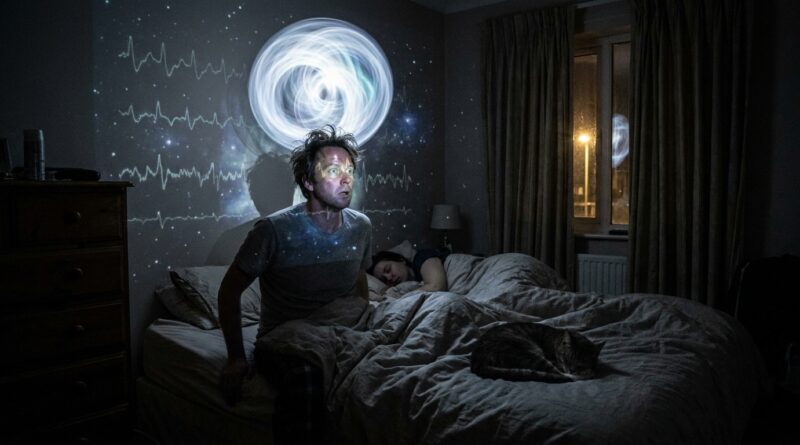
The Brain Bursts No One Can Predict: Inside The New Wave Of ‘Exploding Head’ Reports
You wake up to a blast so loud it feels like a gunshot, a slammed door, or a transformer blowing outside. Your heart is racing. You check the house. Nothing. No broken glass. No alarm. No one else heard a thing. That is deeply unsettling, and if it happened to you in the last day or two, you are far from alone. Social feeds are suddenly full of people describing the same strange pattern. A mysterious exploding head syndrome unexplained night bang, often with a flash of light or a jolt that feels almost electrical. The good news is that this does have a name in sleep medicine. The frustrating news is that medicine still does not fully explain why it happens, why it seems to cluster, or why some people feel it once while others get hit again and again. So let’s sort out what is known, what is guesswork, and what is worth paying attention to tonight.
⚡ In a Hurry? Key Takeaways
- These “head bang” episodes closely match a known sleep event called exploding head syndrome, which sounds scary but is usually not dangerous by itself.
- Start a simple log with time, symptoms, stress level, sleep position, meds, caffeine, and whether anyone else in the home noticed anything unusual.
- Get medical help quickly if the event comes with chest pain, weakness, ongoing severe headache, confusion, seizure-like activity, or hearing loss.
What people are reporting right now
The stories sound weirdly similar. A huge bang. A bright flash behind closed eyes. A snap, crack, pop, or metallic explosion that seems to happen inside the skull, not in the room. Some describe a zap through the head or body right as they are falling asleep or waking up.
That last part matters. Timing is one of the biggest clues. These episodes usually happen in the borderland between wakefulness and sleep. Not in the middle of a normal daytime conversation. Not while washing dishes. Right at that handoff when the brain is changing gears.
For many people, there is no pain at all. Just fear. Others do report a brief sting, pressure, or a shock-like sensation. The emotional effect can be intense. Once it happens, people dread going back to sleep.
So what is exploding head syndrome?
Exploding head syndrome, usually shortened to EHS, is a recognized sleep-related phenomenon. It falls under parasomnias, the same broad family as sleepwalking and some night terrors. The classic version is simple. A person hears an incredibly loud noise that no one else hears, usually at sleep onset or on waking.
The name is awful. It makes the whole thing sound catastrophic. But the syndrome itself does not mean your head is literally in danger of exploding, and it is not generally thought to be a stroke or a brain bleed when it appears in its usual pattern.
Typical signs
Here is what tends to fit the pattern:
- A sudden loud bang, crash, gunshot, buzzing burst, or electrical pop
- Happens when falling asleep or waking
- Very brief, often just a second or two
- No outside source found
- Strong fear or panic afterward
- Sometimes a flash of light or body jerk
What experts think may be going on
No single explanation has won. The leading ideas involve a brief glitch in how the brain shuts down sensory and motor networks as sleep begins. Think of it like a messy handoff instead of a clean power-down. Some researchers have also looked at stress, sleep disruption, medication changes, and overlap with other sleep conditions.
That still leaves the part people find hardest to ignore. Why do these reports sometimes seem to arrive in waves?
Why a sudden social media cluster feels so eerie
This is where things get tricky. A burst of posts can mean a few different things, and more than one can be true at the same time.
Possibility 1: More people are noticing it
If one viral post says, “Did anyone else hear a bang in their head last night?” people who had the same event finally speak up. That makes a hidden phenomenon visible very fast.
Possibility 2: Shared triggers are real
Stress spreads. Bad sleep spreads. Travel, heat, storms, late-night scrolling, stimulant use, and disrupted schedules can hit lots of people at once. If exploding head syndrome is linked to poor sleep transitions, then a rough week across a whole population could create a real cluster.
Possibility 3: There are environmental questions we cannot rule in or out yet
This is the part that will interest the Anomal community. Some readers suspect links to solar activity, local EMF changes, pressure shifts, storms, or other external factors. Right now, the evidence for those links is thin. Thin does not mean impossible. It means not proven. That is exactly why careful logging matters more than hot takes.
What it is not, at least most of the time
An unexplained night bang in your head can feel supernatural or dangerous. Sometimes it may still turn out to be something else entirely, such as a real outdoor noise, a hypnic jerk, a migraine event, tinnitus, medication side effects, or another sleep disorder.
But the standard exploding head syndrome pattern usually does not include ongoing pain, loss of consciousness, or neurological damage. That is why doctors often describe it as benign, even though “benign” can feel like a cold word when you have just sat bolt upright at 3:17 a.m. convinced something detonated over your bed.
When you should not just shrug this off
Here is the common-sense part. If the event is new for you, intense, or paired with anything outside the usual EHS pattern, get checked. Especially if you have:
- Severe or persistent headache
- Weakness, numbness, facial droop, or trouble speaking
- Fainting or confusion
- Actual hearing loss or ringing that does not fade
- Seizure-like movements
- Chest pain or shortness of breath
- Recent head injury
If you are ever torn between “this was probably a sleep event” and “this feels medically wrong,” err on the side of getting evaluated.
What to log if this happened to you
If the goal is to move this from campfire story to something we can investigate, details matter. Not just the spooky part. The boring part too.
Your best home log
- Date and exact time
- Were you falling asleep, fully asleep, or waking up?
- Sound description. Bang, pop, hum, crack, electric snap
- Flash of light, body jerk, shock sensation, pressure, pain
- How stressed or sleep-deprived you were that day
- Caffeine, alcohol, cannabis, nicotine, or supplements
- Any new meds or missed doses
- Sleep position and room conditions
- Weather, storm activity, power flickers, device issues
- Whether anyone else nearby heard a real sound
This kind of record helps in two ways. First, it gives a doctor something useful to work with. Second, it lets a community compare reports for timing, geography, and repeat patterns without relying on memory alone.
Why people often stay quiet about it
Because it sounds absurd. “I heard an explosion inside my head” is not a sentence most people enjoy saying out loud. They worry they will sound unstable, dramatic, or attention-seeking. That silence is part of why each new wave of reports feels so shocking. The phenomenon may not be brand new at all. The conversation is.
And once people realize there is a real sleep term for it, the shame tends to drop. That matters. You are much more likely to document something carefully if you do not feel embarrassed for having experienced it.
What you can do tonight if you are nervous about it happening again
You cannot fully “hack” your brain out of doing this on command. But you can lower some of the common aggravators.
Simple steps that may help
- Get to bed earlier than usual if you are sleep-deprived
- Cut back late caffeine and heavy alcohol
- Keep your room calm, dark, and cool
- Try not to doomscroll right up to lights out
- Write down the episode before bed so your brain stops replaying it
- If episodes repeat, talk to a doctor or sleep specialist
That last point is important. Recurring exploding head syndrome is worth discussing, especially if it is ruining your sleep or feeding anxiety.
Why this matters beyond one weird night
A mysterious exploding head syndrome unexplained night bang sits in an uncomfortable gap. It is weird enough to feel paranormal. Medical enough to belong in a clinic. Poorly understood enough to frustrate both sides.
That is exactly why collecting fresh reports has value. Maybe this social burst turns out to be a simple mix of viral attention and ordinary parasomnias. Maybe patterns show up around stress, insomnia, medication changes, or migraine history. Maybe readers do uncover timing clusters worth comparing with solar or environmental data. We will not know by laughing it off, and we will not know by declaring a grand theory on day one.
At a Glance: Comparison
| Feature/Aspect | Details | Verdict |
|---|---|---|
| Most likely explanation | A sleep-related event consistent with exploding head syndrome, often happening while falling asleep or waking | Plausible and medically recognized |
| What you should do next | Log the episode, note triggers, improve sleep habits, and seek medical advice if it repeats or includes red-flag symptoms | Best practical step |
| Big unanswered question | Whether sudden online clusters reflect shared triggers, better awareness, or something environmental that deserves closer study | Open question, worth tracking carefully |
Conclusion
If this happened to you, the first thing to know is simple. You are not the only one, and you are not making it up. That alone can take some of the sting out of an experience that feels impossible when it strikes in the dark. The bigger value here is what happens next. By collecting fresh accounts, comparing them to the small amount of science we do have, and inviting readers to log their own “head bang” incidents, we can turn an embarrassing one-off into usable evidence. Maybe the pattern points back to sleep disorders. Maybe it shows clusters linked to stress, solar activity, EMF questions, or something else people have been too quick to dismiss. Either way, the Anomal community has a chance to do something useful with a genuinely eerie event. Not just react to it, but investigate it together, starting now.