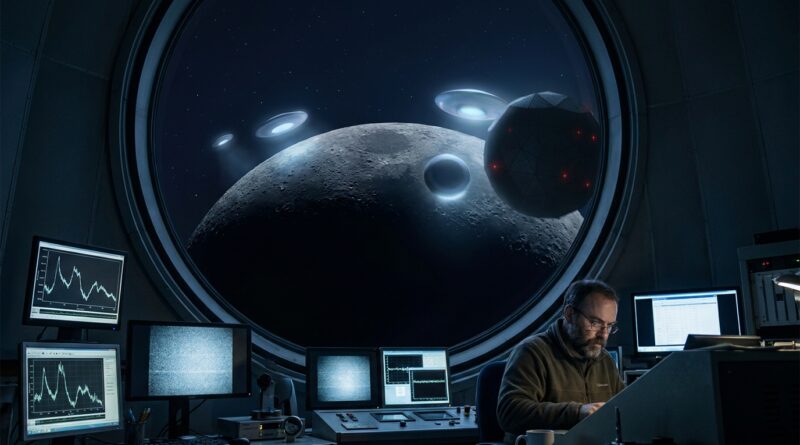
Did Scientists Really Find A UFO Fleet On The Moon? Inside The Lunar ‘Secret Base’ Panic
You are not imagining it. Your feed really is packed with posts claiming scientists found a UFO fleet on the moon, complete with a hidden base and giant craft zipping across the surface. It is the kind of story that makes you click, then immediately regret clicking because the details are usually a mess. One thread says it is telescope footage. Another says NASA is silent. A third insists this is proof of alien technology. If you are tired of screenshots without sources and commentary without context, here is the calm version. Short answer: no, scientists have not confirmed a technologically advanced UFO fleet or a secret lunar base. What happened is that a set of lunar observations, image interpretations, and bold online retellings got bundled together into a much bigger claim than the evidence supports. There may be odd visual data worth checking. That is not the same thing as confirmed alien hardware parked on the moon.
⚡ In a Hurry? Key Takeaways
- No, there is no verified scientists moon ufo fleet hidden base study proving a lunar alien base or fleet.
- Before sharing, trace the claim back to the original observation, not the viral caption built on top of it.
- Most of the panic comes from interpretation. Low-quality imagery, compression, motion blur, and wishful pattern-matching can turn ordinary data into extraordinary stories fast.
How this story got so big so fast
The viral version usually goes like this: scientists pointed instruments at the moon, picked up strange moving objects or unusual structures, and then the internet added the phrase “fleet” and “hidden base.” That jump is the whole issue.
Raw observations can be real without the dramatic explanation being real. A telescope can capture a weird streak. A camera can show a bright cluster. An image analyst can flag an unusual shape. But between “something odd appeared in data” and “there is a technological fleet operating from the moon,” there are about ten missing steps, and those steps matter.
This is why these stories spread so easily. The starting point sounds scientific. The ending point sounds cinematic. Everything in the middle gets skipped.
What was actually observed
In most versions of this lunar panic, the underlying material falls into one of a few buckets.
1. Light streaks or bright moving points
These can come from satellites crossing the field of view, sensor blooming, atmospheric distortion, frame-stitching errors, or simple motion blur. If the moon is being filmed at high zoom, tiny tracking issues can make ordinary objects look dramatic.
2. Strange shapes on the lunar surface
The moon is a master class in visual tricks. Long shadows, crater rims, compression artefacts, and contrast enhancement can make a rock formation look geometric or artificial. Humans are very good at seeing patterns, faces, towers, and “buildings” where none exist.
3. Image-processed anomalies
Once an image gets sharpened, enlarged, color-boosted, cropped, reposted, and compressed five times, it stops being clean evidence. It becomes more like a game of telephone with pixels.
Why some people say “scientists found something”
This is where wording gets slippery. Scientists often do find anomalies. In science, an anomaly just means something that does not fit the expected pattern yet. It does not mean aliens. It means “we need to check that again.”
That is a healthy part of the process. Researchers are supposed to flag oddities. They are also supposed to test boring explanations first. Instrument error. Data processing mistakes. Reflection. Known orbital objects. Timing issues. Environmental conditions. The scientific method is slow on purpose because exciting first impressions are often wrong.
Why other scientists are waving red flags
The criticism is not necessarily “nothing strange happened.” More often, it is “the method does not support the conclusion.”
That distinction matters.
Common methodological problems
No baseline comparison. If you do not compare the odd image with normal images from the same setup, you cannot tell whether it is unusual or routine.
No independent confirmation. If one telescope, one observer, or one processed clip is all you have, that is very weak evidence for a huge claim.
No chain of custody for the data. If the original files are missing and only social media reposts remain, confidence drops hard.
Conclusion outrunning the observation. A bright spot is not a craft. A cluster is not a fleet. A shadowed area is not a base.
The big gap between “unexplained” and “extraterrestrial”
This is the part that gets lost online. “Unexplained” does not mean “explained by aliens.” It means unexplained.
Think of it like hearing a weird thump in your attic. You do not jump straight to “secret government owl drone.” You first check for pipes, wind, a branch, or a raccoon. Space data works the same way, just with fancier tools and more dramatic thumbnails.
What a real breakthrough would look like
If scientists had truly found a moon-based UFO fleet, the signs would be much clearer than a viral thread.
You would expect:
Multiple observatories seeing the same thing.
Time-stamped original data.
Independent analysis teams reaching similar conclusions.
Published methods that other experts can test.
Cautious language from researchers, followed by intense scrutiny.
Instead, what usually drives these stories is a mix of weak-source clips, speculative narration, and people repeating each other.
Could there still be something interesting here?
Yes. That is the part skeptics sometimes skip too quickly. A weak alien claim can still start with a genuinely odd observation. Space imaging is difficult. Unexpected artefacts do happen. Rare transient events happen. Misidentified human technology happens. Scientists should absolutely keep checking anything that looks unusual.
Being open-minded does not mean believing the boldest version first. It means staying curious while insisting on better evidence.
How to fact-check a lunar UFO claim without needing a physics degree
You do not need to be an astronomer to do a quick sanity check.
Ask these five questions
What is the original source? A paper, observatory log, raw file, or direct researcher statement beats a reposted screenshot every time.
What was the instrument? Telescope type, camera setup, exposure settings, and tracking method all affect what you are seeing.
Has anyone independent confirmed it? One source is a claim. Several strong sources start to become evidence.
Are there ordinary explanations on the table? If those have not been tested first, the dramatic claim is premature.
Did the headline add words the data never did? “Anomaly” becoming “fleet” is a classic internet upgrade.
Why moon stories hit so hard online
The moon feels close enough to imagine and far enough to mythologize. That makes it perfect fuel for panic, wonder, and nonsense. A blurry shape on Mars is one thing. A blurry shape on the moon feels personal, like a secret in our own backyard.
That emotional pull is exactly why it helps to slow down. The most shareable version of a story is rarely the most accurate one.
What to tell the friend who sends you the “moon fleet” post
Try this: “Interesting clip, but has anyone posted the original data or independent confirmation?”
That keeps the conversation open without rubber-stamping the claim. You are not being the buzzkill. You are being the useful person in the group chat.
At a Glance: Comparison
| Feature/Aspect | Details | Verdict |
|---|---|---|
| Claim of a UFO fleet | Viral posts use dramatic language, but there is no confirmed scientific evidence of multiple alien craft operating near the moon. | Not supported |
| Claim of a hidden lunar base | Usually based on ambiguous surface images, shadow patterns, or heavily processed visuals rather than verified structural evidence. | Very weak |
| Possibility of a real anomaly | Some observations may still be odd or unresolved, but they need original data, repeat observations, and careful review. | Worth checking, not proof |
Conclusion
The useful takeaway is not “believe” or “mock.” It is “separate the observation from the story built around it.” Today’s feeds are full of hot takes about a supposed secret lunar base and giant craft skimming the moon, but almost nobody is explaining how that claim emerged, what the telescope data actually show, or why some scientists are throwing flags on the methodology while others say there may still be something unexplained worth looking at. That is the real value here. You do not have to bounce between uncritical believers and instant debunkers. You can stay curious, ask for source material, and keep your standards high. If better evidence appears, great. If it does not, you saved yourself from another round of doomscrolling dressed up as discovery.