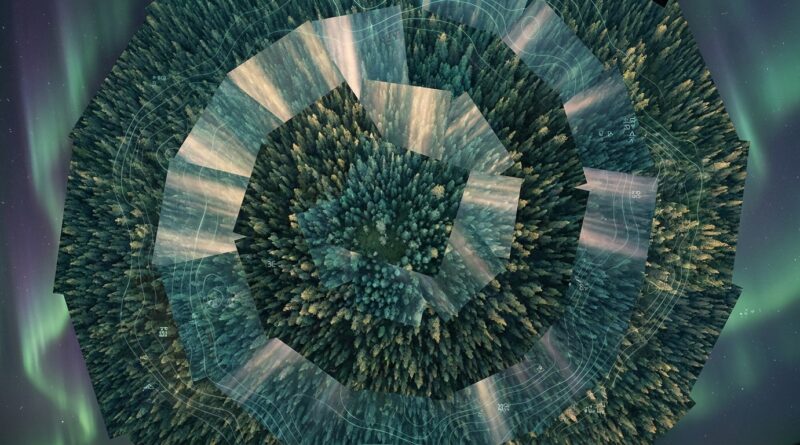
The ‘Living Sundial’ Forest: Why Trees In One Corner Of Earth Are Moving In Sync With A Hidden Cosmic Clock
If you are tired of blurry lights, recycled “insider” claims and the same old conspiracy loops, you are not alone. A lot of people want a mystery that is real enough to measure, strange enough to argue over, and open enough that nobody can honestly say it is solved yet. That is why this so-called living sundial forest has grabbed attention so fast. In one remote corner of the planet, satellite images and field reports appear to show groups of trees shifting in sync with a repeating environmental rhythm that does not match normal seasonal growth alone. The result is a mysterious synchronized forest movement unexplained phenomenon that looks less like random ecology and more like a timed response to something bigger. Maybe it is space weather. Maybe it is groundwater. Maybe it is a biological trick we have missed for years. The point is simple. Scientists are looking, the data is public, and the argument is just getting started.
⚡ In a Hurry? Key Takeaways
- This forest story matters because it appears to involve repeatable, measurable tree movement tied to a still-unexplained cycle, not a one-off anecdote.
- If you want to follow it smartly, watch for satellite time-series data, local weather records, solar activity reports and whether independent teams can repeat the findings.
- The safest take right now is curiosity, not certainty. The anomaly is interesting because it is unresolved, and that makes careful observation more useful than wild claims.
What people mean by a “living sundial” forest
The phrase sounds dramatic, but the basic idea is pretty easy to picture.
Researchers and online observers are describing a patch of forest where tree crowns, canopy density or trunk lean patterns seem to change in a coordinated way over time. Not just tree by tree. Not just from a storm. In sync. That is the part making people sit up.
From above, the forest can appear to “turn” or pulse in a repeating pattern, almost like the landscape is responding to an invisible hand on a clock. That does not mean the whole forest is literally rotating. It means measurable features of the trees seem to shift together on a schedule that is not yet fully explained.
This is what makes the mysterious synchronized forest movement unexplained phenomenon different from internet folklore. There is something to track. You can compare images. You can line up dates. You can test competing ideas.
Why this feels different from the usual anomaly story
Most anomaly stories arrive already broken. The video is too short. The witness is anonymous. The key evidence has vanished. Then everybody picks a side and nothing new happens.
This case is the opposite.
It is unfolding in public. It involves Earth science, plant biology and possible links to larger environmental cycles. It may be visible from space. And best of all, scientists are not giving one neat answer yet.
That uncertainty is not a weakness. It is the reason the story has legs.
Real mysteries are usually messy at first. Different experts see different patterns. One team says the signal tracks moisture stress. Another says geomagnetic changes may be involved. A third says we may be looking at a remote-sensing artifact mixed with normal plant behavior. That is how serious investigation often starts.
What could be causing it
1. A hidden groundwater or soil cycle
This is the least flashy explanation, but also one of the strongest.
Trees are deeply tied to water availability. If underground water rises and falls in a repeating pattern, nearby trees could respond together. Their leaves, branches and internal water pressure could change just enough for satellites to notice. In a very specific landscape, that can look eerie from above.
The catch is timing. If the cycle being reported does not cleanly match rain, river flow or known soil moisture changes, then the groundwater idea needs more proof.
2. Wind, slope and microclimate effects
Forests do not behave like flat green carpets. They grow on ridges, in hollows, across soil breaks and through shifting local weather. A recurring wind channel or thermal pattern could push certain stands of trees into similar postures over time.
Again, possible. But if trees across one zone are moving in lockstep while nearby zones are not, researchers have to explain why the boundary is so sharp.
3. A biological response we do not fully understand
Plants are far more dynamic than most people realize. They track light. They move water. They react to stress. They communicate chemically. Some even sync behaviors across groups.
It is possible this forest is revealing a large-scale version of a plant response that usually goes unnoticed because we do not watch forests closely enough, or often enough, from the right angle.
4. Space weather or geomagnetic influence
This is where the story gets weird in a good way.
A few researchers and outside observers have wondered if the timing lines up with solar or geomagnetic cycles. Earth is constantly bathed in charged particles and magnetic fluctuations. We know animals can respond to magnetic fields. We know technology can. What we do not know, at least not clearly, is whether entire forest stands can show a visible, synchronized response to those changes.
That idea is speculative. Very speculative. But it is not pure fantasy. It is one of the reasons people are calling this a living sundial instead of just “some odd trees.”
5. A data illusion
We also need to keep our feet on the ground.
Satellite images can mislead. Changes in sun angle, image timing, sensor calibration, seasonal leaf color and cloud filtering can create patterns that look meaningful even when they are not. A strong anomaly has to survive that kind of scrutiny.
If the effect only appears in one dataset, caution is smart. If it shows up across multiple instruments, seasons and field checks, then things get much more interesting.
Why scientists are arguing in public
Because no single field owns this problem.
A botanist may see stress signaling. A remote-sensing expert may see imaging bias. A geophysicist may notice a cycle that matches something in the environment. A climate scientist may warn that rising noise in global systems can create false patterns or hide real ones.
That mix is exactly why the story is worth your attention. It sits at the crossroads of several disciplines, which means the answer may not come from one lab working alone.
And frankly, that is refreshing. It gives readers something better than a finished press release. It gives them a real scientific disagreement in progress.
How to follow this without getting fooled
If you want to watch this story like a grown-up and not get dragged into nonsense, here is the checklist.
Look for repeated observations
One striking image means very little. A pattern that repeats across months or years matters much more.
Check whether different teams see the same thing
If only one source claims the forest is moving in sync, be careful. If separate groups using different methods report similar timing, confidence goes up fast.
Separate “movement” from “appearance”
Sometimes the trees are not physically moving much at all. Instead, changes in moisture, leaf angle, canopy thickness or reflected light make them look different from above. That still counts as interesting. It is just a different kind of signal.
Watch the timing against outside variables
Rainfall. Temperature swings. local winds. groundwater records. solar storms. magnetic fluctuations. The best explanation will eventually line up with one or more of these better than chance.
Be skeptical of anyone who says it is solved
That includes people selling a cosmic explanation and people dismissing it in one sentence. Early certainty is usually a red flag.
What regular readers can actually contribute
You do not need a lab coat to be useful here.
People who care about anomalies can help by collecting timelines, comparing open satellite sources, logging news of local field studies and keeping track of whether the claimed cycle holds up over time. Good citizen observation is often just disciplined note-taking.
The key is to avoid turning every odd image into proof. Better to build a clean record than a loud theory.
If local researchers release coordinates, vegetation types or observation windows, readers can also watch for similar behavior in other forests. If a “living sundial” pattern turns up elsewhere under similar conditions, that would be a huge clue.
Why this matters beyond the weirdness
Even if the final answer turns out to be completely natural, the implications could still be big.
It could reveal a new way forests respond to environmental stress. It could improve satellite monitoring of ecosystem health. It could expose interactions between climate signals, soil systems and plant behavior that are easy to miss at human timescales.
And if some small piece of the cosmic-clock idea survives testing, then this story gets even more important. Not because aliens did it, but because it would suggest Earth life is responding to outside forces in ways we have barely mapped.
At a Glance: Comparison
| Feature/Aspect | Details | Verdict |
|---|---|---|
| Type of evidence | Satellite imagery, repeat observations and environmental comparisons, rather than a single witness account. | Much stronger than typical anomaly claims, but still needs independent confirmation. |
| Possible explanation range | Could be groundwater, wind patterns, plant signaling, geomagnetic influence or imaging artifacts. | Wide open. Natural explanations lead for now, but the exact driver is unresolved. |
| Why readers should care | This is a measurable mystery with real scientific disagreement and room for public tracking. | Worth following early, especially for anyone tired of recycled fringe content. |
Conclusion
The best thing about this story is that it gives anomaly fans something rare. A live mystery with data attached. Not a campfire tale. Not a grainy clip with spooky music. A measurable event sitting right where space weather, unexplained biology and Earth science overlap. That makes it more fun, but also more useful. If you follow it now, you get to watch a real question take shape before mainstream coverage sands off the edges. More important, readers can help keep attention on it, test ideas, compare observations and push for better study before the signal gets lost in the background noise of a changing planet. Whether the living sundial forest turns out to be cosmic, climatic or just a strange piece of overlooked ecology, it is exactly the kind of unresolved, grounded phenomenon people have been asking for.