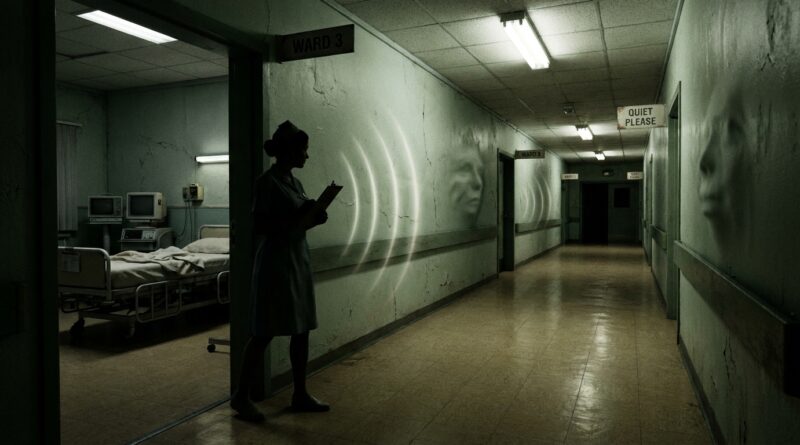
The Hospital Room That Answers Back: Inside The New Wave Of ‘Talking Walls’ Reports
If you have ever heard a hospital room answer a question with a knock from inside the wall, you already know the worst part is not the sound. It is trying to explain it later without feeling foolish. Lately, reports of unexplained hospital haunting talking walls have started to sound oddly similar. Night staff describe knocks in exact patterns. Former patients talk about voices calling names from empty rooms. Security workers mention old wards where sound seems to travel with intent, not just echo. That does not automatically mean something paranormal is happening. But it also does not mean every witness is tired, confused, or making things up. Hospitals are some of the strangest buildings people ever spend time in. They are packed with vents, pipes, alarms, radios, grief, stress, and memory. So the smart move is not blind belief or instant dismissal. It is careful observation, simple checks, and honest comparison of what people are hearing.
⚡ In a Hurry? Key Takeaways
- “Talking walls” reports in hospitals often fall into a few repeat patterns, knocks, voices, name-calling, and sounds that seem to reply.
- Start with a log. Note time, room number, weather, HVAC activity, nearby equipment, and who else heard it.
- If you rule out building noise and still get consistent, shared experiences, you have something worth documenting calmly, not panicking over.
Why these reports feel so unsettling
A strange noise at home is one thing. A strange noise in a hospital lands differently.
Hospitals already put people on edge. Sleep is broken. Lights are odd. Hallways never seem fully quiet. Even healthy people can misread sound in that kind of setting. Add fear, loss, medication, or a 3 a.m. shift, and the brain starts hunting for patterns.
That matters because pattern-hunting is exactly what many witnesses describe. Not random banging. Not a vague whisper. A direct response. Three knocks after a question. A voice using a nurse’s name. Sound that seems to come from inside a sealed wall, then stop the second someone opens the door.
That is why unexplained hospital haunting talking walls stories keep spreading. They hit a nerve. They sound specific enough to feel real, but slippery enough to resist easy proof.
The most common “talking walls” patterns people report
1. Call-and-response knocking
This is the big one. Someone taps once or twice on a wall, bedrail, or doorframe. A matching pattern comes back. Sometimes immediately. Sometimes after a pause that feels almost deliberate.
Before jumping to ghosts, check for pipe knock, water hammer, elevator vibration, and air pressure changes from fire doors or automatic closers. Older hospitals are full of mechanical systems that can mimic intent.
2. Voices from empty rooms
These reports usually involve a short phrase. A name. “Help.” “Nurse.” “Come here.” The witness goes to check, and the room is empty or the patient asleep.
Possible causes include intercom bleed, radio crosstalk, TV audio bouncing down a corridor, or plain old audio pareidolia. That last one means the brain turns fuzzy sound into recognizable speech. It is common, and it is powerful.
3. Sound that seems trapped in the wall
Some witnesses say the wall itself sounds hollow, like someone is moving behind it. In abandoned wards, this can be raccoons, settling, ductwork, or pressure shifts in old ventilation shafts. In active hospitals, the usual suspects are utility chases, plumbing stacks, and service corridors hidden behind panels.
4. Multiple witnesses hearing the same thing
This is the detail that gets people’s attention. If one exhausted staffer hears a voice, that is easy to shrug off. If three people hear the same knock pattern, or all hear “Sarah” called from room 214, you have a stronger report.
Shared experience does not prove a haunting. It does mean the event deserves better documentation.
What to check first before calling it paranormal
You do not need fancy gear. You need a boring checklist.
HVAC and vents
Air systems can create whistles, murmurs, and sudden pressure pops. Long metal ducts also carry sound farther than most people expect. A conversation at one end of a corridor can seem to come from a wall vent twenty feet away.
Pipes and water hammer
Hospitals use a lot of water. When flow changes fast, pipes can bang in a way that sounds startlingly deliberate. If the knocks often happen after toilets flush, sinks run, or equipment cycles, put plumbing high on your list.
Nurse call systems and speakers
Older paging and call systems can crackle, clip, or leak partial audio. One distorted syllable can become a name in a tired brain.
Medical equipment
Pumps, monitors, and beds can click, chirp, and pulse in rhythms that feel almost human. If the same sound follows the same machine, that is useful data.
Building layout
Hospitals are maze-like. A voice from one room can bounce through a hard corridor and seem to come from somewhere else entirely. Tile, glass, and cinder block do weird things with sound.
A practical witness checklist
If this is happening to you, start here.
- Write down the exact time.
- Note the room number and floor.
- Describe the sound in plain words. Knock, scrape, whisper, name, buzzing voice.
- Record the pattern. One knock, three knocks, repeated every ten seconds, and so on.
- List what else was happening nearby. Doors closing, sink running, vent cycling, call light sounding.
- Note who else heard it, and have them describe it separately.
- If allowed by policy, capture short audio or video.
- Check weather. Wind and pressure swings can change building noise fast.
The separate-description part is important. If you ask, “Did you hear a woman say my name?” people may agree without meaning to. Better to ask, “What did you hear?” and compare notes after.
Why hospitals produce so many haunting stories in the first place
Part of it is emotional charge. Places tied to birth, death, pain, relief, and last conversations naturally collect stories. Part of it is architecture. Big utility systems. Long corridors. Rooms built and rebuilt over decades. Hidden spaces inside walls. Sound loves a building like that.
And part of it is the people inside. Nurses, cleaners, guards, transport staff, and overnight techs spend enough time there to notice things others miss. They know the normal sounds. When they say, “No, this was different,” that is worth hearing out.
That does not mean every eerie account is proof of a haunting. It means witness experience has value, especially when the witness knows the building well.
When a story starts sounding more than mechanical
Some reports stand out because they keep repeating under controlled conditions.
For example, the same empty room. The same name being called. The same answer-knocks only when someone speaks first. If multiple people report the same thing across weeks or months, and routine building causes have been checked, you move from “weird noise” to “persistent anomaly.”
That is still not hard proof of a spirit. But it is enough to justify taking the account seriously.
Signs a report deserves closer attention
- The event happens in one specific location again and again.
- Different witnesses report matching details independently.
- The pattern responds to speech or timing in a consistent way.
- Facilities staff have already checked obvious mechanical causes.
- The sound is captured clearly enough to compare with building noise.
How to talk about it without sounding “unhinged”
This may be the hardest part.
Stick to facts first. Skip the dramatic framing. Say, “At 2:17 a.m., room 6B produced three knocks in response to two taps. Two staff members heard it. No one was inside.” That lands better than, “The ward talked back.”
You are not watering down the experience. You are making it easier for other people to assess it honestly.
If you work in a hospital, keep it professional. Report anything that might have a safety cause, especially voices, alarms, or sounds that could mask patient distress. You can stay open-minded and practical at the same time.
What skeptics get right, and what believers get right
Skeptics are right that old buildings fake a lot of “intelligence.” Echoes, pipes, vents, radios, and sleep deprivation can create incredibly convincing experiences.
Believers are right that not every case disappears under closer inspection. Some reports remain stubborn. Shared. Specific. Repeated. Those are the ones people remember for years.
The healthiest position sits in the middle. Rule out what you can. Document what you cannot.
If you want to investigate safely
Do not wander into sealed, abandoned, or restricted hospital areas just to chase a story. That is a fast way to get hurt or trespassed. Old medical buildings can hide mold, unstable flooring, exposed wiring, and bad air.
If you are staff, follow workplace policy. If you are a visitor or urban explorer, get permission and never go alone. The building itself is often more dangerous than whatever story drew you there.
At a Glance: Comparison
| Feature/Aspect | Details | Verdict |
|---|---|---|
| Patterned knocking | Could be pipes, pressure shifts, or structural noise. More interesting if it repeats in direct response to taps or speech. | Document carefully before assuming anything paranormal. |
| Voices calling names | Could come from intercom bleed, TVs, radios, corridor echo, or audio pareidolia. | Check equipment and ask witnesses for separate descriptions. |
| Multiple witness reports | Stronger than a single account, especially if details match without prompting. | Worth taking seriously, even if the cause stays unknown. |
Conclusion
That is the real value of taking unexplained hospital haunting talking walls reports seriously but calmly. You do not have to laugh them off, and you do not have to sprint into wild theories either. A simple checklist, clear notes, and honest witness comparisons can separate bad acoustics from something that remains genuinely hard to explain. That helps nurses, night-shift staff, former patients, and skeptical readers alike. It gives people a way to compare notes without shame, rule out vents and pipes without killing the mystery, and feel less alone if a wall in a quiet ward once seemed to answer back. Sometimes the result is a plain building fix. Sometimes it is just a better story. And sometimes, even after the practical checks, the room stays strange. That is allowed too.