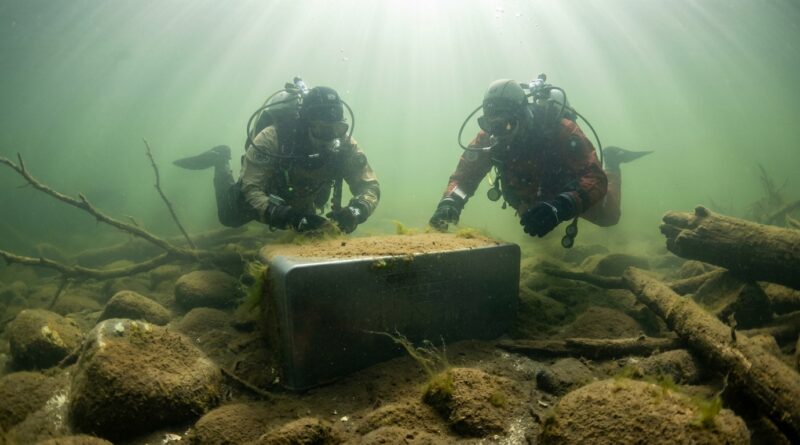
The River Relic No One Can Explain: Divers Just Found A Mystery Object In Wisconsin’s Depths
Most people are tired of mystery stories that turn into nothing. Another blurry light. Another zoomed-in clip. Another “experts are stunned” headline that falls apart five minutes later. That is why this reported mystery object found in Wisconsin river waters has grabbed so much attention. It is not just a dot in the sky. It is a physical thing, reportedly recovered by divers, sitting right in the messy middle between archaeology, junk, hoax and something genuinely hard to place. That makes it a lot more interesting, and a lot easier to investigate like adults.
Right now, the smartest move is to treat the object as unresolved, not magical. The real story is not just what it might be. It is how people can check the claims. Where exactly was it found? Who recovered it? Was law enforcement notified? Has a local museum, tribal historian, marine salvage expert or state archaeologist seen it? If this case develops with photos, chain-of-custody details and location records, readers could have a rare real-world mystery to dig into without having to suspend common sense.
⚡ In a Hurry? Key Takeaways
- The mystery object found in Wisconsin river reports is interesting because it is a physical item, but there is still no solid public proof of what it is.
- If you want to follow the case, start with maps, county records, dive logs, local news, and public agencies instead of social media guesses.
- Do not try to recover suspected artifacts yourself. River finds can be dangerous, legally protected, or historically important.
Why This Story Feels Different
There is a simple reason this one cuts through the noise. It is grounded. A river is a real place. Divers are real people. An object can be photographed, measured, tested and compared. That gives this story a backbone most internet mysteries never have.
Wisconsin is also the kind of place where a strange river discovery could plausibly be several things at once. The state has deep Indigenous history, old trade routes, industrial leftovers, logging-era debris, lost tools, farm machinery, and plenty of spots where something unusual can sit unseen for decades.
So when people hear “mystery object found in Wisconsin river,” the best reaction is not instant belief or instant mockery. It is curiosity with a clipboard.
What the Object Could Be
1. An Actual Historical Artifact
This is the version that gets people excited, and for good reason. Rivers often preserve or hide objects connected to travel, trade, ceremony, war, industry or everyday life. Depending on the material, shape and context, a recovered item could point to a local historical site or even a long-forgotten route.
But context matters more than vibes. A real artifact is not just “old-looking.” Archaeologists care about where it was found, the surrounding sediment, whether nearby items were present, and whether the object matches known tool-making or manufacturing methods.
2. A Modern Object That Looks Weird Underwater
This is more common than people think. Water changes how things age. Metal corrodes in odd patterns. Wood swells. Concrete breaks into shapes that look hand-carved. Old machine parts can end up looking ceremonial, alien or ancient once they are coated in mineral buildup.
That does not make the story boring. In some cases, the answer is still fascinating. An “ancient relic” can turn out to be a piece of river infrastructure, a logging tool, a boat fitting or part of a Depression-era project.
3. A Hoax or Misunderstanding
It happens. Sometimes an object is planted. Sometimes someone leaves out key details. Sometimes a dive story spreads before anyone verifies it. If photos exist but the recovery timeline is fuzzy, or the findspot keeps changing, that is a red flag.
The good news is that physical claims are much easier to test than stories about strange lights in the sky. A hoax item usually starts to wobble when experts ask simple questions.
4. Something Genuinely Hard to Classify, For Now
This is probably the most realistic “mystery” lane. Not alien technology. Not a cursed relic. Just an object that does not fit neatly into the first round of guesses. That alone is enough to keep a story alive, especially if local historians, tribal experts and materials specialists disagree.
What Evidence Actually Matters
If you want to separate signal from nonsense, focus on the paper trail and the physical trail.
Location Details
Was the object found in a named stretch of river, near a bridge, dam, old settlement, former mill site or known crossing? Even a rough location can help people compare old maps, shipping records and land-use history.
Recovery Details
Who found it, on what date, and under what conditions? Was it buried in silt, wedged in rock, or fully exposed? That can tell you whether it likely drifted there or sat there for a very long time.
Photos With Scale
A ruler, glove, dive knife, or standard object in frame helps a lot. So does showing multiple angles. One dramatic close-up is how bad mystery stories are born.
Material Analysis
Is it stone, cast metal, forged iron, bronze, ceramic, composite material, or something else? The answer can knock out half the wild theories fast.
Expert Review
The most useful opinions usually come from boring-sounding people. State archaeologists. Conservators. Maritime historians. Tribal cultural offices. Salvage professionals. Corrosion specialists. They are not as viral as TikTok speculation, but they are how real answers happen.
How Readers Can Follow the Investigation Without Getting Played
This is where the story becomes more fun than your average internet mystery. You can actually help make sense of it.
Check Local Sources First
Start with county news outlets, sheriff statements, dive groups, museum pages, and town Facebook posts from actual residents. Local chatter is messy, but it often surfaces names, dates and places before national outlets catch up.
Use Historical Maps
Old river maps, Sanborn maps, logging maps and county plat books can reveal what used to be near the discovery site. A “mystery” object found near a vanished mill or ferry point may stop being mysterious pretty quickly.
Look for Public Records
If the discovery is serious, there may be public documentation. You can look for incident reports, permitting records, state archaeological guidance, or agency emails that may be available through open-records requests. That does not mean every record will be public, but it is a much better path than reposting rumors.
Pay Attention to Chain of Custody
If the item moved from diver to collector to influencer to anonymous “expert,” that weakens the case. If it went from recovery to documented storage to expert review, that strengthens it.
The Wisconsin Angle Matters More Than It Seems
Wisconsin rivers are not blank spaces. They are layered places. Indigenous communities used them long before modern state lines existed. European settlement, fur trade networks, logging, agriculture and industry all left marks. That means a river object can sit at the crossroads of several histories at once.
It also means people should be careful about jumping straight to “lost civilization” language. Sometimes those claims erase the communities that already have deep knowledge of the land and waterways. If this object is authentic and old, local tribal historians may have important context that random online theorists do not.
What Not to Do
Do not head out with a magnet, shovel and GoPro hoping to grab your own relic. Rivers are dangerous. Visibility can be awful. Currents change fast. And if an item is historically significant, removing it without proper reporting can damage the site and create legal trouble.
Also, do not treat every odd shape as proof of some hidden technology. A lot of “unexplainable” objects become very explainable once someone cleans them, tests them or identifies the manufacturing marks.
So, Is It Real?
The object may be real in the simplest sense, meaning a physical item was reportedly recovered. The better question is whether the extraordinary claims around it are real. On that front, the answer is still “not proven.”
That is not a letdown. It is the whole point. A good mystery is not one where people fill the gaps with fantasy. It is one where enough hard facts exist that the truth can slowly come into focus.
At a Glance: Comparison
| Feature/Aspect | Details | Verdict |
|---|---|---|
| Physical evidence | Reportedly a real recovered object, not just a video or distant sighting. | Stronger than most viral mystery stories. |
| Likely explanations | Could be a historical artifact, industrial debris, a misidentified modern item, or a staged find. | Open case. No single answer yet. |
| Best way to investigate | Use maps, local reporting, public records, expert review, and documented recovery details. | This is the most reliable path to the truth. |
Conclusion
The reported mystery object found in Wisconsin river waters stands out because it gives people something rare. A mystery you can test. Instead of another recycled clip from the sky, this is a grounded case that may involve archaeology, lost local history, modern debris, or something stranger that still needs a plain-English explanation. That is what makes it worth watching. If more details come out, readers can do more than just scroll past and shrug. They can compare maps, check public records, listen to local voices, and follow a real investigation as it unfolds. That is a lot more satisfying than arguing over pixels.