The Deep‑Sea ‘Goblin’ Caught Alive: Why This Living Fossil Has Shark Scientists Spooked
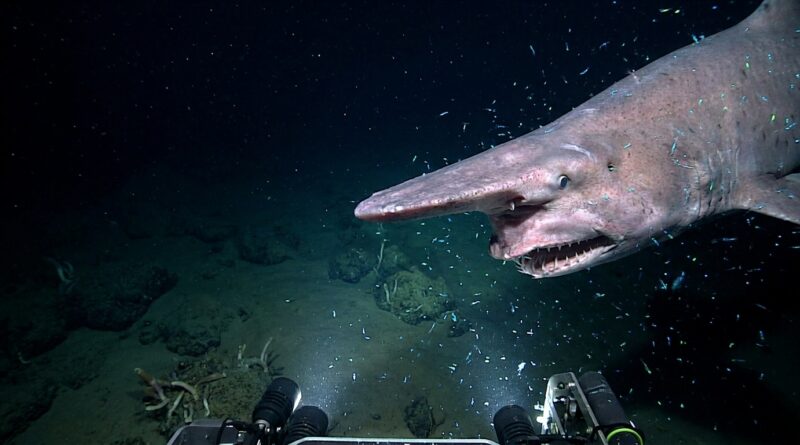
If you love real mysteries, the kind with timestamps, cameras and actual biologists scratching their heads, you are probably exhausted by the same old UFO reruns and ghost-story filler. Fair enough. What makes this goblin shark case different is simple. It is real, recent and weird in a way science cannot neatly tidy up yet. A goblin shark seen alive in natural habitat mystery is rare enough on its own, because this species usually enters the public record as a damaged bycatch specimen hauled up from deep water. Seeing one alive, moving normally and documented in conditions that do not quite match the usual expectations is the sort of thing that makes shark scientists pay attention fast. Not because it proves anything supernatural, but because it exposes a gap. We have a famous deep-sea “living fossil,” and suddenly the question is not just what it is. The question is whether we have badly underestimated where it goes, how often it appears and what its normal life actually looks like.
⚡ In a Hurry? Key Takeaways
- A live goblin shark sighting matters because this species is almost never observed behaving naturally in the wild.
- If you follow anomaly stories, stick to sightings with video, location data and expert reaction, not recycled folklore.
- The value here is that the mystery is testable. New dives, footage and papers could confirm whether this was a fluke or part of a bigger pattern.
Why this sighting has people rattled
Goblin sharks already look like something invented for a late-night creature feature. They have a long flattened snout, loose pinkish skin and a jaw that can shoot forward to grab prey. But the creepy look is not the important part.
The important part is how little we actually see of them alive.
Mitsukurina owstoni, the goblin shark, is a deep-sea shark often described as a living fossil because its lineage goes back a very long way and its overall body plan appears ancient compared with many modern shark groups. Most of what scientists know comes from stranded individuals, animals caught accidentally by fishers, and occasional submersible encounters.
That is why a goblin shark seen alive in natural habitat mystery gets attention right away. A living animal on camera can show posture, swimming style, apparent health, depth context and surrounding habitat. That is the difference between examining a wrecked car in a junkyard and watching it drive down the road.
What makes this more than just a cool deep-sea clip
If this were only a rare animal sighting, it would still be notable. What pushes it into “scientists are quietly spooked” territory is the mismatch with expectations.
Goblin sharks are generally associated with deep continental slopes, submarine canyons and offshore waters, often hundreds of meters down. They are not the sort of animal researchers expect to casually spot in a way that produces clean, useful footage. So when one appears alive in a place, depth range or behavioral context that seems off-model, it raises awkward questions.
Three big questions jump out
1. Are goblin sharks less rare than we think?
They may not be truly scarce. They may just be badly sampled. Deep water hides a lot. If better cameras and more dives are now catching them, we might be seeing observer bias break down in real time.
2. Are they using habitats we did not expect?
A single sighting does not rewrite biology. Still, one credible live observation can hint that their range, depth use or movement patterns are broader than the textbooks suggest.
3. Are changing ocean conditions pushing them into view?
This is where things get interesting. Temperature shifts, prey movement, oxygen changes and fishing pressure can all alter animal behavior. A strange appearance can be a clue, not just a curiosity.
Why “living fossil” is both useful and misleading
The phrase “living fossil” is catchy, but it can fool people into thinking a species is frozen in time. It is not. Goblin sharks are modern animals alive right now, dealing with modern oceans.
What the label really means is that they belong to an old lineage and preserve traits that look ancient compared with many other sharks. That makes them valuable to science, because they can help researchers think about how shark evolution unfolded over vast stretches of time.
It also makes every good live sighting more important. If you almost never get to observe a species in its own world, each bit of footage becomes a small gold mine.
What scientists can actually learn from a live encounter
For non-specialists, a shark video can look like a spooky clip and not much else. Researchers see more.
Body condition
Is the shark thin, scarred, sluggish or healthy-looking? That can hint at stress, prey availability or recent injury.
Swimming behavior
Goblin sharks are often assumed to be slow, energy-saving hunters. A clear live record can help test that. Does it cruise steadily, hover awkwardly or make quick directional moves?
Depth and habitat clues
Even basic information about seafloor type, light levels and nearby animals can add context we rarely get from dead specimens.
Range confirmation
Accurate coordinates matter. One verified sighting can expand or strengthen the known map for a species.
Why the anomaly community should care
This is the sweet spot. You get the thrill of the bizarre without having to pretend evidence does not matter.
Too many “mystery” stories collapse the moment you ask for specifics. This one gets better when you ask for specifics. Where was it filmed? At what depth? Who confirmed the ID? Does the habitat fit prior records? Are there comparable sightings?
That is the kind of anomaly story worth following, because it invites debate without floating off into fantasy. It gives readers something concrete to test and revisit as more reports come in.
Could this just be a one-off?
Yes. It could.
That is worth saying plainly. A single live sighting does not mean goblin sharks are suddenly common, migrating in new ways or reacting to some huge ocean shift. Weird things happen in nature all the time.
But one-offs still matter when the animal in question is so poorly observed. In deep-sea biology, one clean encounter can sit at the center of discussion for years because the baseline data are so thin.
Think of it like spotting a famously private neighbor outside at 3 a.m. carrying a cello into the garage. It may mean nothing. It may also mean your assumptions about that neighbor were wildly incomplete.
What may be going on behind the scenes
When a sighting like this circulates, scientists tend to sort through a few possibilities fast.
Misidentification check
First they make sure it is really a goblin shark. With this species, the protrusible jaws and long snout make that step easier than with many lookalike fish.
Location credibility
Then comes the hard metadata. Where exactly was it? Was the depth recorded correctly? Was it near known deep-water structure?
Health and stress
If the shark appeared in an unusual setting, researchers will ask whether it was healthy or distressed. Animals out of place are sometimes simply animals in trouble.
Pattern search
Finally, people start looking for similar records. This is the key part. A mystery becomes meaningful when another case pops up, then another, and a pattern starts to take shape.
Why shark scientists are “spooked,” in the sensible sense
Not horror-movie spooked. More like professionally unsettled.
Scientists get uneasy when a species they think they understand turns out to be operating just outside the frame of their models. Goblin sharks already live in a realm that is hard to sample and expensive to study. So every surprise carries extra weight.
If the current footage or observation suggests the shark was somewhere unexpected, behaving in an unusual way or showing up more visibly than it should, then the sighting pokes at a larger problem. Our picture of deep-sea life may still be missing huge chunks.
That is not failure. That is science doing its job in public.
What to watch next if you want the real story
Do not get distracted by dramatic thumbnails. Watch for the boring details. They are where the truth usually hides.
Look for these updates
Official species confirmation. Was the ID confirmed by shark specialists?
Exact habitat notes. Was it over slope, reef edge, canyon or open water?
Depth information. This is one of the biggest clues in any goblin shark seen alive in natural habitat mystery.
Repeat sightings. One case is exciting. Two or three start to become evidence of a pattern.
Paper or expedition follow-up. If researchers return to the area, that tells you they think the sighting may be more than a fluke.
At a Glance: Comparison
| Feature/Aspect | Details | Verdict |
|---|---|---|
| Rarity of live observation | Goblin sharks are usually known from dead bycatch or damaged specimens, not natural-behavior footage. | Genuinely significant |
| Fit with current models | The sighting appears to raise questions about expected depth, habitat or frequency of appearance. | Scientifically unsettling |
| Value to readers | It is a verifiable mystery with room for real analysis, not a recycled paranormal claim. | Excellent case to follow |
Conclusion
This is why the story matters. The Anomal community is not being asked to believe a blurry legend or a secondhand campfire tale. You are getting a brand-new, verifiable glimpse into an animal that usually only shows up dead on fishing lines, despite belonging to a lineage that reaches back toward the age of dinosaurs. That alone is remarkable. But the real hook is the unresolved part. Instead of pure speculation, readers can watch a real unexplained pattern try to form in public. A supposedly ultra-rare, deep-dwelling living fossil has turned up on camera in a place and way that does not sit neatly inside current expectations. That tension between hard data and soft explanation is exactly what makes this worth your time. It gives people something solid to dissect, debate and track as new expeditions, footage and papers appear in the coming weeks. In mystery terms, this is the good stuff. Strange, real and still open.