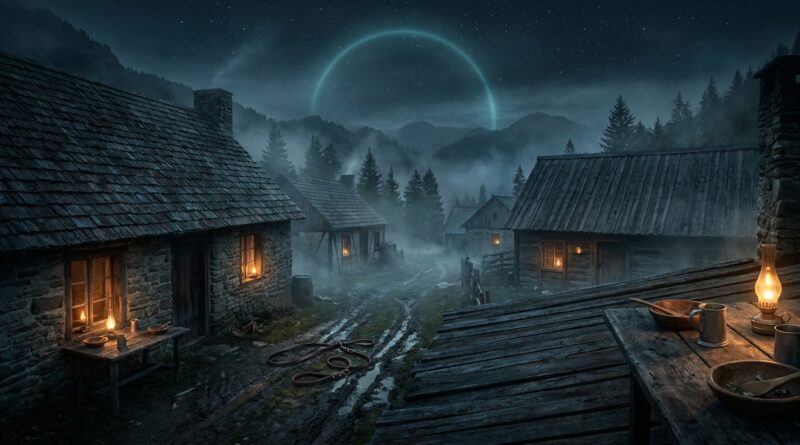
The Village That Vanished Overnight: Inside the Creepiest ‘Mass Disappearance’ Story Blowing Up Online
You see the post. A whole village. Gone overnight. No bodies, no wagon tracks, no warning. Just 1,500 people erased from the map like someone hit delete. It is exactly the kind of story that gets under your skin, and it is frustrating because the versions flying around TikTok, Instagram, Facebook and Reddit all sound certain while quietly changing the details. The village name shifts. The year shifts. The country shifts. Even the number of missing people balloons depending on who is telling it. So let’s answer the question behind the trend as clearly as possible: the viral “village that disappeared overnight real story” is not one solid historical case. It is a mix of folklore, misquoted books, repackaged ghost stories and a few real abandoned settlements that get stitched together into one creepy legend. The mystery is real as internet folklore. The mass disappearance, as usually told, is not confirmed history.
⚡ In a Hurry? Key Takeaways
- The viral vanished-village story is almost certainly not one verified 19th-century event. It is a legend built from several different tales.
- If you want to fact-check it fast, start with the village name, year, local census records and old newspaper archives. Those usually expose the holes.
- The spooky part is not that history “shrugged.” It is that social media keeps remixing half-true stories until they look like hard fact.
The short answer
If you are searching for the village that disappeared overnight real story, here is the plain-English answer. There is no widely accepted historical record of a 19th-century village of 1,500 people vanishing in a single night with no trace and no official explanation.
That does not mean every version is made up from scratch. It means the viral claim usually blends together:
- real ghost-town history
- older folklore about cursed or abandoned settlements
- tabloid-style retellings from mystery books and blogs
- social posts that trim out uncertainty and add dramatic details
That last part matters. Once a story goes viral, people do not usually add boring facts. They add chills.
Where the story seems to come from
Version 1. The “Angikuni Lake” style disappearance
The closest famous match is the old Canadian legend of an Inuit village near Angikuni Lake supposedly found deserted by trapper Joe Labelle in the 1930s. Depending on the retelling, an entire settlement vanished, meals were left on tables, rifles were untouched, and even graves were emptied.
It is a great campfire story. It is also heavily disputed.
Researchers have long pointed out major problems. The Royal Canadian Mounted Police records do not support the dramatic account as usually told. Details appear late, vary wildly and often trace back to sensational magazine pieces rather than solid contemporary reporting. It is one of the clearest examples of a disappearance legend growing stronger every time someone repeats it.
Version 2. Roanoke gets jammed into the meme
Another source is the Lost Colony of Roanoke. That was a real historical mystery in the late 16th century, not the 19th century. Colonists disappeared from an English settlement, and later searchers found the place abandoned with “CROATOAN” carved into a post.
Roanoke is unresolved, but it is not a one-night wipeout of 1,500 villagers. Different era. Different scale. Different evidence.
Version 3. Real villages that emptied out, just not overnight
This is where social media often gets sneaky. There are many real places that became deserted because of famine, disease, war, forced relocation, mining collapse, environmental change or simple economic decline. But that is not the same thing as “everyone vanished in one night with no tracks.”
Abandoned villages are common in history. Instant mass disappearances are not.
Why this story keeps spreading
Because it presses three very human buttons at once.
1. It feels possible enough to be scary
A haunted castle is easy to dismiss. A whole village with no explanation feels weirdly close to real life. That makes it sticky.
2. It sounds like hidden history
People love the idea that the truth was buried, ignored or covered up. It gives the story extra fuel.
3. Social media rewards certainty
The post that says, “Maybe this is a garbled version of several older stories” gets ignored. The post that says, “1,500 people vanished in one night and authorities never explained it” gets shared.
That is how folklore mutates now. Faster than ever.
What is actually confirmed, what is distorted, what is invented
Confirmed
History has many abandoned settlements. Some were emptied by disaster or hardship. Some famous disappearance stories, like Roanoke, are based on real unanswered events. There are also documented cases where small communities relocated, dissolved or were misrecorded in later retellings.
Distorted
The numbers. The dates. The setting. This is where the internet often goes off the rails. A tiny settlement becomes a large village. A slow abandonment becomes an overnight event. A local legend becomes an “officially unsolved case.”
Invented
The dramatic extras. No footprints. Fires still burning. Food left warm. Graves dug up. Authorities baffled. Every single person gone. These details are classic mystery-story upgrades. They make the tale irresistible, but they are usually the least reliable parts.
How to fact-check a viral mystery without needing a history degree
This is the useful bit. The next time a creepy claim starts making the rounds, use this checklist.
Start with the oldest version you can find
Do not begin with TikTok summaries or quote cards. Search for the earliest newspaper mention, book citation or archive entry. The closer you get to the first printed account, the faster you spot later exaggerations.
Check whether the place name stays the same
If one version says Canada, another says Alaska, and another says northern Russia, that is a warning sign. Real events tend to keep basic facts. Legends drift.
Look for census records or local administrative records
A village of 1,500 people leaves paper behind. Taxes, church records, census data, maps, court documents, trade records, land registries. If none of that exists, be careful.
Search local newspapers, not just national ones
If 1,500 people vanished overnight, nearby communities would almost certainly have talked about it. Local archives often tell a very different story than viral posts.
Watch for “too perfect” details
Warm food. Silence. No tracks in snow. Entire graveyards opened. These details are built for storytelling. That does not make them impossible. It does make them suspicious.
A simple timeline of how legends like this grow
Here is the pattern you usually see:
- A real place exists, or a small local story starts circulating.
- An early retelling adds mystery or leaves out uncertainty.
- A book, magazine or radio segment repackages it for entertainment.
- Blogs and listicles flatten the caveats.
- Social media shortens it even more and upgrades the drama.
- The new viral version gets treated as the original.
That is probably what happened here. The story did not survive history untouched. It got edited for maximum chills.
So was there ever a “real” vanished village?
Maybe a seed of one. Not the one in the meme.
The most honest answer is that there are real historical mysteries involving deserted settlements, missing groups and incomplete records. But the specific viral version about a 19th-century village of 1,500 people vanishing in a single night without bodies or tracks does not hold up as a clean, documented event.
It works better as a case study in how internet legends are built.
Why that matters beyond this one spooky post
Because this is not just about one creepy story. It is about how easy it is for emotion to outrun evidence. Once you see how a vanished-village legend gets assembled, you start spotting the same pattern in miracle cures, scam warnings, conspiracy clips and fake history threads.
And that is useful. Not boring useful. Actually useful.
At a Glance: Comparison
| Feature/Aspect | Details | Verdict |
|---|---|---|
| Core viral claim | A 19th-century village of about 1,500 people disappeared overnight with no trace | Not verified as a single historical event |
| Possible source material | A mix of Angikuni-style legends, Roanoke references and real abandoned settlements | Likely a blend, not one case |
| Best way to check future stories | Trace the oldest source, compare names and dates, then look for local records and newspapers | Most reliable fact-check method |
Conclusion
The reason this story keeps blowing up is simple. It hits the part of the brain that wants one more creepy rabbit hole before bed. But if you slow it down, line up the timelines, check the maps and follow the archives, the picture changes. The “vanished village” is less a locked historical case and more a shape-shifting internet legend made from scraps of real history, old mystery writing and modern social sharing. That is still interesting. Honestly, it may be more interesting, because now you can see exactly how these stories evolve. And that gives you something solid to share the next time the claim pops up on TikTok, Instagram or Facebook. Not just “that’s fake,” but a clear breakdown of what is confirmed, what got distorted and what looks invented. You still get the eerie feeling. You just do not have to hand your common sense over with it.