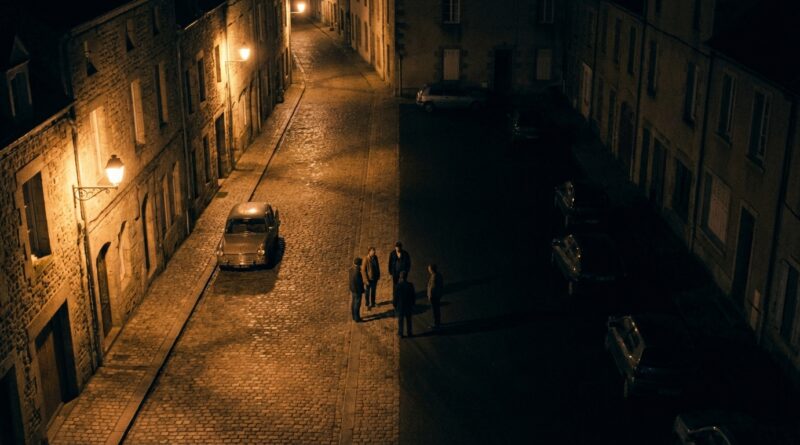
The Town That Lost Its Shadows: The Bizarre ‘Light Drop’ Phenomenon No One Can Explain
If your street suddenly drops into darkness for two or three seconds, and then snaps back like nothing happened, you know how maddening it is to be told it was “just a blip.” That is exactly what people in one small European town are dealing with right now. Residents describe streetlights dimming to black in sync, car headlights seeming to vanish into whole patches of road, and the strangest part of all, shadows that flicker out and then reappear a heartbeat later. Engineers have checked the obvious suspects. The local grid looks normal. There is no planned load reduction, no tidy fault report, no simple switch to point at. So we are left with something rare. Maybe not supernatural, but certainly not routine. The useful move here is not panic. It is good observation. If this mysterious town lights dimming unexplained shadow phenomenon is real, the fastest way to sort fact from fear is to document it properly, with time stamps, multiple cameras, and a little boring discipline.
⚡ In a Hurry? Key Takeaways
- What people are seeing does not neatly match a normal neighborhood power blip, especially when whole blocks dim in sync while the grid appears healthy.
- The best next step is to record events with exact time, location, weather, and video from more than one angle so patterns can be checked.
- Stay safe. Do not stand in roads or touch electrical hardware. Treat this as a reporting and evidence problem first.
What people say is happening
The reports all share the same odd shape. This is not a lamp failing here and there. It is a coordinated drop. Streetlights dim hard or go fully black for a few seconds. Nearby areas do it at the same time. Then everything returns.
That alone would be strange enough. But the detail that keeps showing up in witness accounts is the shadow effect. People say their own shadow disappears, or the shadow of a parked car vanishes, then comes back in a sharp, almost mechanical way. That makes this feel more unsettling than a simple outage.
It also tells us something important. Human eyes are good at noticing sudden changes in contrast, but not always good at explaining them. So before anyone jumps to wild conclusions, it helps to ask what kinds of ordinary systems could create a very weird-looking result.
Why this does not sound like a normal power fault
A standard local fault usually leaves fingerprints. You might see one feeder affected, one side of a street go dark, or a breaker trip that utility logs can verify. Voltage sags can happen, of course. But synchronized light drops across multiple blocks, with no clean fault trail, are harder to shrug off.
Streetlights are not simple anymore
Modern lighting systems often use LEDs, remote control gear, photocells, timed dimming schedules, and centralized management software. That means a lighting problem can look like a power problem even when the main grid is fine.
If a controller briefly misfires, or a shared command is sent in error, you can get many fixtures responding together. To someone on the street, that feels eerie. To an engineer, it suggests there may be a layer above the power lines worth checking.
Your eyes and cameras can disagree
There is another wrinkle. LED lighting can pulse at rates your brain smooths over most of the time. Under certain conditions, especially with motion, fog, wet roads, or a mismatch between camera shutter speed and light frequency, a brief dimming event can look more dramatic than it really is.
That does not mean witnesses are imagining things. It means the event may involve both a real lighting change and a perception effect that makes the shadows feel even stranger.
Possible explanations that are weird, but still earthly
1. A control-system glitch
This is the cleanest technical theory. If many lamps are on the same remote management system, a firmware bug, bad timing signal, or failed network node could briefly tell them all to dim or reset. That would explain the synchronized behavior better than random failing bulbs.
2. A voltage sag too short to be obvious indoors
Very brief dips in supply voltage can hit outdoor lighting gear in noticeable ways, especially if drivers are sensitive or near the edge of tolerance. People inside homes might miss it. Streetlights and some vehicle lighting systems might not.
3. Sensor confusion from weather or reflections
Low cloud, mist, wet pavement, and reflective surfaces can create sudden changes in how light spreads. If the ambient light shifts at the same time as a small dimming event, shadows can seem to blink out completely. It is a plain explanation, but it does not fully account for synchronized reports across different streets.
4. A local electromagnetic issue
This is more speculative, but not impossible. Strong interference near control gear, communications hardware, or poorly shielded systems can cause strange behavior. If there is one thing that makes modern infrastructure act haunted, it is electronics trying and failing to talk to each other properly.
5. Something not yet in the boring file
Sometimes a pattern turns out to be real before anyone has a good label for it. That is why documentation matters. You do not need to claim aliens, secret experiments, or a tear in reality. You just need enough clean data that experts cannot wave it away.
The practical playbook for residents
If your town is seeing these light drops, the goal is simple. Capture evidence that can be compared across places and dates. Think like a neighbor with a notebook, not a ghost hunter with a shaky flashlight.
Use two devices if you can
One phone camera is good. Two is much better. Put them in different spots, aimed at the same stretch of street or at nearby lights. If both catch the same dip at the same time, that is useful. If one shows it and the other does not, that is useful too.
Record the basics every single time
Write down:
- Exact date and time, to the second if possible
- Street or intersection
- Weather conditions
- Whether cars, house lights, or traffic signals were affected
- How long the drop lasted
- Whether you heard any sound, such as transformer hum changing or relays clicking
This sounds fussy. It is. That is what makes it credible.
Check other light sources
When the event happens, note what changes and what does not. Did only municipal streetlights dim? Did shop signs stay bright? Did battery-powered lights look normal? Did your phone screen brightness seem unchanged? Those comparisons help separate a grid issue from a lighting-system issue.
Use slow-motion video carefully
If your phone allows slow-motion capture, try it. It can reveal pulsing or stepped dimming that normal video misses. But do not rely on slow-motion alone. Some camera modes create artifacts. Use normal video and slow-motion side by side.
Try a simple witness map
Start a shared map with pins for each event. Include time and a short note. If reports cluster along one route, one district, or one hardware type, that pattern may matter more than the stories themselves.
What local engineers should be checking
If officials are taking this seriously, there are some obvious places to start beyond “the power is fine.”
- Streetlight control software logs and command histories
- LED driver reset behavior under short voltage dips
- Time synchronization errors in smart lighting systems
- Communications faults between lighting cabinets and fixtures
- Power quality monitoring, not just outage records
- Whether affected blocks share common controllers, relays, or maintenance history
This matters because “no outage recorded” is not the same thing as “nothing happened.” A lot of modern faults live in the messy middle between full failure and normal operation.
How to avoid fooling yourself
Strange events grow in the telling. That is human nature. The best way to protect a real mystery is to be strict with the facts.
Do not lead witnesses
Ask, “What did you see?” Not, “Did your shadow disappear too?” Small wording changes can spread the same detail from person to person, even if only one person noticed it first.
Separate raw footage from edited clips
Keep original files. Edited montages are good for getting attention, but raw footage is what helps engineers and skeptical observers check what actually happened.
Compare with official data, but do not stop there
If the utility says there was no fault, note that. Then keep collecting evidence. Official logs can miss brief events, or track the wrong layer of the system. The point is not to prove authorities wrong. It is to narrow down what kind of event this really is.
Why the “shadow” detail is so compelling
A streetlight going out is mundane. A shadow vanishing feels wrong at a deeper level. That is because shadows are one of the simplest things in daily life. We trust them without thinking. When they behave oddly, our brains treat it like a glitch in reality.
There may be a plain explanation. If a main light source drops and a secondary light source remains, the shadow can soften, shift, or seem to disappear. Add wet pavement, moving headlights, and LED timing, and you can get something that looks impossible for a moment.
But again, “there may be” is not the same as “case closed.” If many people in different places report the same sequence, and video supports it, that deserves more than a shrug.
At a Glance: Comparison
| Feature/Aspect | Details | Verdict |
|---|---|---|
| Likely cause | More consistent with a coordinated lighting or control-system issue than a random bulb failure. | Plausible, needs logs and power-quality data. |
| Best evidence residents can gather | Time-stamped video from multiple angles, plus notes on weather, affected devices, and exact location. | Very useful and easy to start now. |
| Safety and common sense | Observe from sidewalks or windows. Do not approach substations, open cabinets, or stand in dark roads to film. | Non-negotiable. |
Conclusion
Being told you are overreacting to “just a power blip” is frustrating, especially when what you saw felt specific, repeatable, and deeply odd. The smartest response is not to get louder. It is to get better evidence. A shared playbook for timing, filming, and comparing these mysterious light drops gives the Anomal community something solid to work with. It validates people who feel something genuinely strange is happening, and it helps separate the everyday faults from the events that resist easy explanation. In a news cycle full of UFO hearings and AI noise, a careful, grassroots mystery built from ordinary streets, headlights, and house lamps is refreshingly real. You do not need to solve it overnight. You just need to document it well enough that the next person cannot dismiss it with a shrug.