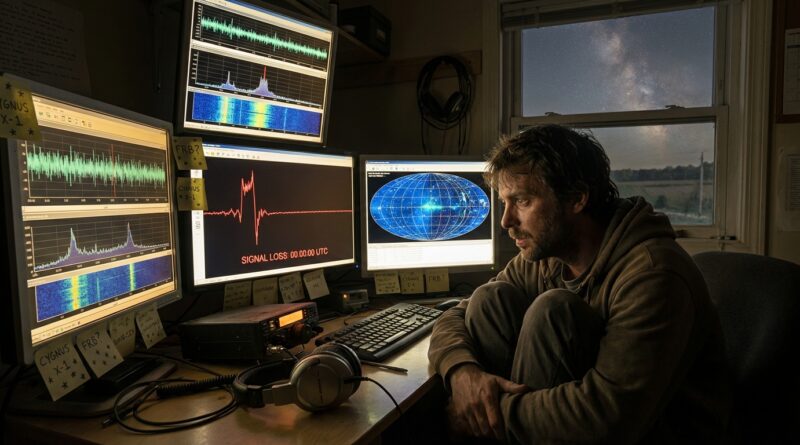
The best way to track a ‘ghost’ radio signal that keeps vanishing without a trace
It is maddening when a mysterious disappearing radio signal unexplained phenomenon pops up in your feed, everyone says it might change what we know about space, and then the trail goes cold. One paper mentions a burst. A Reddit thread mangles the details. A TikTok swears it is aliens. Meanwhile, you just want one simple thing. How do you follow a “ghost” signal properly and see what is actually known before the story gets buried under hype? The best way is to treat it like a live case file, not a spooky rumor. Pick one signal or signal class, follow the real observatories and alert feeds tied to it, log every update in one place, and separate raw detections from interpretation. That sounds technical, but it is very doable from home. You do not need a PhD or a giant dish in your backyard. You need a clean method, a few trusted sources, and the patience to watch a signal disappear and reappear without filling in the blanks too fast.
⚡ In a Hurry? Key Takeaways
- The best approach is to track one event through official alert channels, observatory posts, and paper preprints, not social media clips.
- Start a simple case log with time, source, frequency, telescope, and whether the claim is confirmed, disputed, or still open.
- Most “vanishing” radio signals are hard to repeat by nature, so lack of a follow-up does not automatically mean cover-up, hoax, or aliens.
Why these signals feel like they vanish
Most people first hear about fast radio bursts, repeating bursts, or odd narrowband detections after the dramatic part has already happened. That is the problem. Radio astronomy moves in bursts of attention. A telescope catches something strange. A team checks whether it is local interference, satellite noise, or a real astrophysical source. Then the story gets chopped into bits across press releases, preprints, news articles, and social posts.
By the time you arrive, the signal seems to have vanished twice. Once from the sky, and again from the internet under layers of bad summaries.
That is why the smartest move is not to chase every “wow” headline. It is to follow one trackable thread and build your own timeline.
The best way to track a ghost signal
Think of it like tracking a storm. You do not rely on one dramatic photo. You watch radar, forecasts, local reports, and updates over time.
Step 1: Pick one target, not the whole mystery
Do not try to follow “all unexplained radio signals from space.” That is how you end up drowning in noise. Choose one of these:
- A specific fast radio burst, if it has a catalog name
- A repeating source that has been seen more than once
- A telescope survey project known for catching transients
- A suspected event that is still under review
This gives you a defined case instead of a vague spooky feeling.
Step 2: Build a short trusted-source list
You want sources that sit close to the data. In plain English, that usually means:
- Observatory websites and press rooms
- Astronomy preprint servers like arXiv
- Research groups’ X, Mastodon, Bluesky, or lab pages
- Public event databases for radio transients or fast radio bursts
- Astronomy newsletters and alert networks
The key is to put these in one bookmark folder. If a dramatic claim does not point back to one of these source types, treat it as unconfirmed.
Step 3: Keep a case log
This is the part that turns you from a passive reader into an actual field investigator from home.
Use a spreadsheet or notes app with these columns:
- Date and time of report
- Name of signal or event
- Telescope or instrument
- Frequency range
- Sky location, if available
- Was it one burst or repeating?
- Source link
- Status: raw detection, under review, confirmed, disputed, likely interference
- Your plain-English summary
This sounds simple because it is. And simple is good. It stops you from mixing a real telescope detection with someone’s spooky narration over stock footage of stars.
Step 4: Watch for the three follow-up questions scientists ask
When a radio signal appears and then vanishes, researchers usually try to answer three things:
- Was it really from space?
- Can it be detected again?
- Does it match a known class of source?
If you track those three questions in your notes, you will understand the story far better than people reposting “they found something impossible.”
How to tell whether a signal is truly strange or just messy
Not every odd event is a deep cosmic puzzle. Radio data is full of clutter. Earth-based interference is common. Satellites are common. Instrument artifacts happen. Even weather and local electronics can muddy things.
Clue 1: Independent confirmation
If another instrument or team saw something similar, the case gets stronger. If only one source is making a huge claim and no one else can find the data trail, slow down.
Clue 2: Repeat behavior
A repeating signal is gold for investigators. It gives astronomers more chances to pin down the source and compare patterns. A one-off event can still be real, but it is much harder to study.
Clue 3: Clear technical details
Good reports usually include at least some specifics. Frequency. Duration. Dispersion measure. Telescope name. Rough location. If the story has none of that and only says “scientists baffled,” it is probably a bad summary of a more nuanced finding.
Your home investigator toolkit
You do not need expensive gear to track a mysterious disappearing radio signal unexplained phenomenon. Start with information tools first.
Basic setup
- A bookmark folder for observatories, arXiv, and alert pages
- A spreadsheet or Notion page for your case log
- Google Alerts for specific event names or telescope names
- RSS reader if you want updates in one place
- A group chat, Discord, or forum thread to compare notes
If you want to go one step further
You can also listen in on the public side of radio and space tracking communities. Not to “decode aliens,” but to get better at pattern recognition and source checking. Amateur radio communities, satellite trackers, and astronomy clubs are often better at practical signal skepticism than flashy mystery accounts.
A simple playbook you can use tonight
Here is the version I would hand a friend.
- Choose one recent radio burst or repeating source.
- Find the earliest credible mention of it.
- Log the telescope, date, and any technical details.
- Search for later follow-up from observatories or preprints.
- Mark every update as confirmed, pending, or questionable.
- Ignore any post that jumps straight to a wild conclusion without source links.
- Share your timeline with others and invite corrections.
That last step matters. Shared sleuthing beats solo doom-scrolling every time.
What “vanishing without a trace” usually really means
Usually, one of four things is going on:
- The signal was a real transient event and simply did not repeat on schedule.
- The source repeated, but no telescope was pointed there at the right moment.
- The event is still being checked for interference or processing errors.
- The internet moved on before the science did.
That last one causes a lot of confusion. Scientific follow-up can take weeks or months. Hype cycles last about six hours.
How to avoid the biggest traps
Trap 1: Mistaking silence for a cover-up
No update often just means no confirmed update yet. It is boring, but boring is common in real science.
Trap 2: Treating all radio anomalies as the same thing
Fast radio bursts, pulsars, local interference, military chatter, and satellite contamination are very different categories. Lumping them together makes every story sound scarier and less useful.
Trap 3: Chasing summaries instead of sources
If you only read reactions, you will never catch the actual trail of the event. Go one layer closer to the source every time.
Why this matters for the Anomal community right now
This is where things get interesting. A lot of mystery communities are great at spotting weird stories early, but not always great at building durable case files. That is a missed chance.
If even a small group of readers starts tracking these events in a shared, organized way, the whole conversation gets better. Instead of “Did you see that creepy signal post?” you get “Here is the timeline, here are the source links, here is what is confirmed, and here is what is still open.”
That changes the mood from spooky rumor mill to citizen investigation. Much healthier. Much more fun, too.
At a Glance: Comparison
| Feature/Aspect | Details | Verdict |
|---|---|---|
| Best tracking method | Follow one signal through observatory updates, preprints, and a personal case log. | Most reliable |
| Fastest but weakest method | Relying on TikToks, reposts, and viral UFO threads without source links. | High hype, low trust |
| Best habit for beginners | Keep a spreadsheet with date, telescope, frequency, and confirmation status. | Easy and surprisingly powerful |
Conclusion
The best way to track a ghost radio signal is to stop treating it like folklore and start treating it like a case. Pick one event. Follow the closest sources to the data. Write down what is known, what is guessed, and what is still missing. That alone will put you ahead of most of the internet. More importantly, it helps the Anomal community right now by turning a confusing trend into a shared investigation people can join in real time, instead of just reading recycled spooky takes a week later. Done right, this gives curious readers a simple playbook for becoming field investigators from home, and builds a tighter community around live data sleuthing instead of secondhand mystery stories.