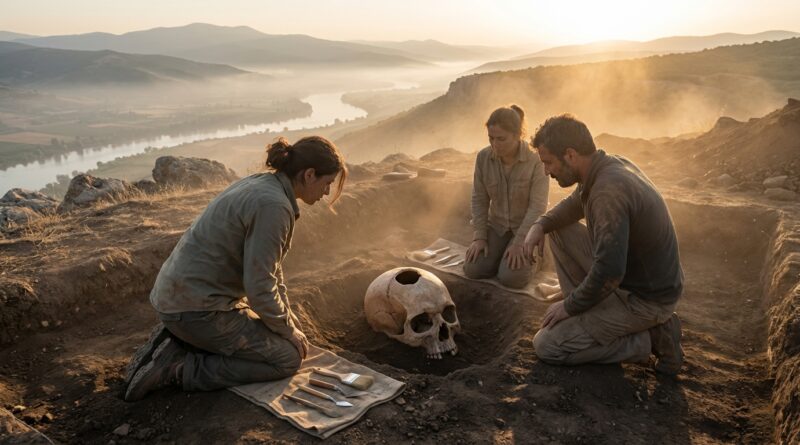
Ancient Skull Surgery Or Ritual Killing? Archaeologists Stunned By 5,000‑Year‑Old Cranial Mystery In Turkey
If you are tired of “mysteries” that feel too abstract to grab onto, this one is the opposite. Archaeologists in Turkey are staring at a very real human skull, about 5,000 years old, with signs that someone deliberately opened it. That is where the frustration starts. Was this an early surgery meant to help? Was it ritual violence? Was it something in between, where healing and belief were mixed together in ways that feel strange to us now? Right now, nobody can say for sure. That uncertainty is exactly why the find is so gripping. It is not just a bone in the dirt. It is direct evidence that a real person, in a real community, went through something dramatic and painful. The cuts appear purposeful, not random. But purpose does not always equal medicine. Sometimes it points to power, ritual, fear, or all three at once.
⚡ In a Hurry? Key Takeaways
- The 5000 year old skull surgery mystery Turkey find shows deliberate cranial opening, but experts do not yet agree if it was treatment, ritual, or violence.
- When reading early reports like this, watch for clues such as cut precision, bone healing, burial context, and tool marks before jumping to a dramatic conclusion.
- This is a good reminder that ancient “medicine” and spiritual practice often overlapped, so modern labels may not fit neatly.
Why this skull has archaeologists so hooked
A lot of ancient discoveries are important but hard to feel. This one lands differently because it is intimate. A person’s skull was cut open thousands of years ago, and the marks seem too intentional to shrug off as accident or damage from burial.
That puts archaeologists in a tricky spot. The evidence suggests human action. The hard part is working out the reason. If there are signs the person survived for a while after the opening, that leans toward some form of surgery. If there is no healing, the story gets murkier. The opening could still have been an attempt to treat them, but it could also point to ritual action carried out at or near death.
What experts usually look for in a case like this
1. Was the hole made with care?
Not every hole in a skull is surgery. Archaeologists check whether the edges look shaped by tools, whether the cuts are controlled, and whether the location matches what we know about ancient trepanation, the practice of cutting or scraping into the skull.
If the marks are neat and repeated in a methodical pattern, that supports the idea that someone knew what they were doing, at least by the standards of the time.
2. Did the bone start to heal?
This is one of the biggest clues. Bone healing can show the person lived days, weeks, or even longer after the procedure. If healing is present, the case for surgery gets stronger.
If healing is absent, though, that does not automatically mean murder or ritual killing. The person may have died during the attempt, or the opening may have happened just before death as part of desperate treatment.
3. What was found around the body?
Context matters. Burial goods, body position, nearby artifacts, and the wider site can all shift the picture. A skull found in an unusual ceremonial setting may raise the odds of a ritual explanation. A burial that looks otherwise ordinary might point more toward an attempt at treatment.
The uncomfortable truth: surgery and ritual may not be separate
This is where modern readers can get tripped up. We like clean categories. Medicine here. Religion there. Violence somewhere else.
Ancient communities often did not think that way. A healer could also be a spiritual specialist. A painful procedure might have been meant to release illness, drive out spirits, reduce pressure from injury, or all of those at once. So when people argue “surgery or ritual killing,” the true answer may be messier than either label.
That is part of what makes the 5000 year old skull surgery mystery Turkey story so compelling. It forces us to admit that the past does not always fit our filing system.
Could this really be ancient brain surgery?
Possibly, yes. Trepanation is well documented in different parts of the ancient world. People did survive it in some cases. That still shocks modern readers, but skulls with healed openings have shown up before, proving that prehistoric people were not strangers to risky medical procedures.
What makes this case stand out is the uncertainty around intent. Some skull openings are easier to classify. This one, at least from the details available so far, appears to sit in that frustrating middle ground where several explanations remain plausible.
Why the mystery feels so immediate
There is a reason stories like this spread fast. It is not just the gore factor. It is the sense that you can almost stand beside the trench and see the problem for yourself. Here is the skull. Here are the marks. Now decide what happened.
That beats a lot of distant cosmic speculation because this mystery is human-sized. Someone suffered. Someone used a tool. Someone believed they had a reason.
What readers should keep in mind before the final verdict comes in
Early archaeology reports often change as more lab work comes back. Microscopic analysis, dating, scanning, and comparisons with other skulls can all shift the story. A dramatic first read can later turn into a more cautious conclusion.
So the sensible approach is simple. Stay curious, but do not lock into one theory too fast. In finds like this, the smallest detail can flip the interpretation.
Why it matters beyond one skull
This is bigger than a single ancient injury. Finds like this reopen a question that never really goes away. How much of what we call medicine started as a mix of practical care, fear, symbolism, and tradition?
Even now, people mix clinical treatment with rituals, lucky objects, spiritual advice, and inherited home remedies. We are not as far from our ancestors as we sometimes like to think. The tools changed. The need to make sense of pain did not.
At a Glance: Comparison
| Feature/Aspect | Details | Verdict |
|---|---|---|
| Evidence of deliberate action | Tool-like marks and purposeful cranial opening suggest this was not random damage. | Strongly supports human intervention |
| Surgery vs ritual | Without full healing and context data, both explanations remain possible. | Still unresolved |
| Wider significance | Shows how ancient health practices may have mixed treatment, belief, and social ritual. | Important beyond this single find |
Conclusion
This is what makes the story worth your time. It is a fresh, grounded mystery from the last 24 hours, not another odd signal in space or a strange glow in the sky. It is a human being whose head was deliberately opened 5,000 years ago, for reasons nobody can yet pin down with confidence. You get to stand, at least mentally, beside the archaeologists and weigh the evidence as it comes in. And the deeper value is this. The skull is not just about the past. It nudges us to ask how often healing, fear, faith, and violence have lived side by side, then and now.