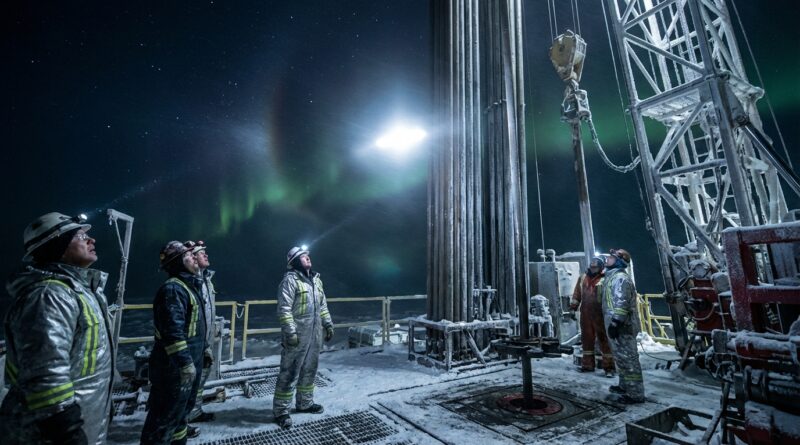
The Night The Sky Stopped Making Sense: Inside The Drillers’ UFO Encounter Over Canada’s Frozen North
You can only watch so many shaky UFO clips before your eyes glaze over. That is the real frustration here. Most “mysterious object” stories arrive with bad footage, no location details, and a pile of comments doing all the work the evidence should be doing. This case feels different because it starts in a place where mistakes are costly and attention matters. A remote drilling operation in Canada’s Northwest Territories is not exactly prime influencer territory. According to fresh reports from the last 24 hours, workers described a bright object hanging silently in the sky over the frozen north, then moving in ways that did not match a normal plane, helicopter, drone, or satellite. That does not automatically mean aliens. It does mean the report deserves a calm, grounded look. The useful part is not picking a side too fast. It is learning how to sort a strange sighting from internet nonsense when the next mysterious light in the sky over Northwest Territories drilling rig story pops up.
⚡ In a Hurry? Key Takeaways
- This Northwest Territories drilling-rig sighting stands out because it was recent, remote, and reportedly seen by multiple workers describing silent hovering and sudden movement.
- Before calling any sighting a UFO, check the basics first: flight paths, satellites, weather, bright planets, drones, and whether multiple witnesses agree on time and direction.
- The value here is not blind belief. It is using a fresh case to build a better filter for the next viral clip that lands in your feed.
Why this report grabbed attention so quickly
A lot of UFO stories fall apart the second you ask simple questions. Who saw it. When. From where. For how long. Did anyone else nearby report the same thing. Was there noise. Did it blink like an aircraft. Was it moving, or did the clouds make it seem that way.
This one has a stronger starting point than most. The setting matters. A drilling operation in the Northwest Territories is isolated, cold, dark, and practical. People working there are not out on a casual evening stroll. They are used to machinery, harsh weather, and the normal look of the night sky in a remote place.
That does not make them perfect witnesses. It does mean they are less likely to confuse city glow, traffic, or advertising lights with something unusual.
What was reportedly seen
Based on the early descriptions, witnesses reported a bright object hovering silently over the area, then changing movement in ways they did not recognize. The key claims are the ones worth focusing on.
- It appeared bright against the dark northern sky.
- It hovered rather than crossing steadily like a plane.
- It was silent, at least from the witnesses’ position.
- It moved in a way they felt broke the usual rules for aircraft.
That last point is where stories often get muddy. “Moved in impossible ways” can mean anything from an actual sharp change in direction to an optical illusion caused by distance and lack of reference points. In the far north, where the horizon can be flat and depth is hard to judge at night, our brains can get fooled more easily than we like to admit.
Why a remote drilling site changes the usual UFO math
If someone in a city says they saw a glowing thing in the sky, the list of possible causes is long. Aircraft. Police helicopters. Drones. Reflections. Light pollution. Buildings changing your perspective. In the frozen north, some of that clutter disappears.
That is why this mysterious light in the sky over Northwest Territories drilling rig report is more interesting than the average social post. Fewer distractions means fewer easy explanations. You still have to check the normal stuff, but the environment narrows the field.
What the location helps with
A remote site gives you cleaner sky conditions and fewer man-made lights. It can also make witness timelines easier to line up because crew logs, shift times, and site routines are often tracked closely.
What the location makes harder
Distance judgment gets worse. Sound can behave oddly in cold air. A bright object against a huge dark backdrop can look closer, larger, and stranger than it really is.
The short list of ordinary explanations to check first
This is the part people skip because it feels less exciting. It is also the part that keeps you honest.
Aircraft
Planes usually show consistent directional travel, navigation lights, and predictable paths. In remote regions, however, angle and distance can make an aircraft seem to pause or hover, especially if it is coming toward you. That is called the autokinetic trap of sky watching. If there is no fixed background, motion gets weird fast.
Helicopters
Helicopters can hover, but they are not subtle. If witnesses were close enough and still heard nothing, that lowers the odds. Not zero. Just lower.
Drones
Drones are a popular answer now because they are real, common, and can move sharply. But in a remote industrial zone in freezing conditions, battery life, operating range, and purpose all matter. A hobby drone is not likely to be hanging around far from easy access, especially if it was visible for more than a brief moment.
Satellites or Starlink
Satellites move steadily. They do not hover, reverse, dart, or jump around. Starlink trains can look odd if you have never seen them, but they still move in orderly lines, not in stop-start patterns.
Planets and stars near the horizon
Bright objects low in the sky can twinkle, distort, and seem to drift because of atmospheric effects. Venus has been blamed for more UFO reports than almost anything else in the night sky. It is worth checking, especially if the object was seen in one general place for a long stretch.
Atmospheric effects
Ice crystals, temperature inversions, and unusual reflections can do strange things in cold regions. Northern environments are beautiful, but they can also be visually sneaky.
What would make this case stronger
If more evidence comes out, these are the details that matter most.
Independent witness statements
Not one retelling. Separate accounts from multiple workers. The best version is when people describe the same event in similar language before they have had time to swap stories and smooth out the differences.
Precise timing
A solid time stamp lets investigators compare the sighting with flight tracking, satellite passes, and weather conditions. “Sometime after dark” is weak. “Between 10:14 and 10:21 p.m. local time” is useful.
Direction and elevation
Even rough notes like “northwest, about a hand-width above the horizon” can help rule things in or out.
Phone video with audio
Blurry is still blurry, but raw video with original metadata can be more useful than a cleaned-up clip posted after edits.
Environmental context
Wind, cloud cover, temperature, aurora activity, and whether there was nearby industrial aviation all matter.
What would make it weaker
There are also signs a story is getting inflated.
- One witness becomes “multiple sources” with no names or roles.
- The object gets faster and stranger every time the story is retold.
- Video appears only after heavy zoom, filters, or reposting.
- No one can pin down the time, direction, or duration.
- Basic checks, like nearby aircraft activity, are ignored because they are “too boring.”
How to analyze a case like this without sounding smug
You do not need to be the person who instantly says “definitely aliens,” and you do not need to be the person who rolls their eyes at every witness either. The smart middle ground is simple.
Start with the strongest normal explanation
Not the wildest one. Not the funniest one. The strongest normal one.
Check what can be checked
FlightRadar-type data. Satellite trackers. weather history. Sky maps. Local reporting. Those are your friends.
Separate what was seen from what was assumed
“A bright light hovered silently for three minutes” is an observation. “It was not made by humans” is a conclusion. Keep those apart.
Pay attention to witness quality, not just witness count
Ten people repeating the same rumor are less useful than two people giving clean, separate accounts.
So, was it a UFO?
In the plain-language sense, yes, at least for now. UFO just means an unidentified flying object. It does not mean spacecraft. It means people saw something they could not identify at the time.
And that is why this case matters. It is fresh. It comes from a remote, practical work site. It includes claims of silence, hovering, and unusual movement. Those details do not prove an extraordinary answer, but they do earn the case a second look.
What to watch for over the next 24 to 72 hours
Fresh sightings often get clearer very quickly or collapse just as fast. Here is what to keep an eye on.
- Local or regional media confirming the exact drilling location.
- More witness interviews, especially if they were recorded separately.
- Any site manager, aviation source, or official statement addressing air activity in the area.
- Raw footage, not reposted clips with captions and dramatic music.
- Weather and aurora reports for the same time window.
If those pieces start lining up, the report gets more interesting. If they do not, it may settle into the familiar pile of “strange, but not solvable.”
At a Glance: Comparison
| Feature/Aspect | Details | Verdict |
|---|---|---|
| Witness setting | Remote drilling operation, low light pollution, workers used to harsh conditions and industrial activity | More credible than a random viral post, but still needs verification |
| Object behavior | Reported as bright, silent, hovering, then moving in unusual ways | Interesting claim, but movement must be matched against distance, angle, and weather effects |
| Likely next step | Compare witness timing with flight data, satellite passes, aurora activity, and any raw video metadata | Best way to separate a real anomaly from a misread ordinary event |
Conclusion
The smart takeaway is not “believe everything” or “laugh at everything.” It is to slow down and check what can actually be checked. This helps the community today because it is a fresh, time-stamped case from a remote drilling operation in Canada’s Northwest Territories, reported within the last 24 hours, with witnesses describing a bright object hovering silently and then moving in ways no known aircraft should. That alone makes it more useful than the usual recycled UFO noise. More importantly, walking through a case like this gives you a practical filter. Next time a viral clip claims the sky has stopped making sense, you will know how to look at witnesses, location, movement, timing, and ordinary explanations before the panic and hype take over.