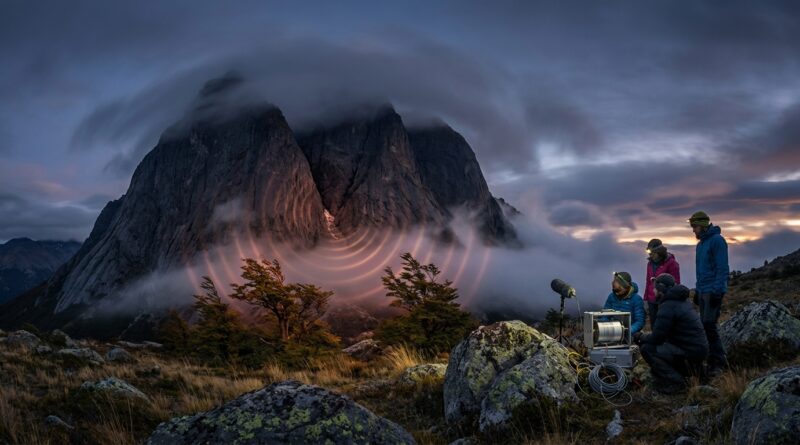
The Mountain That Beats Like A Heart: Inside Patagonia’s Most Mysterious ‘Living’ Peak
If you are worn out by blurry UFO reposts and machine-made mystery bait, this one hits differently. People in a remote part of Patagonia say a mountain there gives off a deep, steady thud, like a giant heart beating under rock and ice. Not once. Not as a campfire tale. Repeatedly. What makes this so interesting is that field researchers are not brushing it off with a lazy one-line answer. They have witness reports, some instrument readings, and a pile of possible causes, but no single theory explains all of it. That puts this squarely in the sweet spot for anyone who likes real anomalies. It is strange, grounded, and still open. The mysterious pulsing mountain Patagonia unexplained geological phenomenon story matters because it shows science at its most honest. Sometimes the right answer is still, “We do not know yet.” And frankly, that is a lot more interesting than fake certainty.
⚡ In a Hurry? Key Takeaways
- A remote Patagonian peak is reportedly producing a low rhythmic thud, and geologists do not yet have one explanation that fits every report and reading.
- If you want to track similar events near you, start with a notebook, time stamps, weather conditions, and public earthquake or infrasound data before jumping to wild conclusions.
- Do not approach unstable mountain areas just to “check” a rumor. Rockfall, hidden fissures, gas pockets, and bad weather are far more real than internet myth.
Why this mountain has people so hooked
Most mysteries fall apart as soon as you touch them. This one has held up longer than expected.
Locals describe a low, rhythmic pulse coming from deep inside an isolated Patagonian mountain. Not a sharp crack. Not a normal landslide rumble. More like a muffled thump that repeats. That detail matters, because repetition changes the question. A random sound can be almost anything. A pattern usually means a process.
And that is where things get messy. The mountain does not behave neatly enough to be dismissed as “just settling rock,” but the reports are not clean enough to lock it into one textbook category either.
What scientists think might be happening
There are several real-world explanations on the table. Each one makes some sense. None of them fully closes the case.
1. Hidden volcanic or hydrothermal activity
One idea is that fluids, steam, or gas are moving through cracks deep underground. When pressure builds and releases in cycles, it can create a repeating pulse. This would fit the “heartbeat” description better than a lot of simpler guesses.
The catch is that a true hydrothermal system often leaves extra clues. You might expect heat anomalies, gas emissions, mineral staining, or a stronger seismic signature. If some of those signs are weak or absent, the theory stays possible, but not proven.
2. Glacial or periglacial movement
Patagonia is full of ice-carved terrain, frozen ground, and mountains that are constantly being shaped by cold, water, and gravity. Ice shifting inside crevices or beneath debris can make deep booming sounds. So can frost cracking and water pressure changes in buried channels.
This is a solid candidate because it fits the region. But witnesses say the sound feels unusually regular, and that is harder to explain with normal freeze-thaw noise alone.
3. Resonance inside the mountain
Think of a bottle that hums when air moves across the top, only on a mountain scale. If the peak has hidden cavities, lava tubes, fracture networks, or old voids, wind, water, or pressure waves could make the whole structure resonate.
That could produce a deep thud or pulse without a classic quake. It is weird, yes, but not silly. Geology is full of natural systems that act like giant instruments.
4. Small seismic events that do not look “normal” to witnesses
Some geologists suspect tiny localized quakes or repeating microseismic events. These can be felt or heard differently depending on terrain, weather, and where a person is standing. Loose sediment, ice, and rock layers can distort sound in surprising ways.
The problem here is simple. If it were only that, many people would expect the data to line up more cleanly by now.
Why there is no tidy answer yet
This is the part that often gets lost online. Remote mountains are hard to study well.
You need instruments in the right places, over enough time, during the right conditions. You need seismic sensors, maybe infrasound gear, thermal imaging, gas checks, and good old-fashioned field notes. One weekend visit does not solve a recurring geological puzzle. Harsh weather, distance, and rough access can wreck a study before it starts.
That is why this case feels different from recycled internet mysteries. The gap here is not imagination. It is data density.
What the witnesses add that instruments sometimes miss
People on the ground can notice timing, direction, and changes in intensity that a sparse sensor network may miss. That does not mean every story is perfect. Memory is messy. Fear changes perception. So does expectation.
But repeated witness accounts are still useful, especially when they agree on a few core details. A low thud. A rhythm. A sense that the sound comes from inside the mountain, not above it.
That pattern is why the story has stayed alive. If everyone described something different, this would already be over.
How to think about this without falling for nonsense
You do not have to choose between “it is obviously aliens” and “nothing unusual is happening.” There is a middle lane, and it is usually the smart one.
Start with the plainest physical explanations first. Ask what in the local landscape could pulse, resonate, vent, crack, or shift. Then ask what evidence would support each idea. This is the same mindset good field teams use. Curiosity first. Certainty later.
That is also why stories like this are fun. You get a real mystery without having to turn your brain off.
If you want to watch for similar anomalies near you
This is where readers can become useful observers instead of passive scrollers.
Keep a simple anomaly log
Write down the date, time, duration, weather, temperature, wind, and what exactly you heard or felt. Note whether windows rattled, pets reacted, or nearby water moved.
Check public data
Look for local earthquake reports, volcanic monitoring pages, weather records, and satellite heat maps when available. A strange sound with no matching local data is not meaningless, but it is worth noting.
Compare reports carefully
If other people heard it, ask for their version before sharing yours. That helps avoid everyone unconsciously copying one description.
Do not go chasing danger
Remote hills, cliffs, glaciers, and volcanic zones can be lethal in boring, non-mysterious ways. Curiosity is good. Becoming a rescue call is not.
Why this case stands out in the anomaly world
It hits a rare balance. You get folklore, local testimony, rough terrain, and actual geologists trying to sort fact from noise. That makes it much more satisfying than a polished fake clip with dramatic music.
It also reminds us that unexplained does not mean supernatural. Sometimes it simply means the Earth is doing something complicated in a place where almost nobody is listening closely enough.
At a Glance: Comparison
| Feature/Aspect | Details | Verdict |
|---|---|---|
| Witness reports | Multiple accounts describe a low, rhythmic thud coming from inside the mountain area. | Compelling, but not enough on their own. |
| Scientific explanations | Hydrothermal pressure, ice movement, resonance, and microseismic activity are all plausible contenders. | Plausible, but no single winner yet. |
| What readers can do | Log times, compare conditions, and check public seismic and weather records before sharing claims. | Useful and grounded. |
Conclusion
The best part of this story is that it does not insult your intelligence. The mountain may turn out to have a very physical explanation. It may even be something boring on paper, but strange in practice. For now, though, the mysterious pulsing mountain Patagonia unexplained geological phenomenon remains exactly what a good anomaly should be: observed, investigated, and unresolved. That gives the Anomal community something rare. Not recycled myth, not empty hype, but a live case where folklore and frontier science are still meeting in the field. It lets readers feel involved rather than shut out, with real ways to notice and document similar events near them. And it is a good reminder of why under-reported mysteries matter. They stay interesting longer, because reality has not been flattened into easy clickbait yet.