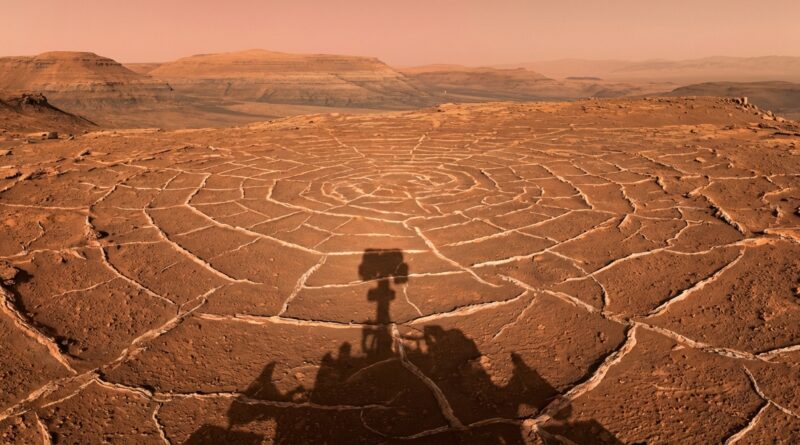
NASA Finds a Giant ‘Spiderweb’ on Mars: The Strange Pattern That Shouldn’t Exist
You are not imagining it. Mars water stories often swing between breathless hype and dense science-speak, and neither one helps when you just want a straight answer. Did Mars stay habitable longer than scientists thought, or not? That is why this new Curiosity image matters. NASA has captured a strange, giant spiderweb-like network of ridges on Mount Sharp, and even mission scientists are being careful not to pretend they have it fully solved yet. The pattern looks like cracked lines stitched across the surface, but it may be the fossil trace of groundwater moving through rock, depositing minerals, and leaving behind a hardened web after softer material wore away. That is a big deal. If groundwater shaped this area late in Mars’ history, it hints that wet, chemically active environments may have lasted longer than older Mars timelines suggested. For anomaly watchers, this is the sweet spot. Real data. Fresh mystery. No need to exaggerate.
⚡ In a Hurry? Key Takeaways
- NASA’s new Curiosity imagery shows a mysterious spiderweb structure on Mars that may point to an unexplained groundwater phenomenon, but the full cause is still uncertain.
- You can check the raw and processed rover images yourself, compare repeat shots, and watch for similar ridge networks in future Mars releases.
- The value here is that this is a verifiable, current science mystery, not recycled speculation, which makes it useful for careful anomaly tracking.
What NASA Actually Found
The new attention is focused on a broad web of crisscrossing ridges on Mount Sharp, the layered mountain Curiosity has been climbing for years inside Gale Crater. At first glance, it looks oddly artificial. Like someone etched a giant fractured net into the ground.
But the more likely explanation, at least for now, is geological. These ridges may be what scientists call mineral veins or fracture fills. Here is the plain-English version. Rock cracks. Water seeps through. Minerals in that water harden inside the cracks. Later, wind strips away the softer surrounding material, and the filled cracks stick up like raised lines. The result can look like a web.
That part is not crazy. We have seen related features before on Mars. What makes this case stand out is the scale, density, and timing questions around it. Scientists are still sorting out when this happened and what kind of water system could have produced such an extensive pattern.
Why This Is More Than Just Another Cool Mars Photo
This is where the story gets interesting for regular readers and serious anomaly hunters alike. The big issue is not whether Mars once had water. We already know it did. The real question is how long liquid water, especially groundwater, stayed active in sheltered environments.
If this spiderweb-like terrain formed from underground water moving through fractures well after Mars became mostly cold and dry at the surface, then some habitable niches may have lasted longer than many simple Mars summaries suggest.
That matters because life does not need beach weather. Microbial life, if it ever started, could have hung on in underground or chemically rich wet zones. A long-lived groundwater system would give that idea a little more room to breathe.
Why Scientists Are Being Careful
NASA researchers are not saying, “We found proof of life.” They are not even saying, “We know exactly how this formed.” And honestly, that is a good sign.
When scientists admit a feature is not yet fully explained, it usually means they are working through multiple possibilities instead of forcing a neat answer too early. The leading ideas include groundwater mineralization, fracture networks caused by stress in the rock, ancient drying and cracking processes, or a mix of several events over time.
In other words, the mysterious spiderweb structure on Mars may be one event, or it may be a layered history book written over millions of years.
Possibility 1: Groundwater Left a Mineral Skeleton
This is the strongest mainstream idea right now. Water moved underground, minerals precipitated inside cracks, and erosion later exposed the hardened lines.
If that is right, the ridges are not just pretty patterns. They are a map of where fluids once circulated.
Possibility 2: The Rock Was Stressed, Then Reworked
Sometimes rocks crack because of pressure changes, impacts, burial, uplift, or temperature swings. Later, those cracks can be altered by fluids. So the web may record both physical cracking and chemical change.
Possibility 3: We Are Seeing Several Different Histories at Once
This is the sneaky option people often forget. A ridge pattern can look like one single event when it is actually the result of repeated cracking, filling, erosion, and reshaping across huge spans of time.
What Makes the Pattern Feel So Strange
Humans are wired to notice patterns. Grids, webs, branching lines, repeated geometry. On another planet, that effect gets stronger fast.
That does not mean the structure is artificial. It means our brains flag it as unusual, and in this case they are right to do so. It is unusual. The key is to stay curious without jumping off the deep end.
The best anomalies are the ones you can point to, measure, revisit, and test. This one checks those boxes.
How to Explore the Imagery Yourself
You do not need a PhD to follow this story. You just need a little patience and the right habits.
Start With the Actual Rover Sources
Look for image releases from Curiosity, especially Mastcam and ChemCam context imagery, plus mission updates from NASA and JPL. Try to find both the polished public-facing image and the less glamorous raw frames. The polished image helps you see the pattern. The raw frames help you check whether processing choices changed the look.
Compare Wide Views and Close Views
A web-like feature can look very different depending on scale. In a wide shot, it may seem like one giant connected pattern. In closer views, it might break into separate ridge sets formed at different times.
Watch for Repeats in Nearby Terrain
The big question is whether this is a one-off oddity or part of a larger regional process. If similar crosshatched ridges appear nearby, that strengthens the case for a real geological system rather than a visual fluke.
Keep Notes Like a Field Researcher
Write down image IDs, dates, camera type, and what exactly caught your eye. It sounds boring, but this is how you avoid fooling yourself later. Good anomaly work is organized work.
What This Could Mean for Mars and Life
If the unexplained groundwater phenomenon idea holds up, it would support a more complicated Mars story. Not a simple wet-then-dead planet, but a world where localized wet environments may have persisted underground or within certain rock layers long after surface conditions worsened.
That does not prove biology. It does something more useful at this stage. It narrows the search. If you want to find signs of ancient habitability, old groundwater pathways are exactly the sort of place you would want to study.
It also tells us that Mars may still have surprises hiding in terrain we thought we broadly understood.
How the Anomal Community Can Add Real Value
This is where careful readers can help instead of just reacting.
First, archive the images and official captions. Fresh stories change fast. Early wording often gets softened or clarified later.
Second, compare this feature to older Curiosity and Perseverance fracture networks. Are we seeing a rare geometry here, or a familiar one in a more dramatic presentation?
Third, watch for follow-up papers, conference abstracts, and rover team comments. The first public explanation is rarely the final one.
Most important, resist the urge to force the story into either camp. It is not “nothing.” It is also not “proof of aliens.” It is a real, unresolved feature in a real data stream, and that is exactly why it is worth your attention.
At a Glance: Comparison
| Feature/Aspect | Details | Verdict |
|---|---|---|
| Pattern appearance | Large crisscrossing ridges on Mount Sharp that resemble a spiderweb or net-like fracture system. | Genuinely unusual and worth close study. |
| Best current explanation | Ancient fractures likely influenced by groundwater, with minerals hardening the cracks before erosion exposed them. | Most plausible, but not fully settled. |
| Why it matters | Could show that wet, chemically active environments on Mars lasted longer than simple timelines suggest. | High scientific value, especially for habitability questions. |
Conclusion
This is the kind of Mars story people have been asking for. Not empty hype. Not jargon piled on top of jargon. Just a fresh, visible puzzle with real scientific stakes. The mysterious spiderweb structure on Mars may turn out to have a straightforward geological explanation, but even that “straightforward” answer could reshape how we think about late-stage water activity and possible habitable niches on the planet. That helps the Anomal community right now because it gives us something solid to track. A data-driven mystery breaking in the last 24 hours, right on the border between mainstream planetary science and genuine high strangeness. Better still, readers can do more than just watch. You can inspect the imagery, compare updates, save sources, and look for repeat patterns as new Mars data drops. That is where careful anomaly hunters can actually contribute, before the story hardens into a neat textbook summary.